Where Learning Becomes Healing
For many young people, traditional education has become a source of anxiety rather than growth. Pressure, competition, and emotional stress can make learning feel like an impossible task — especially for those dealing with trauma, addiction, or behavioral challenges.
At Holina Village Cyprus, we’ve reimagined what education can be. Here, learning and healing are not separate paths — they move together. Our therapeutic education model integrates clinical care, emotional development, and academic growth into one cohesive experience.
Students don’t just return to school — they rediscover curiosity, confidence, and the joy of learning again.
“When a young person feels safe, their mind opens — not just to knowledge, but to possibility.” — Holina Village Educator
The Problem with Traditional School Systems
Conventional schools are designed to teach information, not emotional regulation.
When a young person struggles with focus, anxiety, or behavior, they are often labeled as “lazy,” “difficult,” or “unmotivated.”
In reality, their brain is in survival mode. The nervous system can’t prioritize learning when it feels unsafe.
For young people with trauma or mental health challenges, this leads to a cycle of shame and withdrawal. They stop believing they can succeed — not because they lack intelligence, but because they lack safety.
Therapeutic education begins by restoring that sense of safety, creating the foundation for genuine learning.
The Philosophy Behind Therapeutic Education
At Holina Village, we teach from the inside out.
Our philosophy is simple: healing enables learning, and learning sustains healing.
This approach blends the structure of education with the compassion of therapy, allowing each student to progress at their own pace.
Our key principles include:
Emotional Safety Before Achievement
Individualized Learning Plans
Integration of Therapy and Academics
Focus on Life Skills and Resilience
Empowerment Through Self-Discovery
By meeting students where they are — academically and emotionally — we help them move forward without fear or pressure.

How Holina’s Model Works
Each student at Holina Village has a personalized program that balances therapeutic and educational goals.
We work closely with families, clinicians, and partner educators at UCLan Cyprus to design pathways that align with long-term aspirations.
A typical week may include:
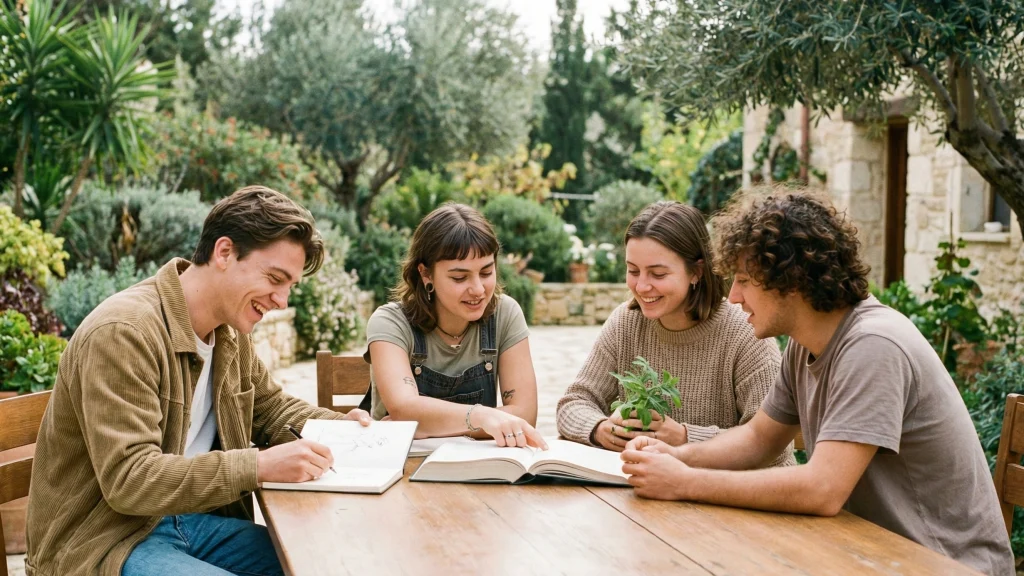
Academic study in small, supportive classes
Individual and group therapy
Creative workshops and life skills training
Mindfulness and movement sessions
Community service and reflective practice
This rhythm teaches balance — between discipline and rest, focus and flexibility, learning and living.
The Role of Emotional Safety in Learning
Safety is the foundation of education at Holina.
Before a student can focus on a lesson, they must feel seen, accepted, and understood.
Our classrooms are calm, structured, and supportive. Teachers use trauma-informed methods to help students regulate emotions and re-engage with curiosity.
By creating emotionally safe spaces, we replace fear with trust — and self-doubt with possibility.
“At Holina, we don’t teach to the test. We teach to the heart.”
— Teacher, Holina Village Cyprus
Learning at Your Own Pace
Therapeutic education honors individual timing.
Some students need to rebuild focus slowly after years of school avoidance. Others are ready to pursue academic qualifications with renewed motivation.
We offer flexible pathways — from foundational learning to university preparation — ensuring that each student progresses in a way that feels empowering, not overwhelming.
Progress is measured not only in grades but in confidence, communication, and self-awareness.
When students experience success without pressure, they rediscover the pleasure of learning for its own sake.
Integrating Therapy and the Classroom
What makes Holina Village unique is how seamlessly therapy and education coexist.
Our therapists and teachers work collaboratively, ensuring emotional insights translate into classroom success.
For example:
A student working on anxiety management in therapy practices those skills during a class presentation.
Someone exploring communication in group sessions applies it in peer collaboration.
Emotional triggers identified in therapy are supported through tailored academic adjustments.
This integration builds consistency and emotional resilience — the skills that support lifelong wellbeing.

Life Skills as Core Curriculum
Academic knowledge is only one part of growth. At Holina Village, life skills are just as essential.
Through guided workshops, students learn:
Emotional regulation and self-reflection
Time management and responsibility
Communication and teamwork
Goal-setting and accountability
Financial and vocational skills
These lessons prepare young adults for independence, ensuring that recovery is not just about healing — but thriving in the real world.
Creativity and Expression as Education
Creative expression is central to the Holina approach.
Art, music, writing, and design help students process emotions that words alone cannot reach.
In these creative spaces, students rediscover voice and agency.
They learn that expression — whether through painting, journaling, or performance — can be both therapeutic and educational.
Creativity turns learning into discovery, and discovery into healing.
The Role of Teachers and Mentors
Holina educators are more than instructors — they are mentors and role models.
They understand that every interaction is an opportunity for growth.
Teachers model empathy, patience, and consistency, helping students rebuild trust in authority and themselves.
This relationship-based teaching approach builds confidence from the inside out, creating lasting change beyond the classroom.
Partnership with UCLan Cyprus
Holina’s collaboration with the University of Central Lancashire (UCLan) Cyprus bridges therapeutic education with formal academic pathways.
Students can continue accredited studies, preparing for higher education while maintaining emotional support.
This partnership reinforces one of Holina’s key messages:
Healing and success can coexist.
How Therapeutic Education Transforms Lives
Therapeutic education helps young people not just recover — but evolve.
They move from avoidance to engagement, fear to curiosity, and shame to pride.
By reconnecting emotional wellbeing with intellectual growth, they learn that their minds are capable and their futures full of possibility.
“I thought I wasn’t smart enough. Holina showed me I just needed to feel safe enough.”
— Student, 18

Families as Educational Partners
Parents play a vital role in supporting therapeutic education.
Holina provides regular updates, family sessions, and educational guidance to keep parents connected to their child’s progress.
We also help families shift from focusing on outcomes to celebrating effort — creating a shared language of encouragement and trust.
When the whole family aligns with the process, learning becomes a collective triumph.
Stories of Learning and Renewal
“Our daughter lost her love of school years ago. At Holina, she found it again — along with herself.”
— Parent, UK
“I never thought studying could feel safe. Now it’s my favorite part of the day.”
— Student, 17
“Holina’s blend of therapy and education is revolutionary. It changes lives from the inside out.”
— Educator, Cyprus
FAQs About Therapeutic Education at Holina Village
Q1: What makes therapeutic education different from regular schooling?
It integrates emotional healing, therapy, and life skills with academics — creating an environment where growth happens on all levels.
Q2: Can students earn qualifications?
Yes. Through UCLan Cyprus and individual study plans, students can pursue recognized academic paths while in treatment.
Q3: What if my child has been out of school for a long time?
Our reintegration model supports students at any stage, rebuilding focus and confidence step by step.
Q4: How are classes structured?
Classes are small, flexible, and designed to balance intellectual challenge with emotional safety.
Q5: How do teachers work with therapists?
Staff collaborate daily to ensure consistency, awareness, and support between emotional and academic progress.
Conclusion: Learning as a Pathway to Healing
At Holina Village Cyprus, education is not separate from recovery — it is recovery.
Every lesson, project, and conversation becomes a step toward self-awareness and empowerment.
Therapeutic education transforms young people from students of knowledge into students of life — confident, grounded, and ready to create their own futures.
Discover your child’s potential through therapeutic education at Holina Village Cyprus.
Where healing and learning grow together.


