In the high-stakes, hyper-competitive landscape of 2026, the transition from crisis to stability is often haunted by a singular, persistent fear: “How do I get my life back on track professionally?” For young adults between the ages of 16 and 25, this isn’t merely a logistical question; it is an existential one. This demographic—Generation Z and Alpha—is currently navigating an era of unprecedented economic pressure and rapid technological change. When this pressure is compounded by a mental health crisis, a behavioral disorder, or the early stages of addiction, the result is often a paralyzing “launch anxiety.”
The fear of being “behind” their peers or being permanently defined by a “gap” in their resume is one of the primary drivers of relapse and social withdrawal. Many high-potential young people delay seeking help because they are terrified that taking three months for treatment will “ruin” their career or academic standing. They choose to suffer in silence rather than risk falling behind in the global race for achievement.
Historically, rehabilitation was framed as a period of total withdrawal—a time where the world stopped while you healed in a clinical bubble. But at Holina Village in Achnas, Cyprus, we have fundamentally dismantled this outdated model. We recognize that true, lasting recovery is not just the absence of a disorder; it is the presence of profound potential. For a young adult to remain healthy in the long term, they must have a vision for their future that is more vibrant and compelling than the desire to return to old patterns.
If you have been searching for what are essential employability skills for returning to work or looking for job coaching services tailored for individuals in recovery, you are looking for a bridge between clinical safety and professional mastery. Located in the serene, sun-drenched hills of Cyprus, Holina Village operates as a specialized Therapeutic Community and productive farm sanctuary where employability skills development is a core clinical intervention. In this guide, we will explore the top employability skills needed for people in recovery, how to professionalize the “gap” in your CV, and why our Mediterranean sanctuary is the ultimate global Center of Excellence for getting Back to Yourself and into the workforce.
Beyond the Resume: Defining Employability Skills in 2026
The modern workforce of 2026 values more than just technical certifications or degrees. While “hard skills” are the baseline entry requirement, it is “soft skills”—more accurately described as human skills or Emotional Intelligence (EQ)—that determine professional longevity and leadership potential. For those in recovery, these skills are not just professional assets; they are the very biological and emotional tools required for regulation.
The Soft Skills of the Therapeutic Community
At Holina Village, our residents live and work within a Therapeutic Community (TC). In this model, the community is the primary teacher. By navigating the daily complexities of group living, residents develop the exact skills that top-tier employers are desperate for:
-
Conflict Resolution: In a TC, you cannot simply “swipe away” a difficult person. Residents learn how to manage interpersonal tension with maturity, honesty, and empathy. They learn to have “crucial conversations” that lead to resolution rather than resentment.
-
Radical Accountability: Every resident has a specific role in the village. If you don’t show up for your shift in the sanctuary or the kitchen, the community feels the impact. This builds a profound, somatic work ethic that a classroom lecture could never instill.
-
Cognitive Flexibility: Recovery requires a radical willingness to change one’s perspective and habits. This flexibility is the most valuable trait in a 2026 economy defined by AI shifts and rapid disruption.
-
Peer Leadership: As residents progress, they take on mentoring roles. They learn to lead with integrity, helping newer members navigate the community’s rhythms. This is leadership training in its purest form.
The Somatic Work Ethic: The Farm Sanctuary
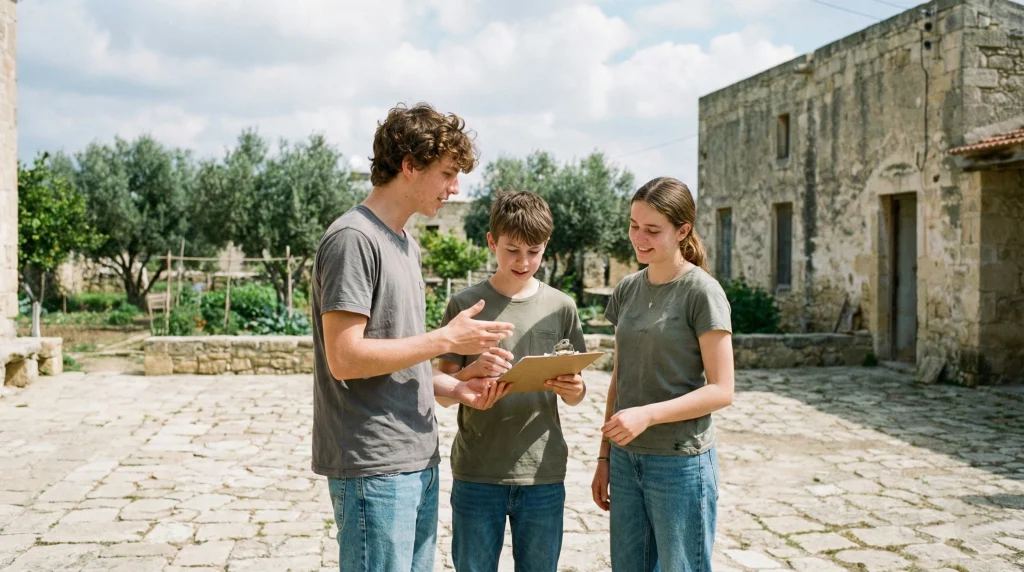
Our farm sanctuary in Achnas serves as a living laboratory for professional responsibility. Caring for animals and tending to orchards provides a “bottom-up” biological reset. When a young person who has felt “broken” or “useless” sees the tangible results of their labor—whether it is a harvested citrus crop or a healthy animal thriving under their care—it rebuilds the self-efficacy that addiction and trauma often destroy. They move from the identity of a “patient” to that of a “provider” and a “creator.” They learn that they are capable of showing up, day after day, regardless of their internal state. This is the biological foundation of employability skills in recovery.

Accredited Growth: Our Partnership with UCLan Cyprus
A common barrier to re-entry for young adults is the lack of current, accredited qualifications. Holina Village removes this barrier through a unique partnership with UCLan Cyprus (the University of Central Lancashire).
Integrated Academic Support
We are one of the few centers globally that offer rehab with education support at a university level. Our residents can engage in accredited modules, foundation programs, and short courses while in residence. This ensures that their time in Cyprus is not documented as a “medical gap” but as a period of intensive academic advancement. We assist with university applications, UCAS personal statements, and professional portfolio development, helping students reframe their recovery journey as a narrative of resilience, self-awareness, and leadership.
Digital Literacy: The 2026 Non-Negotiable
Many people ask how can digital skills improve employability for people in recovery? In 2026, digital literacy is no longer an “extra”—it is a requirement for professional and social participation. We provide our residents with access to high-tech “Discovery Suites” where they can master the digital tools of the modern workplace:
Collaborative Platforms: Mastering tools like Slack, Zoom, and Trello in a regulated, clinical environment.
Digital Identity Management: Learning how to build a professional brand while maintaining digital health and boundaries.
Information Literacy: Learning how to navigate the 2026 information landscape without succumbing to digital burnout or comparison-based anxiety.
By integrating these technical skills with the emotional resilience built in our Therapeutic Community, we ensure that every resident leaves Holina Village with a “dual-advantage”: they are clinically stable and professionally competitive. They don’t just return to the workforce; they return as more capable versions of themselves than before their crisis began.
The “Gap” Mastery: CV Writing and Interview Coaching
One of the most paralyzing fears for those re-entering the workforce is the “employment gap.” Whether it is a few months or several years, explaining a period of illness or treatment is a major source of stress.
Creating a CV That Highlights Resilience
Our career development team works with residents to create a CV highlighting employability skills gained during recovery. We teach our residents that recovery is not a weakness to be hidden; it is a “leadership academy.”
Translating TC Roles: We help residents translate their Therapeutic Community roles—such as “Peer Support Lead” or “Environmental Coordinator”—into professional language that demonstrates management, organizational skills, and social responsibility.
Highlighting Transferable Skills: The discipline, honesty, and grit required for recovery are exactly what modern employers look for. We help residents frame their “recovery skills” as “professional assets.”
Interview Coaching and Disclosure Rights
If you are looking for tips for discussing a gap in employment during an interview, the key is honesty paired with clinical boundary setting. At Holina Village, we provide mock interviews to help residents practice their delivery. We also educate our residents on their workplace rights for employees managing mental health conditions.
The Art of Disclosure: We teach residents how to discuss their journey in a way that emphasizes their growth and current stability, ensuring they feel empowered rather than exposed.
Legal Protections: We ensure our residents understand the Equality Act (in the UK) and similar international protections, so they know when and how to disclose their history (and when they are not legally required to do so).
By practicing these high-stakes conversations in our safe, Mediterranean environment, our residents build the self-confidence for job interviews that allows them to walk into a boardroom without the weight of shame. They learn that their history is not a liability—it is the source of their unique strength.
Breaking the Stigma: Overcoming Systemic Barriers to Employment
There are often systemic barriers to employment for those in recovery, including stigma and, in some cases, the fallout of behavioral issues. What are common barriers to employment for people in recovery and how to overcome them? The answer lies in building a “scaffold of support” around the job seeker.
Mentorship and Recruitment Support
We connect our residents with mentorship programs for individuals re-entering the workforce and specialized recruitment agencies that specialise in placing people in recovery. These forward-thinking organizations recognize that someone who has successfully navigated the rigors of a Therapeutic Community possesses a level of maturity, honesty, and self-awareness that is exceptionally rare in the general workforce.
The Power of Volunteering and Mentoring
For those not yet ready for full-time high-pressure employment, we explore how volunteering can improve job prospects. By starting with low-stakes, high-impact community work, our residents can begin to rebuild their professional confidence and CV while still having the clinical support of our aftercare network. This “phased re-entry” is often the most sustainable path to long-term career success.
Government Schemes and Recovery-Ready Employers
We keep our families informed about government services that support employability for individuals in recovery and companies that offer employment programs for those recovering from addiction. We believe that the global corporate culture of 2026 is becoming increasingly “recovery-ready,” and we act as the essential bridge between our residents and these opportunities. We advocate for our residents, proving that a person in recovery is often the most dedicated and reliable employee a company can hire.

A Day of Purpose: The Holina Cyprus Schedule
The Cyprus-Schedule-May-2025 is designed to mirror the rhythms of a productive, high-functioning adult life. It is the antithesis of the bored, passive “rehab” experience.
07:30 AM – Morning Sanctuary Engagement: Responsibility-based work in the farm sanctuary, caring for animals and gardens.
09:00 AM – Mindful Breakfast: Chef-prepared Mediterranean nutrition to fuel the brain for learning.
10:30 AM – Vocational/Academic Block: Focused study in the Discovery Suites or digital skills workshops under university supervision.
01:00 PM – Community Lunch: The centerpiece of the TC model, fostering social co-regulation and EQ development.
02:30 PM – Clinical Therapy: Addressing the emotional roots of the challenge through EMDR or cognitive processing.
04:30 PM – Somatic Reset: Physical movement in the sun—yoga, hiking, or aquatic therapy in our pool.
07:00 PM – Career Development Circle: Workshops on resume building, interview techniques, and professional goal setting.
09:00 PM – Restorative Sleep: Retiring to luxury en-suite rooms in the quiet hills of Achnas.
Transparent Investment: Costs and Logistics
We understand that choosing a residential program is a major life decision for a family. At Holina Village, we prioritize financial transparency and all-inclusive excellence.
Verified Pricing
In accordance with our official Holina-Village-Cyprus-eBrochure-2025, our inclusive pricing for the specialized Therapeutic Community and Education program is:
Inclusive Rate: €12,700 per month (Shared Room)
This rate is genuinely all-inclusive. It covers elite clinical therapy, 24/7 medical supervision, luxury farm sanctuary accommodation, Mediterranean nutrition, and all academic, vocational, and career development programs. There are no hidden fees for certifications or professional coaching.
How to Apply
The journey begins with a confidential video call with our MD, Ian Young, and our clinical coordinators. We handle all travel logistics, including VIP meet-and-greet at the airport and all documentation for medical extensions if required.
Conclusion: Reclaiming Your Story
The transition from adolescence to adulthood is too precious to spend in a state of academic or professional “pause.” Addiction and mental health struggles should not be a dead end; they should be the catalyst for a more profound, more resilient kind of growth.
By choosing Holina Village in Cyprus, you are choosing a model that refuses to compromise. You are choosing a path where recovery and achievement are integrated, where clinical excellence meets professional mastery, and where the goal is not just to “fix” a problem, but to empower a person to lead.
The “real you”—vibrant, capable, and full of professional potential—is waiting to be rediscovered in the hills of Achnas.
Start Your Journey to Potential Today
Are you ready to stop surviving and start thriving? Our friendly and highly experienced global admissions team is ready to listen to your story and help you plan your integrated recovery and career journey.
Explore the Sanctuary: View our farm facilities and luxury accommodations at www.holinacyprus.com.
Clinical Insights: Explore more on employability skills in recovery and student testimonials at www.holinacyprus.com/blog.
Speak Directly to Admissions: Call or WhatsApp us at +66 62 641 8369 or email info@holinacyprus.com for a confidential, no-obligation assessment.
Holina Village: Where Recovery Meets Potential.


