The weekend used to have a shape. Friday night, a small amount, a private arrangement with himself that this was the edge and no further. By the following spring the arrangement has quietly rewritten itself. There is a Tuesday now, and a Wednesday. The bank statements have gaps he cannot fully account for, and he has started to answer his sister’s calls with a brightness that costs him something to produce.
He is not, by any measure he would accept, an addict. That is part of the problem. Cocaine dependence rarely arrives as collapse. It arrives as a slow renegotiation of what counts as normal, until the person is defending a life they no longer recognise as the one they chose.
If you have arrived at this page for yourself, or for someone whose brightness has started to cost too much, this is written plainly, without alarm. Treatment for cocaine is possible, it is well-studied, and it works differently from what most people expect.
Reading time: 5 minutes
Key points in this article
- Cocaine dependence is diagnosed by how much management the use requires, not by the quantity used.
- Detox settles the body, but rehab is the behavioural and psychological work that actually prevents relapse.
- There is no approved medication that removes cocaine craving. The recovery work is carried by therapy, structure and community.
- Most people using cocaine heavily are also managing an untreated mental health condition, which is why dual diagnosis assessment matters from the first conversation.
Contents of this article
- What cocaine addiction treatment is actually trying to do
- How do you know it is time to ask for help
- Rehab and detox are not the same thing
- Is coming off cocaine dangerous, and what happens first
- Why a residential setting raises the odds for some people
- What a therapeutic community offers that a ward does not
- What a day in residential cocaine rehab actually looks like
- Which psychological therapies actually help
- Is there a medication for cocaine addiction
- Dual diagnosis and why trauma work matters
- Does group therapy work
- How families get folded in
- How long is long enough
- Treatment in Cyprus versus treatment close to home
- Why Holina Village
- Frequently asked questions
What cocaine addiction treatment is actually trying to do
It is not, first of all, an attempt to remove a substance from a body. The substance is largely gone within days. The difficulty that remains is everything the substance was doing for the person: regulating mood, muffling a memory, manufacturing a confidence that felt otherwise unreachable.
Structured cocaine addiction treatment works on that layer. Good programmes give three things at once. Practical tools for interrupting use and managing craving. A period of psychological stabilisation, so the nervous system stops living in emergency. And the slower work of learning what the cocaine was standing in for.
SAMHSA’s clinical protocol for stimulant use disorders is clear that no single format suits everyone, which is why an assessment matters more than a brochure. The evidence on what helps is summarised well in the federal treatment protocol for stimulant use disorders. At Holina we pair talking therapy with the structured programme that runs across the day, because the emotional work rarely lands if the surrounding hours are shapeless.
How do you know it is time to ask for help?
The most reliable sign is not the amount used. It is the amount of management the use now requires.
People notice it in the effort. The effort to hide a purchase, to invent a reason for the mood the next morning, to keep two versions of the week separate so that no one can lay them side by side. There is often a specific, private moment. A missed pickup from school. A number said out loud that turns out to be the monthly spend. A partner who has stopped asking, which is worse than asking.
Clinicians assess severity with structured tools rather than guesswork, measuring craving, sleep disruption, low mood and anhedonia in the days after use. The instrument behind much of that work, the cocaine selective severity assessment, exists precisely because people are poor judges of their own dependence. If the question “is it time” has occurred to you more than once, that recurrence is itself information.
Rehab and detox are not the same thing
They are often spoken of interchangeably, and the confusion causes real harm, because families sometimes fund a detox and expect it to have done the job of rehab.
Detox is the physiological settling that follows stopping. With cocaine it is less about medical danger than with alcohol or opioids, and more about a difficult emotional trough. Rehab is what comes after the body has quietened. It is the behavioural and psychological work, changing the thinking that leads back to use, processing the feelings that drove it, and building a way of living that does not depend on the drug to hold together.
A detox with no rehab behind it is a clean slate handed to an unchanged person. The slate does not stay clean. This is why cocaine rehab is measured in weeks of relational and psychological work, not in the days it takes to clear a bloodstream.
Is coming off cocaine dangerous, and what happens first?
Withdrawal from stimulants is rarely physically dramatic in the way that alcohol withdrawal can be. The risk is psychological, and it is real.
The first phase is often called the crash. Deep fatigue, flattened mood, a hunger and a heaviness that arrive together. Then a stretch of low mood, restlessness, poor sleep and strong craving, described in the archived NIDA work on the pattern of cocaine abstinence as a series of overlapping phases rather than a single event. The danger here is depressive. A person alone in a flat during that trough is at their most vulnerable, and the fastest way to end the feeling is the one they already know. This is the argument for supervision, not for fear.
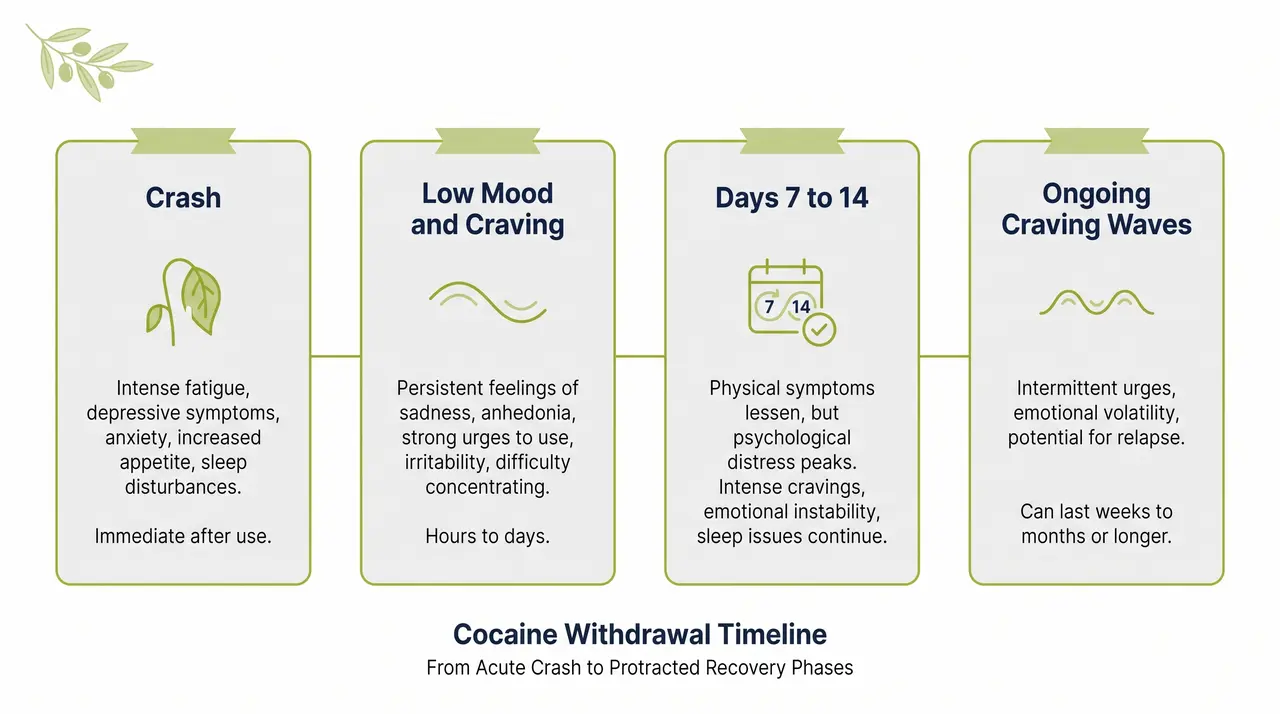
The early days after stopping are often the hardest, which is why supervision matters most here.
How long do cocaine withdrawal symptoms last?
The sharpest symptoms usually ease within seven to fourteen days. Sleep steadies, appetite returns, the flatness lifts. What lingers longer is the craving and the emotional volatility, which can surface in waves for several weeks. This is normal, and it is not a sign of failure. It is the reason the early weeks of a residential stay matter so much.
Why a residential setting raises the odds for some people
Outpatient therapy has genuine value, and for many people it is enough. It reaches its limit when the environment the person returns to each evening is itself the problem.
Residential cocaine treatment removes three things simultaneously. The daily triggers built into a familiar route home. The ready availability of the drug. And the social circle in which using is the shared language. Round-the-clock support means the depressive trough of the first fortnight is met by someone, at three in the morning if that is when it comes.
| Clinical indicator | Outpatient may suit | Residential often needed |
|---|---|---|
| Home environment | Stable, low-trigger, supportive | Using partner, easy supply, chaos |
| Previous attempts | First serious attempt | Several relapses after outpatient |
| Co-occurring difficulty | Mild, well-managed | Depression, trauma, anxiety alongside use |
| Daily structure | Work and routine intact | Days have lost their shape |
What a therapeutic community offers that a ward does not
A therapeutic community is built on an idea that sounds simple and takes months to feel true. The community itself is the treatment. The people around you, the shared tasks, the ordinary friction of living alongside others in early recovery, all of it is the material worked with, not a backdrop to the “real” therapy happening behind a closed door.
Members hold responsibilities, reflect back to one another in groups, and slowly build a version of themselves that does not need the drug to function. It suits people who bristle at being patients and respond to being met as capable adults.
How does this differ from a clinical, hospital-style admission?
A hospital ward tends to communicate that something is wrong with you and must be corrected. Our therapeutic community in Cyprus works from the opposite premise. It sits on a farm with orchards and animals and open sky, and it feels nothing like a clinical facility, because the message we want the nervous system to absorb is capability, not deficit.
What a day in residential cocaine rehab actually looks like
The structure is deliberate and unremarkable, which is the point. A person whose life has been governed by the next high has an internal world of chaos, and a predictable day is medicine for that.
Mornings hold individual therapy or group work. There is physical activity, real tasks on the land, and unstructured time that is not the same as empty time. The adventure and outdoor challenges are not recreation dressed up as therapy. They are where a person discovers, in the body, that they can tolerate discomfort and come out the other side, which is the exact capacity cocaine erodes. The rhythm of cocaine rehab, waking and eating and working and resting at set hours, is how a dysregulated nervous system learns to trust time again.
Which psychological therapies actually help
The evidence base for cocaine is more consistent than most people fear, and more modest than most people hope.
Cognitive behavioural therapy helps a person catch the thought that precedes the craving and interrupt the sequence. Motivational interviewing works with ambivalence rather than against it, which matters because almost no one wants to stop cleanly. Group and dynamic psychotherapy address the isolation and the older wounds. None of these is a switch. They are practised skills that take repetition inside a setting where relapse is caught and understood rather than punished.
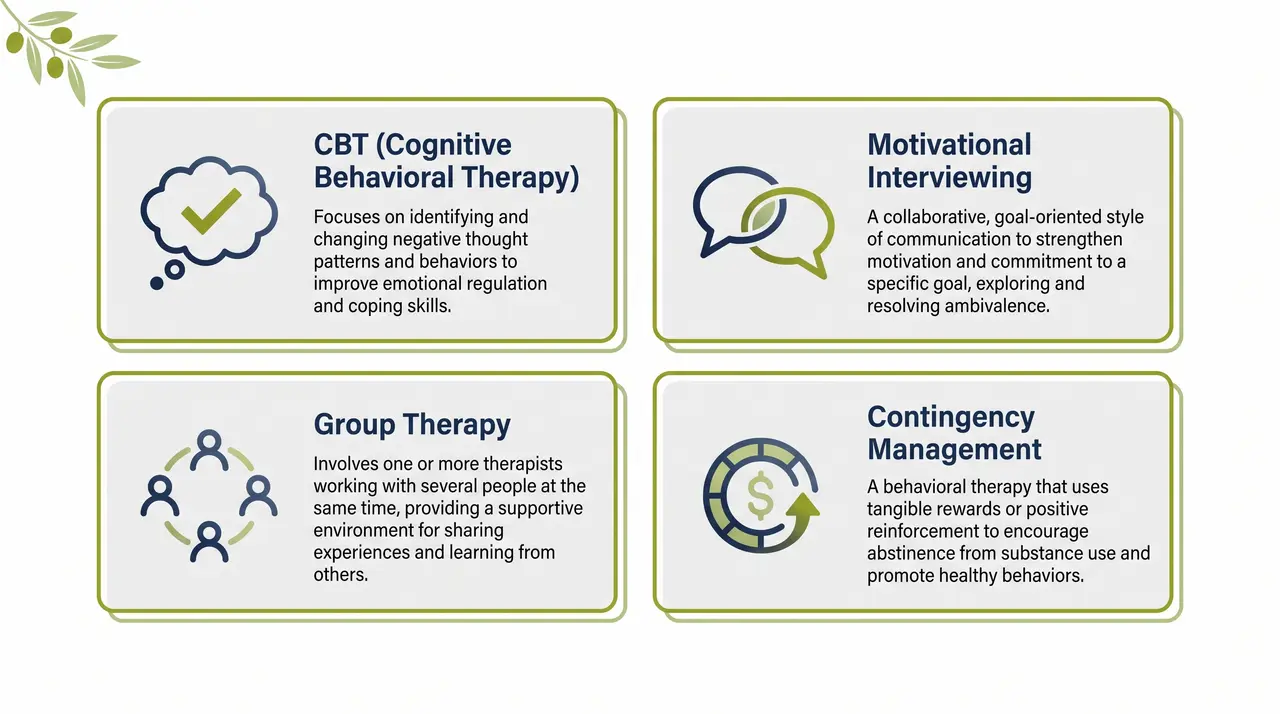
Individual therapy sits alongside group work, each doing a different part of the job.
What is contingency management, and why does it keep coming up?
Contingency management provides small, tangible rewards for verified periods of not using. It sounds mechanical, and the research is among the strongest for any stimulant intervention. It works best folded into a wider programme, not offered alone, because a reward system does not process a trauma or repair a relationship.
Is there a medication for cocaine addiction?
Here the honest answer is the useful one. There is no approved medication that reliably removes the craving for cocaine, and any clinician who suggests otherwise is overselling.
Medication still has a role. It is used to treat what sits alongside the addiction, a depression, an anxiety disorder, a sleep collapse that makes early recovery unbearable. Treat those well and the ground under the psychological work becomes firmer. But the recovery itself is carried by the emotional, behavioural and relational work. There is no shortcut around that, and it is fairer to say so at the beginning.
Dual diagnosis, the piece that decides whether it holds
Dual diagnosis means a substance use disorder sitting alongside a mental health condition. With cocaine this is closer to the rule than the exception.
For a great many people the cocaine was never the first problem. It was the solution they found to an untreated depression, an attention difficulty, an anxiety that made stillness intolerable. Treat the addiction alone and you have removed the coping mechanism while leaving the thing it was coping with fully intact. The odds of that holding are poor. This is why an assessment worth its name looks underneath the use before it plans anything, and why treatment addresses both at once.
Why trauma work matters so much with cocaine specifically
Cocaine’s particular pull, the surge of confidence and energy and blankness, maps unnervingly well onto what a traumatised nervous system is trying to achieve.
The relationship between past trauma and later substance use is cyclical, well-documented in the federal literature on the impact of trauma in behavioural health. The drug briefly does the regulating that the person cannot yet do for themselves. Trauma-informed care means working at a pace that does not re-flood the system, so that processing lowers the emotional pressure rather than raising it. When the underlying charge comes down, the reach for the drug loses much of its logic.
Does group therapy work, or is it “not for me”?
Almost everyone arrives certain that group work is not for them. The shame is real. The fear of being seen is real.
What the group does is specific. It breaks the isolation that dependence builds so carefully. It offers the strange relief of hearing your own hidden logic spoken aloud by someone else. And it creates a mutual accountability that no individual session can manufacture, because these are people who will notice on Thursday whether you meant what you said on Tuesday. Paired with individual therapy, the two formats do different jobs, and the combination reaches further than either alone.
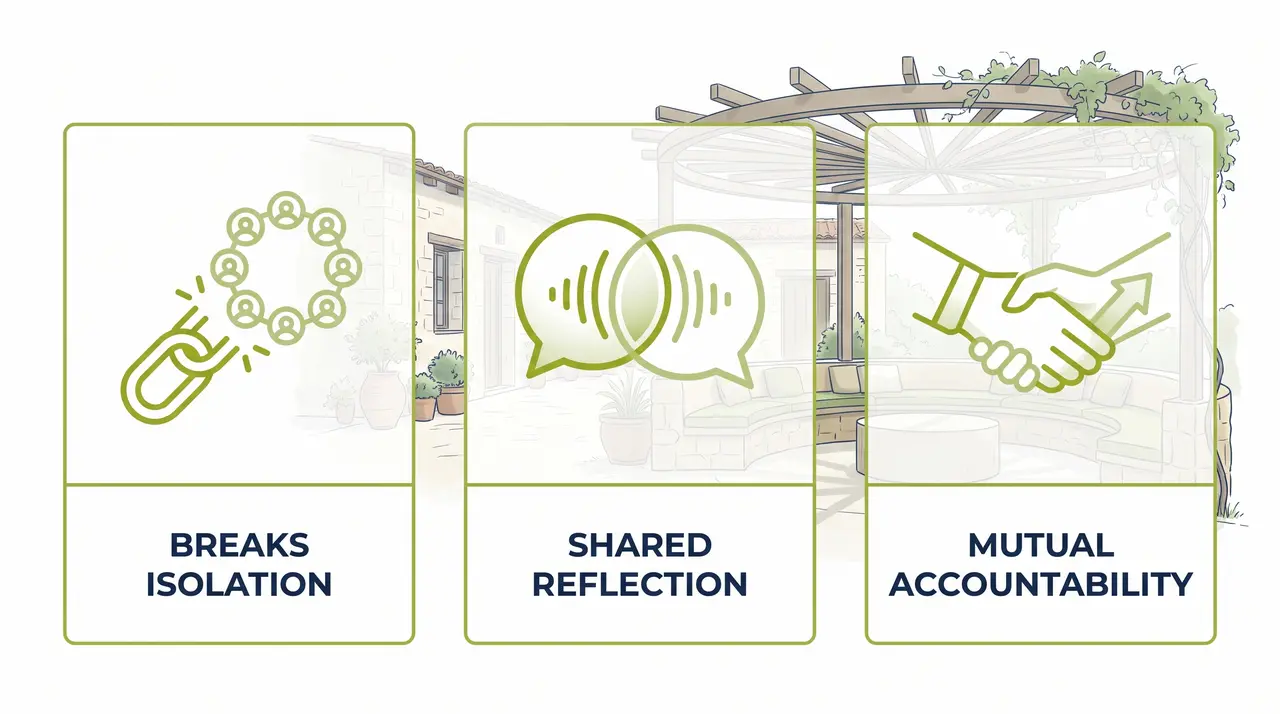
Group work provides an accountability that individual sessions cannot replicate on their own.
How families get folded in without making it worse
Families rarely cause an addiction, and they very often, with the best intentions, help it survive. The shift most families need is from the roles of accuser or rescuer into the role of steady support, and that shift has to be taught.
Effective cocaine addiction treatment brings partners and parents into the work, clarifying boundaries, learning what to say, preparing the environment the person will return to. Recovery that has to survive re-entry into an unchanged household is asking a great deal.
What families should stop doing to avoid funding the addiction
The clinical word is enabling. In practice it means the debts quietly cleared, the missed rent covered, the excuse made to the employer. Each act comes from love, and each one removes a consequence that might otherwise have prompted change. Setting clear financial and behavioural limits is not abandonment. It is the return of a reality the person needs in order to choose differently.
How long is long enough?
The honest answer is that duration should follow the person, not the calendar. That said, the patterns are real.
| Length of stay | What it realistically achieves |
|---|---|
| Four weeks | Stabilisation, the crash weathered safely, first insight into triggers |
| Eight weeks | New patterns beginning to form, deeper therapeutic and trauma work underway |
| Twelve weeks and beyond | Time for the new patterns to hold under their own weight before re-entry |
A four-week stay lets the nervous system recalibrate. Twelve weeks lets the new patterns hold. Severity of use, relapse history and the complexity of any dual diagnosis all move that dial. Whatever the length, an aftercare plan is what protects the gains once the contained space is behind the person.
Treatment in Cyprus versus treatment close to home
Staying near home keeps a person close to their support network. It also keeps them close to every trigger, every supplier’s number, every friend for whom using is ordinary.
Distance is not avoidance. For some people it is the single factor that makes early recovery possible, because geography does what willpower alone cannot. Treatment in Cyprus offers a genuine break in the pattern, a warm climate and quiet landscape that lower the body’s baseline alarm, and a discretion that matters a great deal to people whose professional lives cannot absorb the news. The point of the distance is not escape. It is the room to focus on nothing but recovery.
Why Holina Village
Holina Village is a therapeutic community in Achnas, Cyprus, and it was built around the pieces of this article that most centres treat as extras. Trauma-informed work and dual diagnosis are the centre of the model, not an add-on, because for the people we see the cocaine is almost never the whole story.
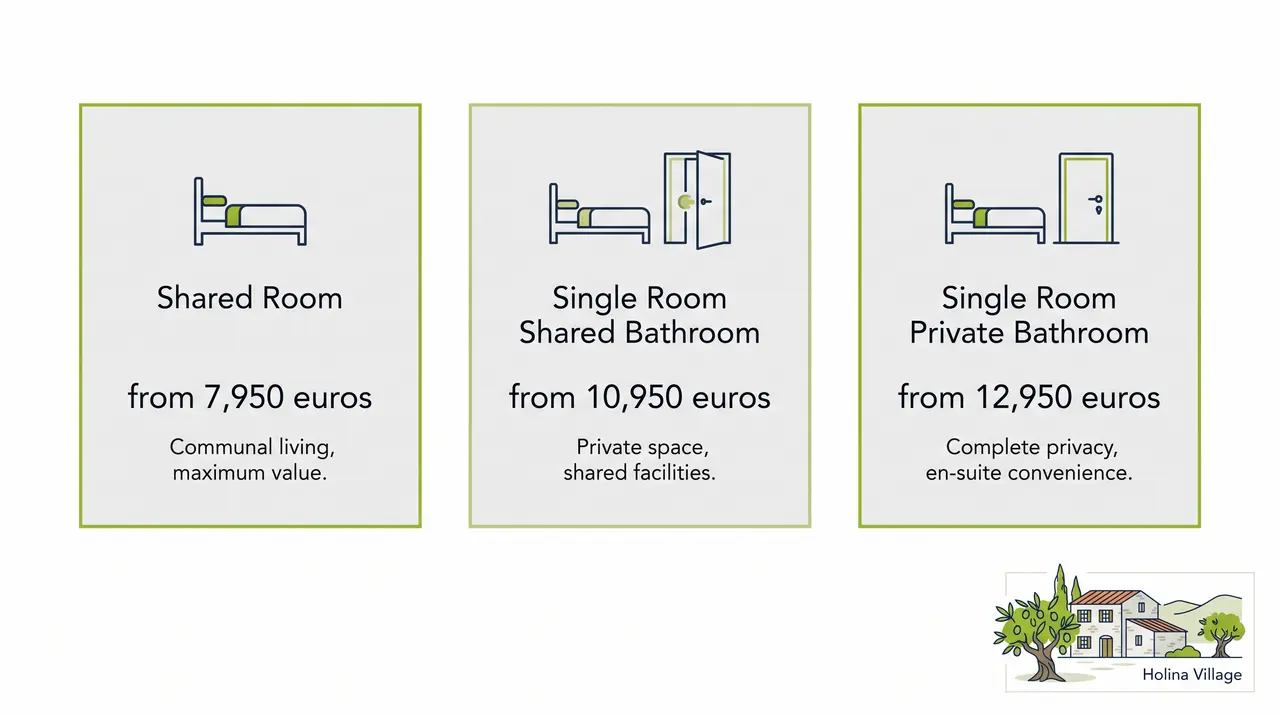
The setting is a working farm rather than a facility, the care is round-the-clock, and the community itself provides the relational substrate that individual therapy alone cannot. Our room tiers are all-inclusive, a shared room from €7,950 a month, a single room with shared bathroom from €10,950, and a single room with private bathroom from €12,950, covering accommodation, meals, all clinical and group sessions, farm and adventure activities and airport transfers, with only personal spending money outside that.
Holina Village sits on a working farm in Achnas, Cyprus.
| Room | From (per month) | Included |
|---|---|---|
| Shared room | €7,950 | All care, meals, activities, transfers |
| Single, shared bathroom | €10,950 | All care, meals, activities, transfers |
| Single, private bathroom | €12,950 | All care, meals, activities, transfers |
Most people who reach us are already in some form of crisis, which is why the first step is kept clear and calm. If any of this has landed, you can begin with a discreet enquiry and assessment to see, honestly, whether this is the right fit. Not a commitment. The willingness to be met.
How long does cocaine rehab usually take?
There is no single answer. A four-week stay allows the crash to be weathered safely and gives a first look at triggers. Eight to twelve weeks or longer gives new patterns time to settle before the person returns to daily life, which matters more for people with a longer history of use or a co-occurring mental health difficulty.
Is medication used to treat cocaine addiction?
No medication reliably removes cocaine craving. Medication is still useful for treating conditions that sit alongside the addiction, such as depression, anxiety or severe sleep disruption, which makes the psychological and behavioural work more effective once those are stabilised.
Can family members be involved in the treatment process?
Yes, and it is encouraged. Families are guided away from accusing or rescuing roles and toward steady, boundaried support, and are prepared for what the household will need to look like when the person returns.
Why does dual diagnosis matter so much with cocaine?
For many people, cocaine was the coping mechanism for an untreated depression, anxiety or attention difficulty. Treating the addiction without addressing what it was masking leaves the underlying problem intact, which lowers the odds that recovery holds.
Is it necessary to travel abroad for treatment?
Not always. Outpatient treatment close to home can work well when the home environment is stable. Distance becomes more valuable when the local environment itself is part of the problem, since it removes daily triggers and supply that staying local cannot.
Cocaine dependence rarely announces itself. It builds through small renegotiations until the effort of managing it becomes the real cost. What helps is not dramatic, it is structure, honest assessment, trauma-informed therapy, and enough time away from the environment that sustains the pattern. If any part of this has felt familiar, a conversation with our team is a quiet first step, with no pressure and no obligation attached to it.
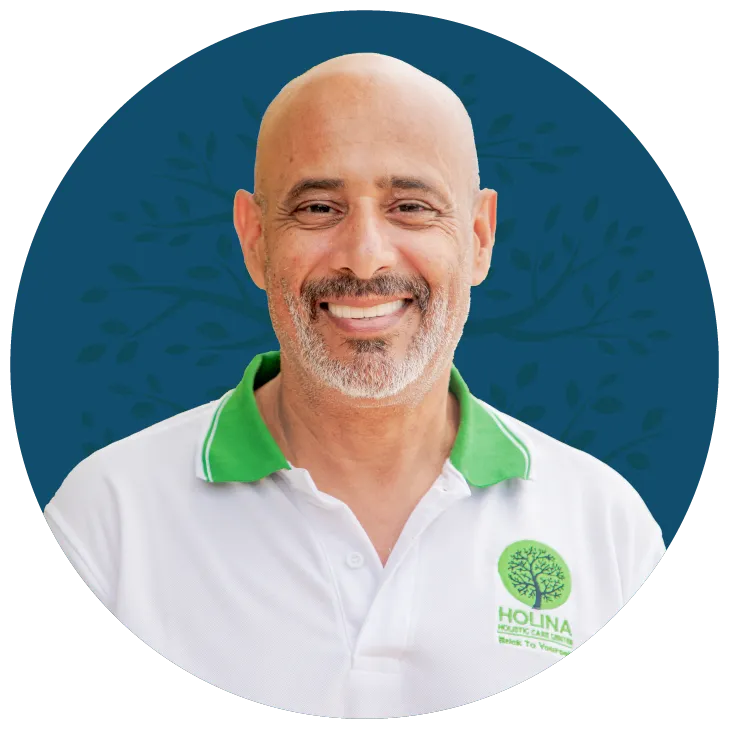
About the Author
Yossi Zubari, CEO & Founder
Director and Senior Therapist working with addiction for over 25 years, and in personal recovery for almost 30 years.