The bottle has been emptied earlier in the day than usual. The hands are steadier after the first drink than before it, and everyone in the house has quietly learned to read that pattern. A son, a partner, a daughter in her early twenties, drinking not to feel good any more but to feel ordinary. By the time a family starts searching for the words “alcohol detox,” they have usually already tried the reasonable things, and found them wanting. What follows is a plain account of what a supervised withdrawal really involves, why alcohol is the substance clinicians treat with the most caution, and what has to happen after the shaking stops if any of it is going to last.
Reading time: 5 minutes
Key points
- Alcohol withdrawal carries genuine medical risks that cannot be safely managed through willpower or a supervised home environment alone.
- Detox addresses physical dependence and immediate safety. It is not, by itself, treatment for alcohol use disorder.
- The continuum of care – moving from detox into sustained therapeutic work – is the factor that most directly lowers the risk of relapse.
- A residential setting removes the person from their triggers and provides around-the-clock clinical and relational support through the hardest days.
Contents
- What alcohol detox is, and what it is not
- Why alcohol withdrawal is treated more seriously than most other substances
- When symptoms start, and the timeline families should know
- The early signs, and the red flags that mean stop
- Delirium tremens – the complication nobody wants to meet by surprise
- The home-detox trap, and why willpower is the wrong tool here
- How to tell whether supervised detox is actually needed
- What residential alcohol detox actually means
- Detox and rehab are not the same word said twice
- The first day inside, hour by hour
- What supports a person through the detox days
- How long residential detox really takes
- What happens after detox to lower the risk of relapse
- Why a community setting suits younger people in particular
- Choosing a detox safely – what a family should ask
- What it costs, and what the price is really protecting against
- How to prepare for the days before arrival
What alcohol detox is, and what it is not
An alcohol detox is not treatment for alcohol dependence. That sentence surprises people, so it is worth sitting with.
Detox is the physiological first step. It is the medically supervised period in which the body, having adapted to a constant supply of alcohol, is brought back to a stable, sober, safe baseline. The clinical literature describes it as three connected tasks – evaluation, stabilisation, and linking the person into ongoing care. The standard reference on detoxification and substance abuse treatment sets it out this way. The first two tasks make the person physically safe. The third is the one families forget exists.
So detox clears the substance and steadies the system. It does not touch the reasons the drinking started, or the grooves it has worn into a life. Think of it as making the ground safe enough to stand on. The actual work of recovery happens afterwards, on that ground.
Why alcohol withdrawal is treated more seriously than most other substances
Most people assume opioids or stimulants are the dangerous substances to come off. With alcohol, the danger runs the other way, and the mechanism is worth understanding because it explains everything that follows.
Alcohol is a depressant. Over months and years of heavy drinking, the central nervous system compensates by becoming chronically over-excited, pushing hard against the sedation just to stay level. Remove the alcohol suddenly and there is nothing left to push against. The whole system rebounds into overdrive at once.
That rebound is not just unpleasant. It can produce seizures, dangerous spikes in heart rate and blood pressure, and in its severe form it carries a real risk of death. The clinical overview of alcohol withdrawal syndrome is blunt on this point. Someone can stop heroin alone in a cheap room and feel wretched for a week. Someone with a long, heavy alcohol history who stops abruptly and alone can die. This is why attempting an unsupervised home detox is not bravery. It is a medical gamble with the odds hidden.
When symptoms start, and the timeline families should know
Withdrawal usually begins within six to twelve hours of the last drink. The window of greatest danger is the first 24 to 72 hours, when symptoms peak and the most serious complications, if they are going to appear, tend to emerge.
Several things shape how hard that window hits. How long the person has been drinking. How much, and how regularly. Age, general health, and crucially, how many times they have withdrawn before. Each previous unmanaged withdrawal can make the next one worse, a phenomenon clinicians call kindling, where the body learns to overreact with each subsequent episode.
The acute physical storm largely settles within a week. What lingers is quieter and longer – disrupted sleep, low mood, a flat anxious restlessness that can run for weeks. Families who expect a person to be fully well after seven days are often quietly disappointed, and that disappointment is avoidable if everyone understands the shape of it in advance.
The early signs, and the red flags that mean stop
Early withdrawal tends to announce itself the same way each time. Tremor in the hands, especially in the morning. Sweating, a racing pulse, headache, an inability to sit still. Underneath the physical noise sits a sharp psychological layer – severe anxiety, sometimes panic, insomnia, vivid and unpleasant dreams.
These symptoms are manageable. In a properly held setting they are eased, monitored, and ridden out with the person rather than against them.
Some signs mean the situation has moved beyond anything a family setting can hold. A grand-mal seizure. Hallucinations, whether visual or auditory. A high fever. Deep confusion about time, place, or identity. If any of these appear, the right response is not to manage it at the kitchen table. It is emergency medical care, immediately.
Delirium tremens – the complication nobody wants to meet by surprise
Delirium tremens, the DTs, is the most severe form of alcohol withdrawal and a genuine medical emergency. It is not common, but it is dangerous enough that everyone considering an unsupervised detox should know it exists before deciding anything.
It typically emerges 48 to 96 hours after the last drink, often just as a family thinks the worst has passed. The clinical picture is severe – a complete loss of contact with reality, hallucinations that frequently involve insects or sensations on the skin, and a violently unstable autonomic nervous system swinging blood pressure and heart rate to dangerous extremes.
The reason supervised care matters is precisely this. Delirium tremens does not always knock politely. A person can look like they are coming through a mild withdrawal and then deteriorate within hours. In a monitored setting that turn is caught early. At home, it is often caught too late.
The home-detox trap, and why willpower is the wrong tool here
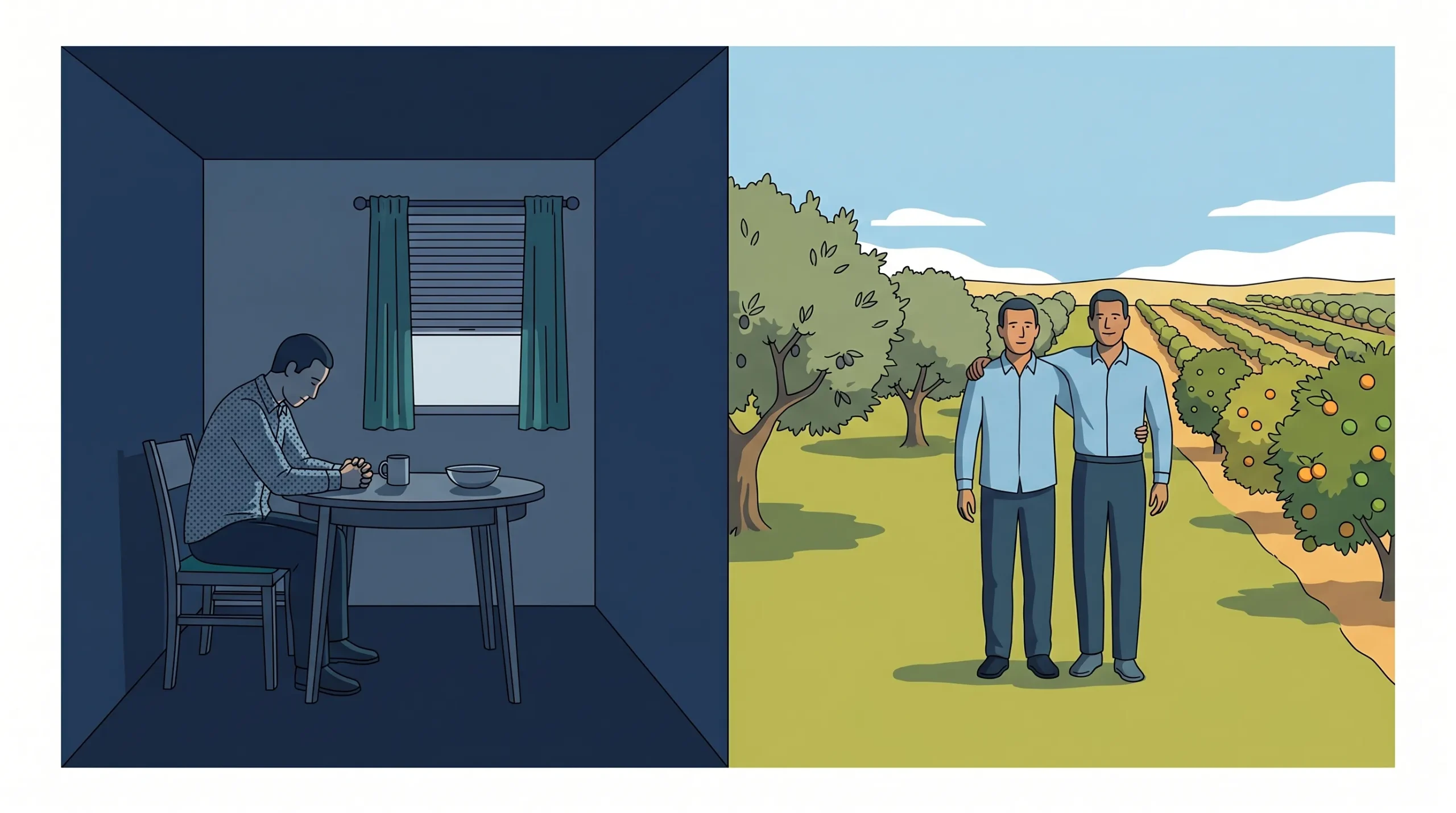
Families try home detox for understandable reasons. Privacy. Cost. A wish to keep the crisis inside the four walls. Often it takes the shape of a parent or partner trying to keep their loved one away from the nearest off-licence, willing them through it.
Two things go wrong. The first is medical, and we have already named it. The second is quieter and almost as decisive. Home is saturated with alcohol’s availability and with every trigger that fed the drinking in the first place. The cravings of the early days are physical and psychological at once, and there is no clinical support to hold a person through them.
And “wanting it badly enough” does not bridge the gap. Once the body has built a physical dependence, willpower is not just insufficient. At the peak of withdrawal it can be the thing that keeps a person fighting alone through something that needed a clinician.
How to tell whether supervised detox is actually needed
There is a real difference between a heavy or problematic drinker and someone who has developed genuine physical dependence. The body of the dependent drinker has rewired itself around a constant alcohol level. That is a physiological fact, not a character flaw, and it is the thing that decides whether withdrawal needs supervision.
The questions worth asking before anything else
A few honest questions tell a family most of what they need to know. Are there tremors in the morning, eased by a drink? Is there a history of blackouts? Has there been a previous attempt to stop that ended in a seizure, a hospital, or a frightening collapse? Does the drinking now feel less like choice and more like maintenance, simply keeping withdrawal at bay?
Clinicians build their recommendation about level of care from exactly these answers. A yes to the seizure or blackout questions in particular moves the conversation firmly toward supervised detox. The point of asking is not to frighten. It is to match the setting to the real risk.
What residential alcohol detox actually means

A residential alcohol detox is the physical withdrawal carried out inside a live-in, protected setting, away from the supply and the triggers, with support available around the clock.
It helps to say what it is not. It is not a cold psychiatric ward with a locked door and a clipboard. The setting matters more than people expect, because a body in withdrawal is exquisitely sensitive to its surroundings. At Holina, the detox happens within a working farm in Achnas, among orchards and animals and open sky, a place that feels nothing like a clinical facility. Natural surroundings, gentle movement, restorative food, and human company through the difficult nights are not decoration. They are part of how a frightened nervous system is coaxed back to baseline.
Detox and rehab are not the same word said twice
This confusion costs families more than any other, so let it be unambiguous. Alcohol detox deals only with physiology and immediate safety. Alcohol rehab is the actual work of changing the patterns of thought and behaviour that drive the drinking.
Going home the moment detox ends almost always ends in relapse, and quickly. The reason is simple. The triggers, the unprocessed grief, the relational wounds, the anxiety the alcohol was medicating – none of it has been touched. The body is clean and the life is unchanged.
| Question | Alcohol detox | Alcohol rehab |
|---|---|---|
| What it addresses | Physical dependence and safety | Patterns, triggers, underlying pain |
| Typical length | 5 to 10 days | Weeks to months |
| Main risk if skipped | Seizure, delirium tremens, medical emergency | Rapid relapse |
| What success looks like | Stable, sober, symptom-free | A changed relationship with self and substance |
The first day inside, hour by hour
The first day is the one families fear most, so it is worth describing plainly. Arrival is unhurried. Most people reach Holina in some state of crisis, so admissions are kept clear and calm on purpose. No interrogation, no performance of strength required. Someone meets you, settles you in, and explains what the next hours hold.
The tone of that first day is the whole point. Containing, not judging. The early hours of alcohol detox are emotionally raw, and the staff meet them as such.
The intake assessment, and what it is actually checking
Intake is thorough but gentle. Physiological observations to establish a baseline. A history of drinking patterns. A wider psycho-social picture, including any co-occurring difficulty such as anxiety, depression, or trauma, because alcohol so often sits on top of something else. All of it feeds one outcome – a plan shaped to this person, not a template.
What supports a person through the detox days
Much of the early work is restorative and physical. Rehydration. Targeted supplementation, including thiamine (vitamin B1), given to protect the brain from a specific and serious withdrawal-related injury. Light, digestible food for a gut that has taken a considerable beating.
Alongside the physical care sits the relational. Brief grounding conversations. Simple body-based relaxation. The plain reassurance of a person who is not frightened of what you are going through, available through the day and the night. The aim is unglamorous and entirely practical – as much physical and emotional comfort as possible, so the move into the real therapeutic work is a step and not a cliff.
Thinking about supervised detox for yourself or someone you love?
A confidential conversation with the Holina admissions team costs nothing and carries no obligation. We will answer your questions honestly and help you understand whether residential care is the right fit.
How long residential detox really takes
In practice, residential alcohol detox usually runs somewhere between five and ten days. That range is not a price list. It is a clinical judgement.
The decision to close the detox phase is not fixed in advance by the calendar. It is made on close clinical observation, when the risk symptoms have fully cleared and the person is genuinely stable. Sometimes that is day six. Sometimes day nine. To families – please do not push the pace here. The instinct to speed up the unpleasant part is natural and almost always wrong. The body sets the timetable, and rushing it only raises the risk.
What happens after detox to lower the risk of relapse
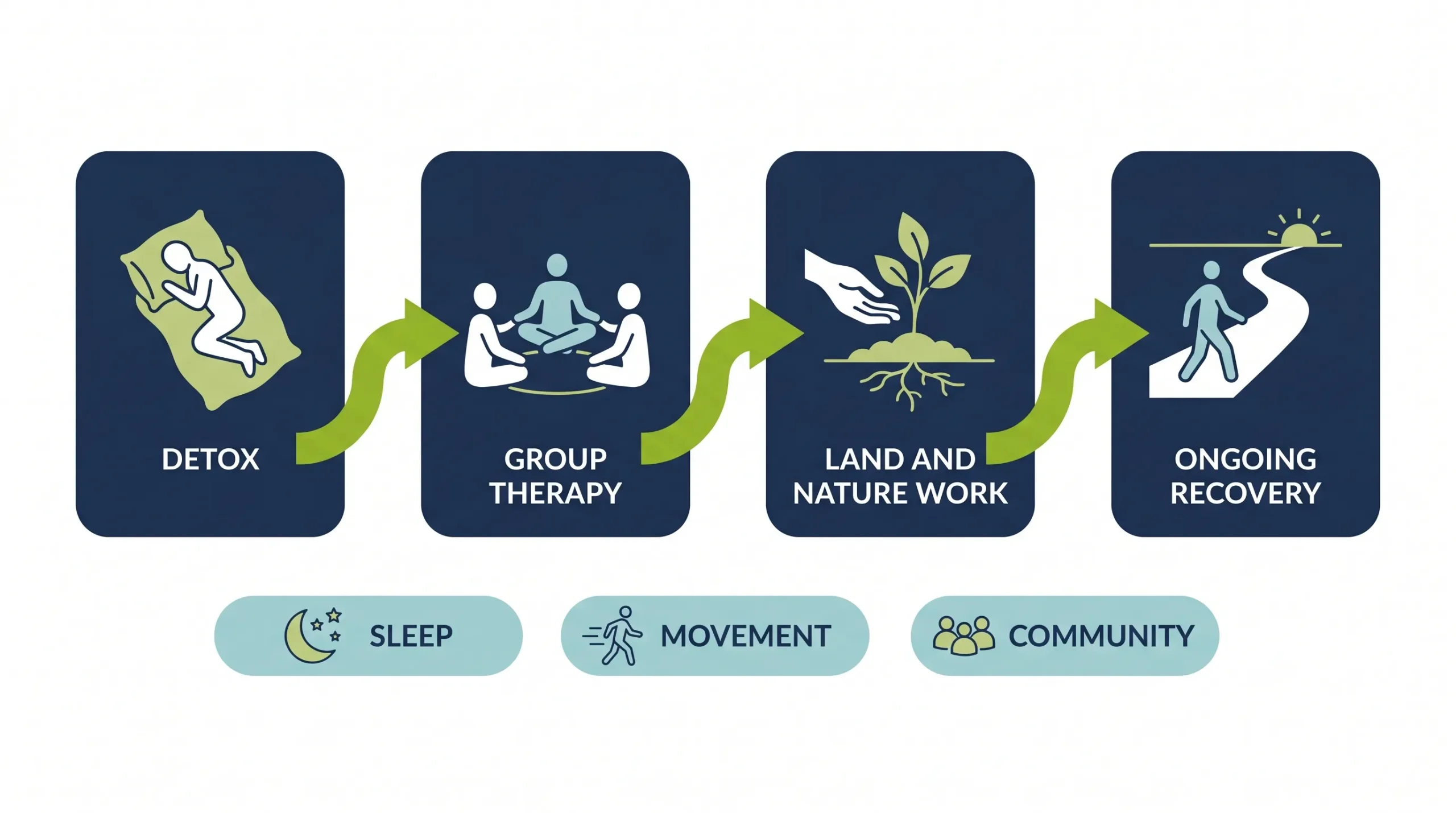
Recovery holds or fails on what clinicians call the continuum of care. Detox opens the door. Everything that lowers relapse risk lives on the other side of it.
A residential community gives a person something a week of detox cannot – time and a setting in which to build real skills for handling cravings and triggers, practised in daily life rather than discussed in theory. After the physical withdrawal, the soundest choice is to stay within a longer-term setting that exposes the person to deep group, individual, and physical work. The Holina therapeutic programme delivers this through community life, structured days, and work that does not feel like sitting in a clinic.
Building the continuum that actually holds
The shape of continuing care matters. Behaviour-focused group therapy. Creative and nature-based work – art, music, time with animals and land. The slow rebuilding of ordinary healthy habits, a real sleep rhythm, physical activity, an environment with no bottle in the next cupboard. Some of that physical work at Holina runs through the adventure and challenge activities, which do more for a recovering nervous system than another hour in a chair. A residential setting provides the live-in structure and relational support that holds a person through the weeks after physical stabilisation, when the psychological work is most delicate.
Why a community setting suits younger people in particular
For people roughly between seventeen and twenty-six, the standard institutional model often backfires. A young person handed a diagnosis and a locked ward tends to absorb the identity of “patient,” and that identity can become its own trap.
What younger people are actually looking for is belonging. To be understood, to be among a peer group walking the same hard road, not processed as a case. A warm therapeutic community offers that. Shared responsibility, work on the land, sport, art, the daily texture of a life being rebuilt with other people rather than in isolation. The relational substrate of a community gives a young person something to become – an identity built around connection and competence instead of around the absence of alcohol.
Loss is often tangled in all of this. A young adult drinking heavily is frequently carrying grief they have not yet named – the kind of unresolved grief in early adulthood that rarely announces itself clearly but shapes everything. Understanding how grief intersects with recovery in early adulthood is part of what makes the therapeutic community approach more effective than a clinical model alone for this age group.
Choosing a detox safely – what a family should ask
If you are the one making this decision for someone you love, you are likely doing it on very little sleep. So here is the practical filter.
A safe centre combines three things under one roof – full medical supervision, a protected setting away from triggers, and a real continuing programme rather than a discharge to nowhere. The most reliable centres do not treat detox as a standalone service to be sold and forgotten. The NIAAA guidance on evidence-based treatment options names the markers worth looking for – proper credentials, a comprehensive assessment, a customised plan, evidence-based methods, and continuing support.
The questions to ask before you commit
Ask about the training and background of the medical and therapeutic team. Ask how medical emergencies are handled, and how quickly. Ask how the family is kept involved during treatment, because family involvement reliably improves outcomes. Ask which methods are used to prevent relapse after detox ends. You can read about the people who make up the Holina team directly on the site before making any decision.
What it costs, and what the price is really protecting against
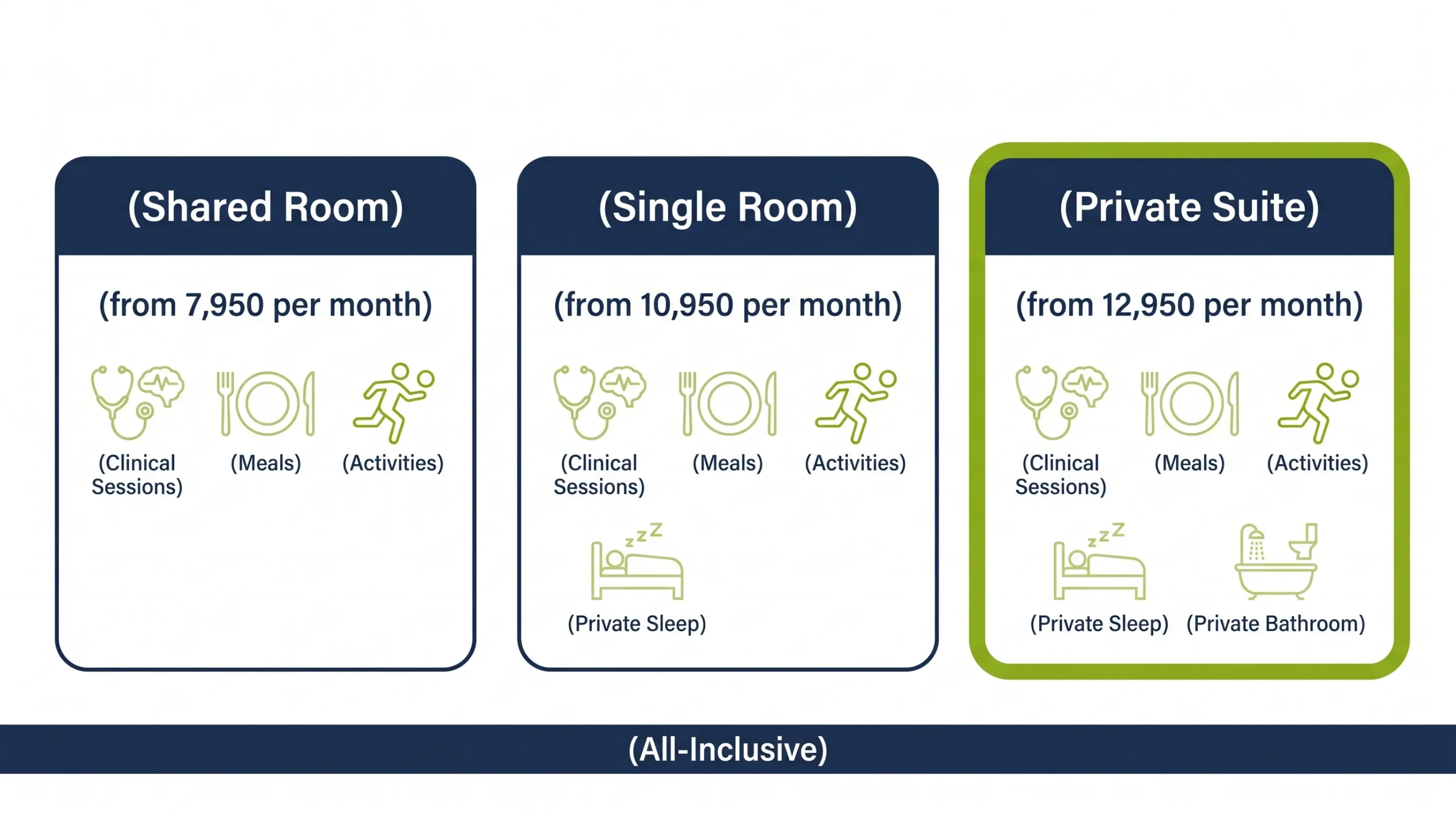
Cost deserves a straight answer. A monitored residential detox is not cheap, and the figure varies with the length of stay, the expertise of the team, the therapies folded into the programme, and the standard of accommodation.
At Holina, accommodation tiers are all-inclusive, covering clinical and group sessions, meals, the farm and adventure activities, and airport transfers, with personal spending money the only extra.
| Room type | From (per month) | Included |
|---|---|---|
| Shared room | €7,950 | Full clinical, group, meals, activities, transfers |
| Single room, shared bathroom | €10,950 | As above, with private sleeping space |
| Single room, private bathroom | €12,950 | As above, with full private facilities |
Set the figure against what the alternative costs. Repeated unmanaged withdrawals, recurring emergency admissions, a family slowly dismantled, a young person’s working future quietly closing. A safe detox joined to real continuing care is, in the cold arithmetic of it, the more sustainable road.
How to prepare for the days before arrival
Practical preparation steadies everyone. Pack comfortable clothes for movement and walking, and a few personal items that carry good emotional weight – a photograph, a familiar book. Leave behind anything not cleared in advance, including unapproved medication, sharp objects, and alcohol-based products, all of which the centre will guide you on specifically.
For families travelling from Israel or elsewhere in the region, Cyprus sits a forty-minute flight away – close enough that it never feels like exile, far enough that the old triggers and drinking environments are genuinely out of reach for a while. Check the practical entry and medication requirements in advance through the official Cyprus international travel information, particularly the rules on bringing prescribed medication.
The harder preparation is mental, and it is best done honestly. The first days will be difficult. There is no version of this where they are not. What changes the experience entirely is that the person does not face those days alone.
Frequently asked questions
Is it safe for someone to stop drinking at home without supervision?
For a person who has developed physical dependence – shown by morning tremors, a history of blackouts, or previous withdrawal complications – stopping without supervision carries real medical risk, including the possibility of seizure or delirium tremens. The decision about whether home detox is safe should be made with a clinician who knows the person’s full history, not on the basis of general reassurance.
How long does the physical withdrawal from alcohol actually last?
The acute, medically dangerous phase typically runs from 24 to 72 hours after the last drink. Most of the physical storm settles within five to seven days. What often follows is a quieter protracted phase – disrupted sleep, low mood, flat anxiety – that can persist for several weeks. This is normal, expected, and manageable within the right setting.
What is the difference between detox and rehabilitation?
Detox addresses the physical dependence and makes the person safe. It does not treat the psychological patterns, underlying pain, or relational dynamics that drove the drinking. Rehabilitation – the ongoing therapeutic work – is what actually changes a person’s relationship with alcohol. Most clinicians consider detox a necessary starting point, not the whole answer.
Can a family stay involved during residential treatment?
Yes, and it matters. Family involvement is consistently associated with better outcomes in alcohol treatment. The nature and timing of that involvement is shaped by the stage of treatment, and Holina’s team can explain in detail what communication and participation looks like during each phase. An open initial conversation is the best place to start.
Does the programme at Holina include treatment for anxiety and depression alongside the alcohol work?
Yes. Anxiety, depression, and trauma very often co-occur with alcohol use disorder, and treating them separately or sequentially rarely works well. The Holina programme is designed to address both the substance difficulty and the underlying emotional landscape together, through individual therapy, group work, and the structured therapeutic community model.
What medication is typically used during a supervised alcohol detox?
The specific medications used depend entirely on the individual’s history, symptom severity, and clinical assessment. Broadly, supervised detox often involves medication to reduce the risk of seizure, ease anxiety and sleep disruption, and supplement nutritional deficiencies. The prescribing decisions are made by the clinical team on a case-by-case basis and reviewed daily throughout the detox period.
The physical detox is the key that opens the door, no more and no less. The change that lasts – the slow rebuilding of a life that no longer needs alcohol to function – happens afterwards, inside a warm and held community. That is the part Holina Village exists to do.
You do not have to wait for the next collapse, the next hospital admission, the next frightening night, to reach out. The willingness to ask a question today, while there is still room to act calmly, is the whole of what the first step asks.
Ready to talk through the options?
Reach out to the Holina team for an honest, confidential conversation. No pressure, no obligation – just clear information to help you make the right decision for your family.

About the Author
Yossi Zubari – CEO & Founder
Director and Senior Therapist working with addiction for over 25 years, and in personal recovery for almost 30 years.