
CBT and DBT are two of the most widely used talking therapies in addiction treatment, and families often ask which one is better. The honest answer is that they do different jobs. CBT helps people change the thoughts and habits that keep substance use going, while DBT builds the skills to cope with intense emotions without reaching for a drink or a drug.
How CBT and DBT Fit Into Drugs Rehab
In a well-structured drugs rehab programme, the choice is rarely one or the other. Most residential teams start with an assessment and then decide how much weight each approach should carry, based on what is driving the person’s substance use.
What CBT Does
Cognitive Behavioural Therapy (CBT) works on the link between thoughts, feelings and behaviour. In addiction treatment, it helps a person spot the situations and beliefs that lead to use, such as “I can’t relax without a drink” or “One line won’t matter tonight”.
Sessions are practical and structured. Residents learn to:
- Identify personal triggers and high-risk situations
- Challenge thinking patterns that justify using
- Plan alternative responses to cravings
- Build a written relapse prevention plan
CBT tends to suit people who are fairly stable emotionally and want concrete tools. You can read more about how it is used on the CBT Therapy page.
What DBT Does
Dialectical Behaviour Therapy (DBT) was developed by psychologist Marsha Linehan for people who experience emotions very intensely. It combines acceptance with change: accepting a painful feeling as real while still choosing a healthier response to it.
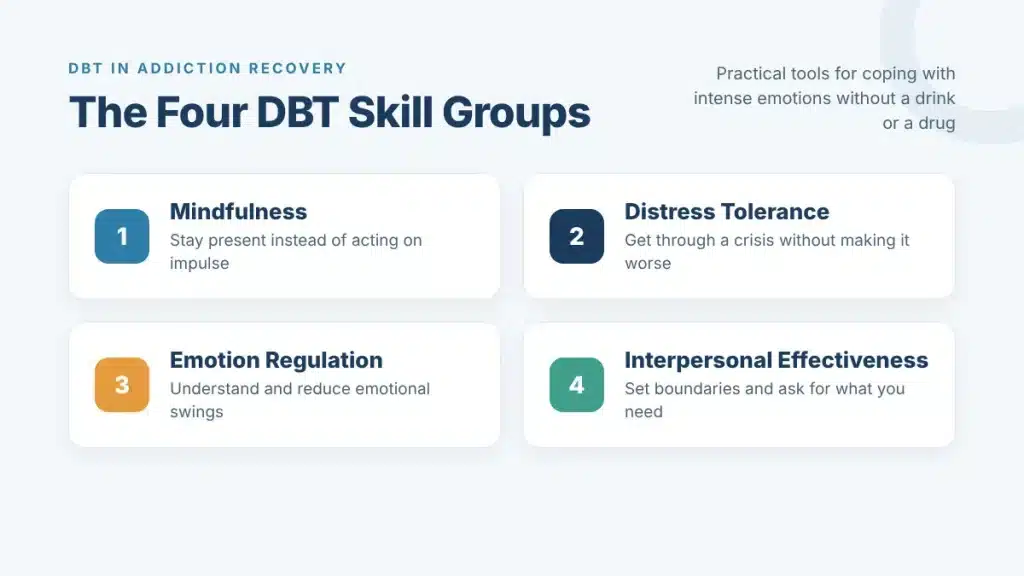
DBT teaches four groups of skills:
- Mindfulness, to stay present instead of acting on impulse
- Distress tolerance, to get through a crisis without making it worse
- Emotion regulation, to understand and reduce emotional swings
- Interpersonal effectiveness, to set boundaries and ask for what you need
For many people, substance use began as a way to escape overwhelming feelings. DBT gives them another way to survive those moments.
CBT and DBT Side by Side
| CBT | DBT | |
|---|---|---|
| Main focus | Thoughts and behaviour | Emotions and coping skills |
| Often suits | Clear triggers, habitual use | Intense emotions, impulsivity, self-harm |
| Typical format | Individual sessions, homework | Skills groups plus individual work |
| Key outcome | A relapse prevention plan | Practical skills for emotional crises |
Why Many Programmes Combine Them
Addiction rarely has a single cause. Someone may drink because of a habit that formed at work and also because of anxiety or past trauma. In that case, CBT can address the habit while DBT builds the emotional skills underneath it.
Combining the two also helps after discharge. CBT gives a clear plan for predictable triggers, and DBT helps with the unexpected moments that no plan can cover.
Where This Leaves You
The right therapy depends on the person, not on which method sounds more modern. A good programme should explain why it recommends CBT, DBT or both for your situation, and how progress will be reviewed.
At Holina Village in Cyprus, therapists combine CBT, DBT and other evidence-based approaches within a therapeutic community, adjusting the balance for each resident. To talk through what might suit you or someone you love, call +357 95 667869 or contact our admissions team for a confidential conversation.
This article is for information only and is not a substitute for a professional clinical assessment.
FAQ
Is DBT only for borderline personality disorder?
No. DBT was first developed for borderline personality disorder, but its skills are now widely used for addiction, self-harm, eating disorders and other conditions involving intense emotions.
How long does CBT take to help with addiction?
Many people notice changes within a few weeks of regular sessions, but lasting change usually needs practice over several months, including after residential treatment ends.
Can CBT and DBT be used at the same time?
Yes. Many residential programmes use CBT for triggers and relapse planning and DBT for emotional regulation, as part of one treatment plan.


