
Cocaine use disorder is a recognised, diagnosable condition — not a moral failing, and not something willpower resolves on its own. The DSM-5 classifies it as a stimulant use disorder, defined by loss of control, tolerance, and continued use despite clear harm — the same clinical framework used for any other addiction. Unlike drugs that build tolerance slowly, cocaine’s intense but short-lived high drives a use pattern that can escalate fast. It also carries essentially no accepted outpatient medical use — the FDA and DEA list it as a Schedule II substance, reserved for rare, tightly controlled clinical settings, not everyday prescribing. According to the European Union Drugs Agency, cocaine is now the second most common reason for first-time drug treatment entry in Europe, and first-time treatment entries for it rose 31% between 2018 and 2023. Here’s what real treatment actually involves.
1 – Why cocaine use escalates faster than people expect
Cocaine’s high peaks and drops within minutes, which pushes many users toward repeated same-session use to chase the same effect. Over time, this rewires the brain’s reward response faster than most other substances. It’s also why the gap between first use and first treatment averages 13 years — by the time most people seek help, the pattern is deeply established.
2 – Two different roads into cocaine use
Not everyone arrives at cocaine use the same way. Recreational use often starts socially, tied to nightlife or peer environments — Europe’s cocaine market has grown alongside rising purity and availability. Trauma-driven use is different: research on PTSD and stimulant misuse points to elevated stress hormones (CRH) that can make a stimulant’s euphoric lift feel like relief from hyperarousal, panic, or emotional numbness — a form of self-medication rather than a search for a high. Understanding which road someone is on changes what treatment actually needs to address.
3 – Why the Middle East context matters too
This isn’t only a European pattern. The WHO Eastern Mediterranean Region and the UNODC have both flagged how conflict, displacement, and prolonged exposure to crisis raise the risk of substance use disorders in affected populations. For someone who has lived through war, loss, or ongoing instability, cocaine’s numbing, energising effect can function as a way to keep functioning day to day — until it stops working and starts costing more than it gives.
4 – What residential treatment actually looks like
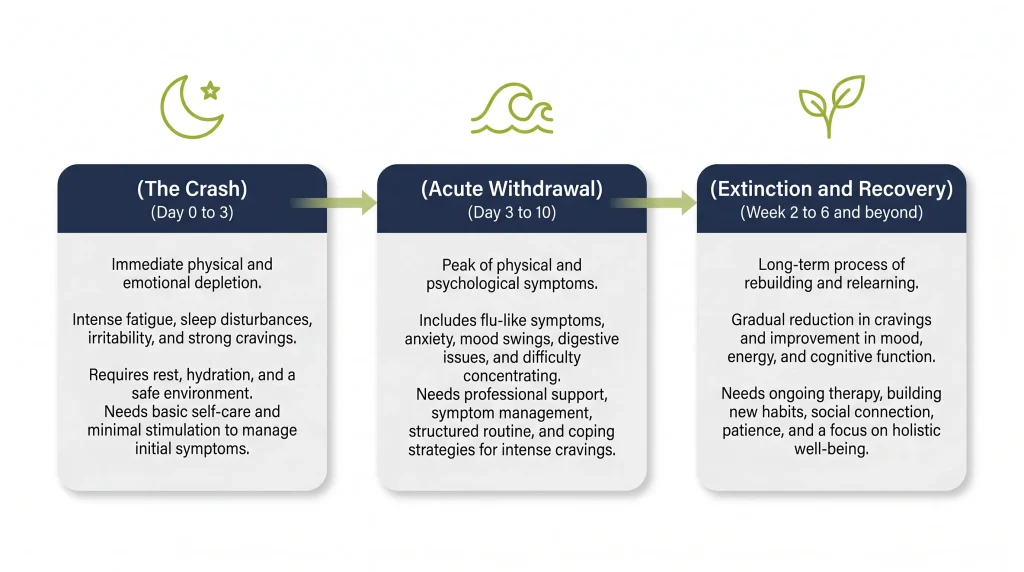
Cocaine withdrawal isn’t typically life-threatening the way alcohol withdrawal can be, but it’s still real: exhaustion, low mood, intense cravings, and sometimes a depressive “crash” in the first days. Treatment focuses less on medical detox and more on structured stabilisation, individual and group therapy, and relapse-prevention work — identifying triggers, cravings, and the situations most likely to pull someone back.
5 – Treating the trauma underneath, not just the drug
If the self-medication pattern applies, treating the cocaine use alone rarely holds. This is where dedicated Trauma Treatment — alongside CBT and trauma-informed care — becomes central rather than an add-on, addressing what the substance use was actually managing in the first place.
Where this leaves you?
Cocaine addiction rarely has one simple cause, and it shouldn’t be treated as if it does. At Holina, that’s the distinction we work from: separating recreational patterns from trauma-driven ones, and treating both the addiction and what’s underneath it, in a residential setting in Cyprus built for exactly this.
If this sounds like your situation, or someone you love, reach out for a confidential conversation:
+357 95 668677 · admissions@holinacyprus.com
This article is informational and isn’t a substitute for a professional clinical assessment.
FAQ
Is cocaine withdrawal dangerous?
It’s rarely medically dangerous the way alcohol or benzodiazepine withdrawal can be, but the psychological symptoms — cravings, crash, low mood — are real and hard to manage alone. Bottom line: it needs structured support, even without a medical emergency risk.
Can cocaine addiction and PTSD be treated together?
Yes, and for many people it needs to be. Treating the addiction without addressing the underlying trauma tends to leave the original driver untouched. Bottom line: ask whether a programme treats both, not just one.
How long does cocaine rehab typically take?
Most credible residential programmes recommend a minimum of four weeks, with 12 weeks advised when trauma or another condition is involved. Bottom line: the pattern took years to build — it won’t unwind in a few days.


