Rethinking the “Gap Year”
For generations, the “Gap Year” has been a rite of passage for school leavers. It was the “Golden Year” between A-Levels and University—a time for 18-year-olds to backpack through Southeast Asia, South America, or Australia to “find themselves.” The narrative was simple: travel builds character.
But for a growing number of young adults today, the traditional backpacking Gap Year is fraught with danger.
We are seeing a generation emerging from school already burned out, anxious, and struggling with substance use. Sending a fragile 18-year-old who is barely holding it together to backpack alone in Thailand or Peru is often a recipe for disaster. Without structure, the “freedom” becomes chaos. The “finding themselves” becomes “losing themselves” in party hostels, cheap alcohol, and dangerous situations.
Enter the Therapeutic Gap Year.
This is a new model of development that is rapidly gaining traction among savvy families. It combines the adventure and travel of a traditional gap year with the safety, structure, and clinical support of a residential program. It is designed for the student who isn’t quite ready for the independence of university, or the young adult who needs a “hard reset” before launching into their career.
It is not a hospital stay. It is a Life School.
In this comprehensive guide, we will explore why more families are choosing structured rehab programs over open-ended backpacking, what a “Therapeutic Gap Year” actually looks like, and how it can be the insurance policy that saves your child’s future.
Who Needs a “Therapeutic” Gap Year?
This isn’t for everyone. If your child is robust, confident, emotionally regulated, and healthy, let them go backpacking. They will be fine.
But this program is specifically designed for three specific profiles:
1. The “Burned Out” High Achiever
The Profile: They just finished their A-Levels or IB exams. They got the grades, but they are emotionally shattered. They are anxious, sleep-deprived, and dreading the start of university.
The Risk: If they go straight to university in September, they will crash. The “Freshers’ Flu” will turn into a mental health crisis, and they will likely drop out by Christmas.
The Solution: A 3-month therapeutic stay to restore their nervous system before the academic pressure restarts.
2. The “Failure to Launch”
The Profile: They have finished school but have no direction. They spend days gaming, sleeping until 2 PM, or smoking cannabis in their bedroom. They lack the basic “adulting” skills (cooking, cleaning, budgeting) to survive alone in a dorm.
The Risk: If you send them backpacking, they will likely run out of money in two weeks, get scammed, or simply check into a hostel and game there.
The Solution: A program that teaches Life Skills alongside therapy.
3. The “At-Risk” Experimenter
The Profile: They have started dabbling in “party drugs” (Ketamine, Cocaine) or heavy drinking during their final year of school.
The Risk: A gap year in a party destination (like Bali or Bangkok) will accelerate this experimentation into full-blown addiction.
The Solution: A sober environment where they can still have adventure (climbing, swimming, travel) but without the chemical crutch.

What Actually Happens? (It’s Not Just Therapy)
The biggest misconception is that a Rehab Gap Year means sitting in a circle crying for 12 months.
A modern Therapeutic Gap Year is an Active Curriculum. It is designed to be engaging.
Phase 1: The Reset (Months 1–2)
The Goal: Physical restoration.
The Routine: Daily exercise, nutritional repair (gut health), and fixing the circadian rhythm (no more sleeping until noon).
The Therapy: Unpacking the baggage from school/home. Diagnosing any neurodivergence (often undiagnosed ADHD is the root of the burnout).
Phase 2: The Build (Months 2–4)
The Goal: Skill Acquisition.
The Routine: “Action Therapy.” Learning to care for animals (Farm Therapy), learning to cook for a group, learning to manage a schedule.
The Therapy: Building resilience. “I can do hard things.”
Phase 3: The Launch (Months 4–6)
The Goal: Future Planning.
The Routine: CV writing, university application prep, leadership roles within the center (mentoring new arrivals).
The Outcome: Leaving with a concrete plan for the next 5 years, not just a vague idea.
Gap Year vs. Backpacking (A Comparison)
Why spend the money on a structured program when they could just travel on a shoestring?
Because Freedom requires Regulation. If you give freedom to a dysregulated person, you get chaos.
Feature | Backpacking (Solo Travel) | Therapeutic Gap Year |
Safety | Low (Risk of theft, assault, overdose) | High (24/7 Security & Medical Team) |
Structure | None (Freedom often leads to apathy) | High (Daily schedule 07:00–22:00) |
Peer Group | Random (Party hostels, transients) | Curated (Sober, motivated peers) |
Outcome | “Stories” (and often debt) | Skills (Emotional Intelligence, Resilience) |
CV Value | “Travelled” (Generic) | “Completed Leadership Program” (Impressive) |
The “Life Skills” Curriculum (Adulting 101)
University requires more than just intelligence; it requires Executive Function.
Many bright students fail university not because the work is too hard, but because they can’t manage their lives. A Therapeutic Gap Year teaches the “Hidden Curriculum” of adulthood.
Financial Literacy: How to budget a weekly allowance. (Residents often have to budget for group excursions).
Nutritional Independence: How to shop for and cook a healthy meal (not just ordering UberEats every night).
Conflict Resolution: Living in a community teaches you how to handle disagreements without exploding or shutting down.
Routine Management: How to wake up without a parent nagging you.

The “Travel” Element (Why Cyprus?)
A Therapeutic Gap Year still needs to feel like an adventure. If it feels like a hospital, they won’t go.
This is why destinations like Cyprus are exploding in popularity.
The “Holiday” Vibe: Being on a Mediterranean island, with beaches, mountains, and sun, satisfies the young adult’s desire to “go somewhere cool.” It doesn’t feel like a medical punishment; it feels like a wellness retreat.
The Climate: 300 days of sunshine allows for Outdoor Adventure Therapy (Hiking, Swimming, Farm Work) year-round. This is vital for mental health (Vitamin D).
The Culture: Exposure to a new culture (food, language, history) provides the “broadening of horizons” that a gap year is famous for.
Financials & ROI
The Cost
Backpacking: £1,000 – £2,000 per month (often subsidized by parents).
Therapeutic Program: £8,000 – £10,000 per month.
The ROI (Return on Investment)
While the upfront cost is higher, the long-term cost of a failed gap year is massive.
If a student develops an addiction while backpacking -> £50k+ in future rehab costs.
If a student drops out of university due to unaddressed burnout -> £60k in wasted tuition/rent.
The Verdict: Investing in a 3-month Therapeutic Gap Year ensures that when they do go to university, they stay there. It is an insurance policy on their future.
How to Pitch It to Your Child (The Script)
Do not say: “You’re a mess. You need to go to rehab.” (This triggers shame/defensiveness).
Do say:
“I know you’re burned out after exams. I know you’re not ready for Uni yet. How about we look at a 3-month program in Cyprus? It’s on a farm, you’ll meet other young people, do adventure sports, and get fit. It’s a chance to build yourself up before you start real life. It’s like a training camp for adulthood.”
Frame it as Performance Enhancement, not Medical Treatment.
Conclusion: The Ultimate Preparation
A Gap Year should be a bridge between childhood and adulthood.
For some, that bridge is built of rucksacks and hostels.
But for those who are fragile, anxious, or struggling, that bridge needs guardrails.
A Therapeutic Gap Year provides those guardrails. It allows the young adult to experience the world, but in a way that builds them up rather than breaking them down. They return home not just with a tan, but with a toolkit for life.
The Perfect Gap Year Destination: Holina Village Cyprus
Holina Village Cyprus is the premier destination for a Therapeutic Gap Year in Europe. We are designed specifically for the 17–25 demographic.
Why Choose Holina for a Gap Year:
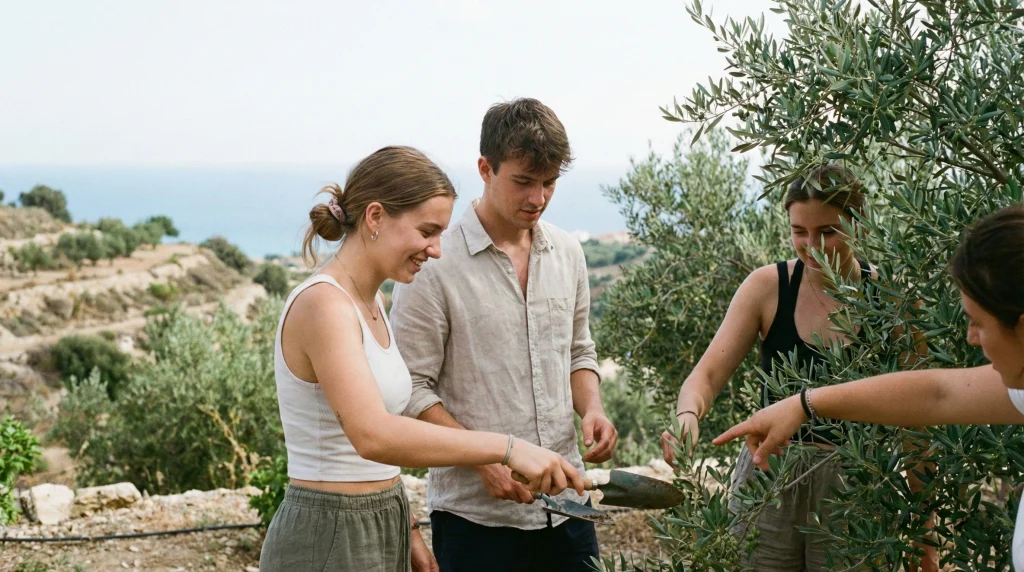
The “Campus” Vibe: We are not a hospital. We are a Therapeutic Farm in the hills of Achnas. Residents care for animals (goats, poultry) and orchards. It feels like an agricultural volunteering program, but with clinical safety.
The Adventure: Our schedule includes Afternoon Excursions, hiking, and outdoor challenges. It satisfies the “wanderlust” while keeping them sober.
Academic Prep: We have dedicated Tutoring Areas. Residents can use their downtime to prep for university reading lists or work on vocational skills (CV writing).
Peer Community: Your child will be with other 18-25 year olds who are taking a “pause” to figure out their lives. They will make friends for life.
Affordable: As a Cyprus-based facility, we offer a world-class residential experience for a fraction of the cost of UK programs, making a 3-month stay viable.
Make their Gap Year count.
Visit www.holinacyprus.com to speak with our admissions team about our Gap Year Packages.


