Why Safety Comes Before Healing
Before growth, there must be safety. Many young people who come to Holina Village Cyprus have lived in constant emotional survival — reacting, withdrawing, or shutting down as a way to protect themselves.
Trauma, whether from loss, neglect, bullying, or instability, teaches the brain one powerful message: “The world isn’t safe.”
Our first mission at Holina Village is to change that message. Through trauma-informed care, we create an environment where safety isn’t just spoken — it’s felt. Because only when a young person feels safe can they begin to truly heal.
“Safety is the soil where trust grows — and trust is where healing begins.” — Trauma Therapist, Holina Village Cyprus
Understanding Trauma in Young People
Trauma is not just about what happened — it’s about how the body and mind responded to it.
For young adults, trauma can come from experiences such as:
Family conflict or divorce
Emotional or physical neglect
Bullying or social rejection
Substance misuse in the home
Loss, abandonment, or instability
Violence or abuse
Even situations that seem minor from the outside can feel overwhelming to a developing nervous system.
When unresolved, trauma affects focus, trust, and emotional regulation — shaping how young people see themselves and the world.
At Holina Village, we don’t ask “What’s wrong with you?”
We ask, “What happened to you — and how can we support your healing?”

The Core Principles of Trauma-Informed Care
Our entire program — from therapy to education to daily routine — is guided by six key principles of trauma-informed care:
Safety:
Every student must feel physically and emotionally protected.Trustworthiness and Transparency:
We communicate openly so students know what to expect and feel in control of their process.Peer Support:
Connection with others who have shared experiences builds understanding and empathy.Collaboration and Choice:
Students participate in decisions about their care — empowering rather than controlling.Empowerment:
We focus on strengths, resilience, and the capacity to grow beyond trauma.Cultural Sensitivity:
Every individual’s background, identity, and story are honored with respect and understanding.
This framework ensures that trauma-informed care is not a single technique — it’s a way of being.
How Trauma Affects the Brain and Body
When the brain experiences trauma, it shifts into survival mode — activating the fight, flight, or freeze response.
Over time, the body stays on high alert even when danger is gone, leading to anxiety, hypervigilance, and emotional reactivity.
Therapy at Holina Village helps regulate this system.
Through mindfulness, grounding techniques, and body-based awareness, students learn to calm their nervous systems and feel safe in their own skin again.
The goal is not to erase memories but to restore a sense of safety in the present.
“I used to panic without knowing why. Now I can feel when my body’s safe again.”
— Student, 19
Creating a Safe Therapeutic Environment
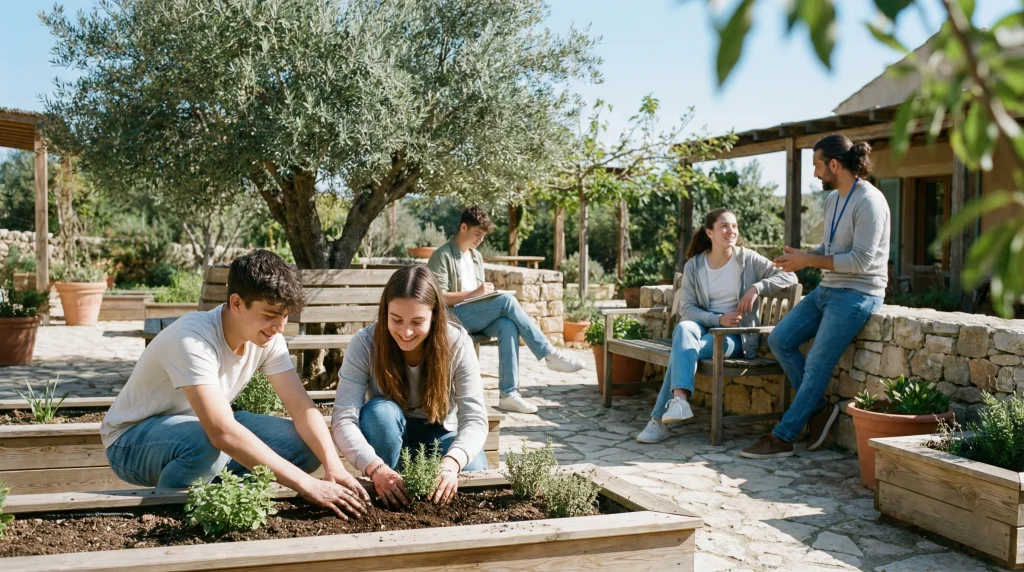
Every detail at Holina Village is designed with safety in mind — from calm, natural surroundings to consistent daily structure.
Students know when meals, therapy, and reflection happen. They know who they can talk to, and that they’ll be met with kindness, not judgment.
This predictability helps rewire the brain from chaos to calm.
Our staff model empathy, patience, and unconditional respect — showing young people that safety isn’t just promised; it’s practiced.
Therapies Rooted in Trauma Awareness
All therapeutic approaches at Holina Village are trauma-informed and personalized to each student’s readiness.
Core modalities include:
Trauma-Focused Cognitive Behavioral Therapy (TF-CBT): Helping reframe painful thoughts and beliefs.
Somatic Therapy: Releasing trauma stored in the body through breath and awareness.
EMDR (Eye Movement Desensitization and Reprocessing): For safely processing traumatic memories.
Mindfulness and Grounding: Reconnecting to the present moment to reduce flashbacks and hyperarousal.
Group and Creative Therapies: Building safety through shared experience and expression.
Each therapy helps students process trauma safely, at their own pace — never rushed, never forced.
The Role of the Body in Healing
Trauma doesn’t live only in the mind; it lives in the body.
Tight shoulders, racing heart, fatigue, or numbness are all ways the body carries old fear.
Holina’s holistic approach integrates yoga, movement, and breathwork to help students reconnect with their bodies as allies, not enemies.
These embodied practices restore a sense of grounding and belonging within oneself.
“When I learned to feel my feet on the ground, I stopped feeling lost.”
— Graduate, 20
Community as a Healing Force
Isolation deepens trauma; connection heals it.
In our therapeutic community, students experience belonging without pressure.
They share meals, conversations, and quiet moments — rebuilding trust in others one interaction at a time.
Through peer support, they learn that vulnerability isn’t weakness — it’s courage.
These relationships become living proof that connection is still safe and possible.
Empowering Choice and Autonomy
Control is often taken away during traumatic experiences.
At Holina Village, we give it back.
Students have choices in their therapy, routines, and personal goals.
Even small decisions — what creative project to start, how to approach a task — help rebuild a sense of agency.
This empowerment teaches young people that their voice matters, their choices count, and their future belongs to them.
The Importance of Family in Trauma Recovery
Families are essential partners in trauma healing.
Many parents carry their own guilt or fear, unsure how to help without making things worse.
Through family workshops, we teach parents how to provide safety, not control — and understanding, not interrogation.
They learn how to listen without fixing, and how to hold space for their child’s emotions with compassion.
“When we stopped trying to change her story and started hearing it, she began to heal.”
— Parent, Cyprus

Integrating Education and Trauma Recovery
Trauma often disrupts learning by making focus and motivation difficult.
Our therapeutic education model is trauma-sensitive — recognizing that emotional safety must come before academic achievement.
Teachers and therapists collaborate to help students rebuild concentration and confidence.
In this supportive structure, learning becomes not a source of stress, but a sign of progress.
Healing Takes Time — and That’s Okay
One of the most important truths about trauma recovery is that it cannot be rushed.
Healing unfolds at the pace of safety and trust.
At Holina Village, we honor that pace.
Every step — from opening up in therapy to joining group sessions — is celebrated as a victory.
Our role is to hold space for that process with patience and faith.
Stories of Courage and Renewal
“For years I thought I’d never feel safe again. Holina helped me find calm in my body and peace in my mind.”
— Graduate, 18
“Watching our son finally sleep through the night again — that was the moment we knew healing had started.”
— Parent, UK
“They didn’t push me to talk about my trauma. They taught me how to feel safe first.”
— Student, 17
Every story reminds us that safety isn’t the end of healing — it’s the beginning of transformation.
FAQs About Trauma-Informed Care at Holina Village
Q1: What makes trauma-informed care different from traditional therapy?
It prioritizes safety, empowerment, and understanding the impact of trauma on the nervous system — not just symptoms or behavior.
Q2: Does Holina use trauma-specific therapies like EMDR?
Yes. EMDR and other evidence-based modalities are integrated into personalized care plans.
Q3: What if my child isn’t ready to talk about their trauma?
That’s okay. We never force disclosure — healing begins with feeling safe, not talking.
Q4: How do you ensure safety within the community?
Through consistent structure, respectful communication, and trained staff supervision that models trust and empathy.
Q5: Can families be part of trauma-informed sessions?
Yes. Parents are involved in education and family support, learning how to support recovery safely at home.
Conclusion: Healing Begins with Safety
At Holina Village Cyprus, trauma-informed care is not just an approach — it’s our foundation.
We create spaces where young people can exhale, feel safe, and rediscover their sense of self without fear.
Safety leads to trust. Trust leads to connection. And connection leads to healing.
Begin your healing journey with Holina Village Cyprus today.
Where safety becomes strength — and every young person learns that peace is possible.


