It is eleven at night in a shared flat near the university. A seminar paper has barely moved since last Tuesday, and the room carries a familiar heavy smell that has settled into the curtains. The student sitting at the laptop does not look like someone in acute crisis. He makes tea, rolls a joint, and tells himself that two pulls will lower the stress enough to finally read the article in English. This is not a dramatic collapse with sirens and police. It is a quiet, daily erosion, in which a substance that began as a way to relax at weekends slowly becomes a precondition for every transition between tasks in life.
This article explains how cannabis dependence develops among students, what it does to memory and grades, what withdrawal actually involves, and which approaches to stopping tend to hold up under the pressure of a live semester.
Reading time: 5 minutes
Key points
- Cannabis dependence at university usually begins as a workable short-term solution to real distress, not as a decision to lose control.
- Frequent use is linked to lower grade averages, missed classes and delayed graduation, largely through its effects on working memory and motivation.
- Withdrawal is physical and real, typically peaking in the first week and easing markedly from around day ten.
- Stopping the substance is rarely enough on its own. Lasting recovery depends on addressing the anxiety, loneliness or earlier pain the cannabis was covering.
Table of contents
- How cannabis dependence develops at university
- How cannabis use affects grades and short-term memory
- Independence and loneliness
- Quiet warning signs of functional dependence
- The high-functioning illusion and the guilt trap
- What withdrawal actually feels like
- The first two weeks of stopping
- The anxiety paradox and the sleep problem
- Stopping mid-semester without losing the term
- Cold turkey, gradual reduction or structured support
- When to stop promising that tomorrow will fix it
- Cannabis as a bandage over earlier pain
- Why a peer community outperforms a weekly hour
- What recovery means beyond abstinence
- How Holina Village Cyprus supports young adults
How cannabis dependence develops at university
The move into higher education brings complete freedom alongside a heavy psychological load. Within that reality, dependence does not begin as a decision to sabotage the future. It begins as a functional answer to genuine distress. The student discovers that a short smoke quiets the noise in the head, softens exam dread and offers a few pleasant hours of disconnection. But the brain learns biological shortcuts quickly. The dopamine system gradually reduces its own production of the transmitters tied to calm and motivation, and starts to require a constant external supply of cannabinoids just to reach baseline. That is the quiet reversal. Cannabis stops being a weekend treat and becomes the only fuel that allows initiation, until sitting in a lecture, eating lunch or meeting friends without being mildly under the influence no longer feels possible.
How cannabis use affects grades and short-term memory
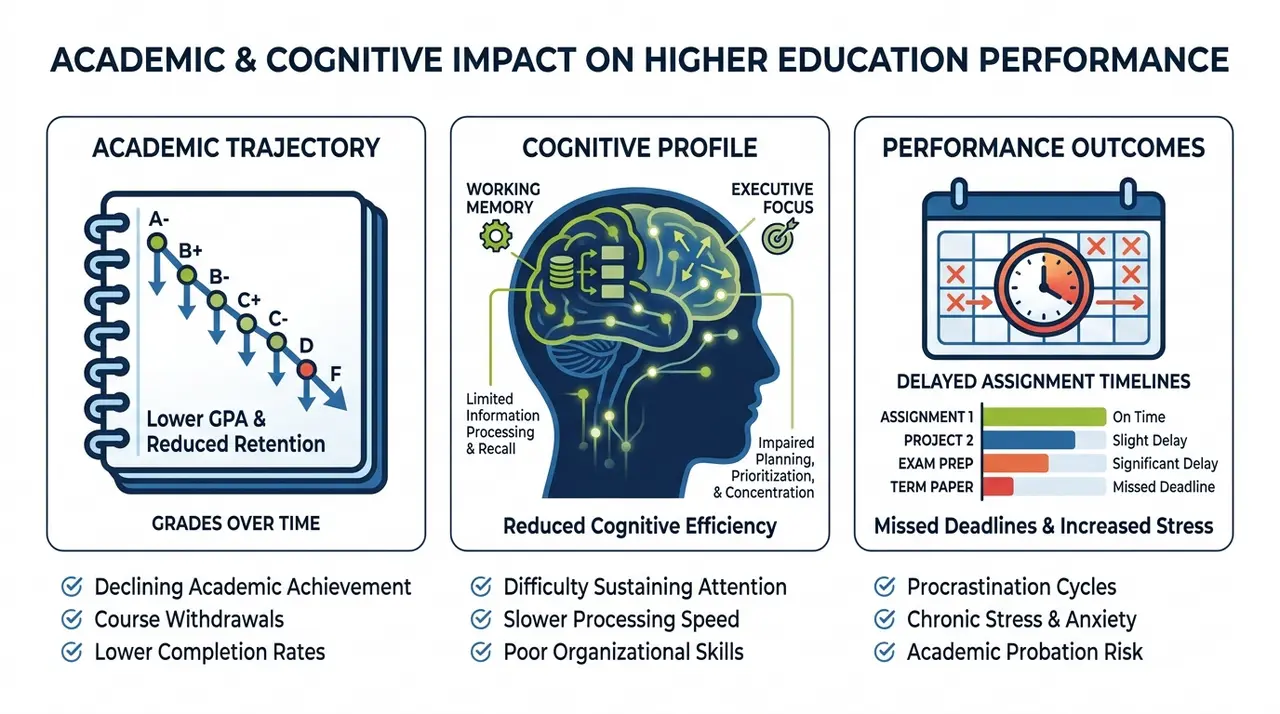
The academic damage rarely appears as instant failing grades. It appears as chronic mediocrity that creeps in. A longitudinal study on how cannabis use affects academic achievement links frequent consumption with a clear drop in grade average, missed classes and delayed graduation. The biological background is straightforward. Cannabis disrupts the prefrontal cortex and the hippocampus, the regions responsible for working memory, for retrieving material during an exam, and for complex abstract thinking. It also produces what clinicians call amotivational syndrome. The student still understands the material, but loses the drive to sit with dense papers for hours, and postpones every task until the last moment, when anxiety has already become paralysing.
Independence and loneliness
Leaving the family home for dorms or a rented flat creates a raw encounter with existential loneliness. There is no pot of home cooking on the stove, nobody asking when you got in, and a thin budget to manage alongside endless reading lists. In that vacuum, smoking often becomes the most faithful companion in the flat. It fills the quiet evening hours with a borrowed warmth that spares the person from facing an emotional emptiness. But the isolation only deepens. The more one smokes in order not to feel alone, the less desire remains to go out, meet new people at university, or build relationships that require real exposure and vulnerability.
Quiet warning signs of functional dependence
Dependence sends early signals long before it breaks the external frame. The first is the loss of ability to eat without smoking beforehand, a state in which the digestive system refuses to register natural hunger without external stimulation. Another is a sharp drop in patience when supply runs out or the money for it ends, showing up as irritability toward partners and flatmates and quiet neglect of the room and daily routine. If you find yourself planning every weekend visit to your parents around where and when you could smoke without them noticing, the line between habit and dependence was crossed some time ago.
The high-functioning illusion and the guilt trap
One of the hardest obstacles to recognising dependence is the high-functioning argument. Many students tell themselves everything is under control because they still score 75 on exams and submit work on time. But basic functioning is not the same as a full life. Living under constant mild numbness carries a hidden price of relentless mental fatigue, emotional flatness in relationships, and a widening gap between real intellectual potential and actual output. Holding that facade drains enormous energy, and it tends to end in a sudden psychological collapse rather than a gentle landing.
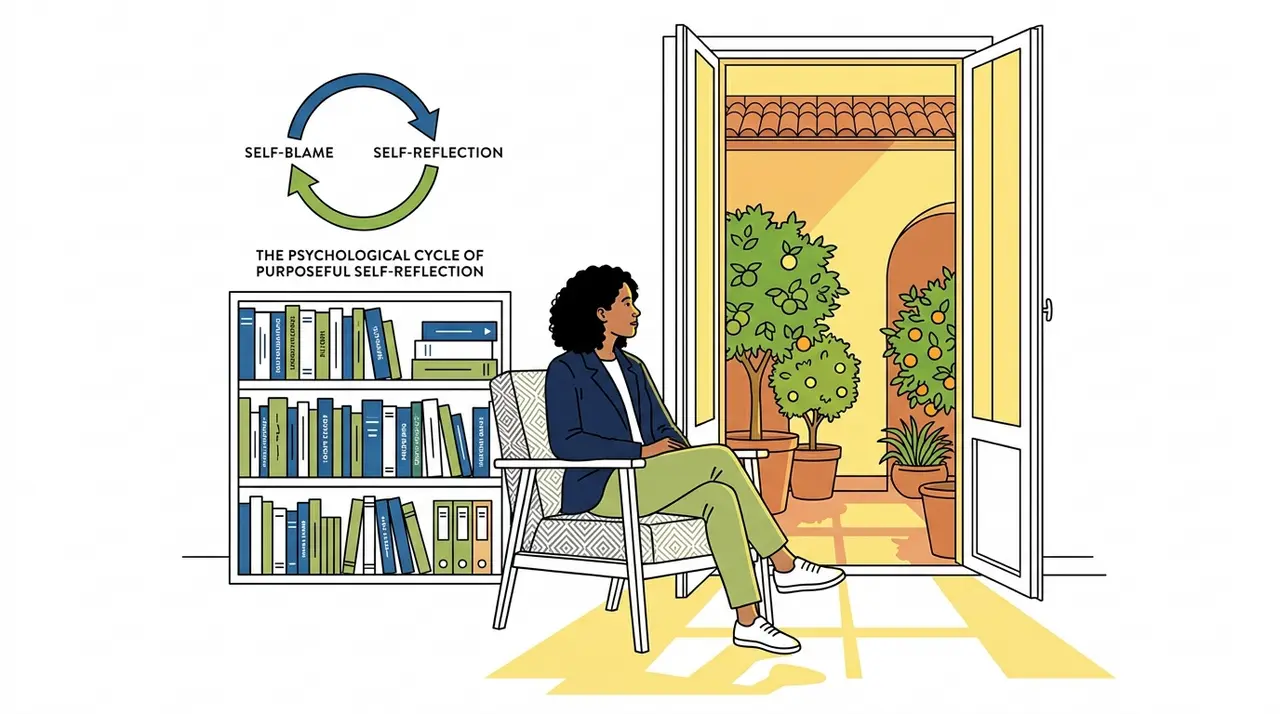
Almost every chronic smoker is well aware of the damage to their studies. They watch coursemates progress into student jobs and projects while they stay stuck in the same closed loop. That awareness does not produce stopping. It produces burning shame and guilt, and the fastest available way to quiet that pain is the same joint. This is the psychological trap of addiction, where the supposed remedy is the primary source of the illness, and every failed attempt to stop adds another layer of despair about the capacity to change.
What withdrawal actually feels like
The persistent myth that cannabis is not physically addictive makes it hard for young people to understand what is happening to them when they stop. In practice, the NIDA withdrawal symptom checklist documents a long list of very real physiological and emotional responses to cessation. Among young adults, withdrawal commonly includes intense night sweats that require changing a shirt, mild hand tremors, morning nausea, complete loss of appetite and dull headaches. Psychologically, there is extreme restlessness, sudden waves of anxiety, and a strong urge to use again in order to stop the discomfort. These symptoms do not indicate a new illness. They indicate a natural process in which the body breaks down stored residues of the substance and works to restore its original equilibrium.
The first two weeks of stopping
Understanding what to expect in the days after the last smoke lowers panic and allows realistic preparation.
The first 24 to 48 hours
The body experiences the sharpest drop in blood concentration of the substance. The dominant feeling is physical restlessness, difficulty sitting in one place, and a craving that floods the mind every few minutes. It is wise to avoid major decisions in these two days, drink plenty of cool water, and keep meals light and small so the strained digestion is not overloaded.
Days 3 to 7, the peak of sleep disruption
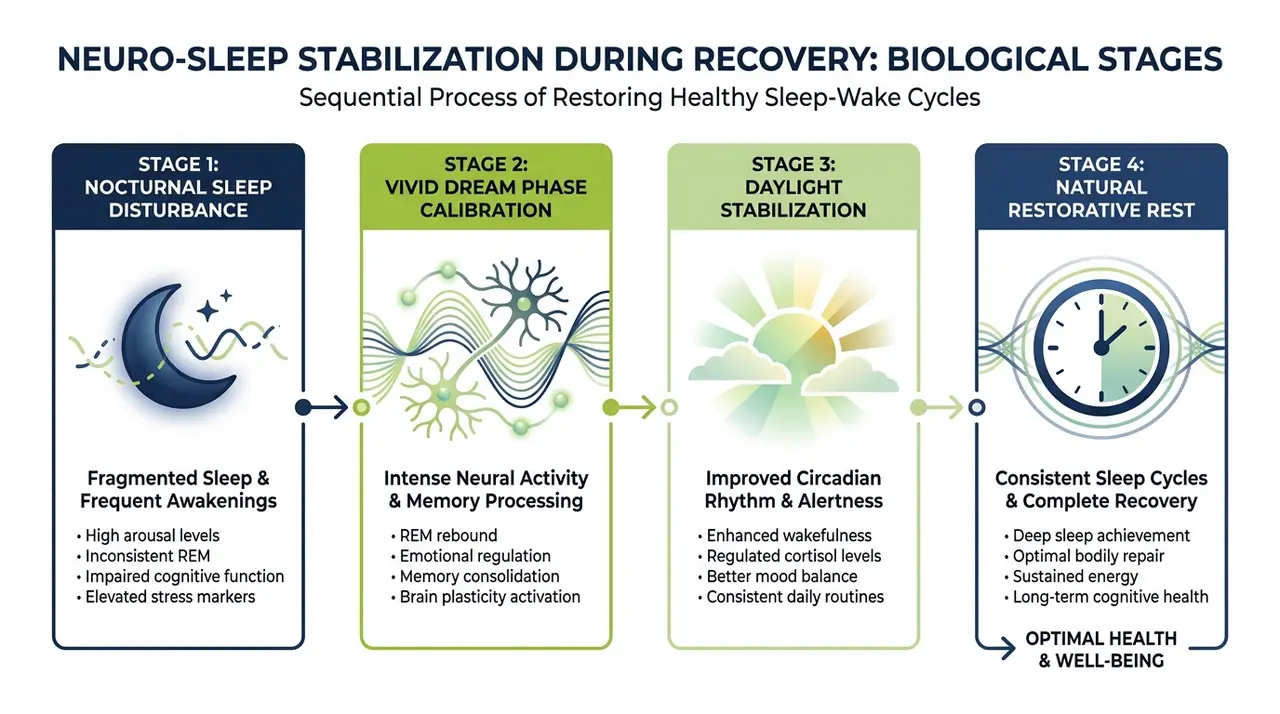
This is the psychologically hardest stage. Sleep becomes very fragmented, with waking drenched in sweat, and dreams turn unusually vivid and turbulent as the dream stage suppressed for months returns. Mood swings sharply between deep sadness and anger over trivial things. Remembering that this is the crest of the wave, after which symptoms recede, makes these days easier to pass through without breaking.
Week two onward, the fog begins to lift
From around day ten most acute physical symptoms subside. Natural appetite gradually returns, the body stops sweating without reason, and the mental fog of the previous weeks starts to clear. Suddenly concentration returns, a paragraph read in a textbook is still there the next morning, and midday energy no longer collapses into heaviness.
The anxiety paradox and the sleep problem
Many students reach for cannabis with the genuine belief that it is the only thing that calms pre-exam stress. This is a short-range optical illusion. While physical arousal does dip in the first hour after smoking, the result across the day is a rebound effect in which baseline anxiety rises significantly. Modern strains carry very high THC concentrations with almost no balancing CBD, a combination that over-activates the brain’s stress axis. The outcome is intrusive thoughts, paranoia around exams, and a growing inability to face routine academic challenges without steady chemical support.
Sleep follows the same deceptive pattern. Cannabis does not improve sleep. It sedates, suppressing the rapid-eye-movement stage in which the brain processes memories, regulates emotion and clears metabolic waste. A person may lie unconscious for eight hours and wake heavy and unrefreshed. When smoking stops, the brain floods with suppressed dreaming, which produces hard insomnia and intense dreams. Knowing that this disruption is temporary, usually lasting one to two weeks, is essential so that fear of sleepless nights does not drive a return to smoking.
Stopping mid-semester without losing the term
The decision to stop does not have to wait for graduation or the summer break. Choose a window with no critical exam in the next two days, such as a relatively calm weekend. The first practical step is clearing the room completely of papers, devices and any remnants, so there is no easy access in a moment of crisis. Plan a tightly structured schedule for the first days, dividing study into short twenty-five minute blocks with deliberate walking breaks. Moderate aerobic exercise helps discharge accumulated adrenaline and eases evening restlessness considerably.
Dealing with flatmates who still smoke in the living room needs no moral lecture and no dramatic announcement. A simple, direct sentence such as saying you are taking a break to clear your head before exams closes the discussion naturally. If the pressure continues, seriously consider a week with a non-smoking friend or a temporary return to the family home to create an initial margin of safety. And when a craving hits, remember its biology. The wave of urge rises, peaks within roughly ten minutes, and fades on its own if it is not fed. A hot shower, a short run around the block, a glass of cold water with lemon, or a brief call to someone close will break the automatic loop.
Cold turkey, gradual reduction or structured support
Clinical experience shows that gradual reduction has low success rates for anyone who has already developed a compulsive pattern, because every small dose reawakens craving and keeps the person in constant, exhausting negotiation with themselves. The three common approaches compare as follows.
Immediate independent stop
Suits someone who smokes only in the evenings and has a supportive environment without smoking flatmates. The risk of mid-semester relapse is medium to high, mostly because of night loneliness and sleep trouble. Expect two to four days of restlessness and fatigue, followed by gradual clarity.
Gradual independent reduction
Feels psychologically easier but demands self-monitoring that is very hard to sustain under academic load. Relapse risk is very high, with most people returning to original quantities within two weeks of pressure. The constant mental bargaining also interferes with concentrating on coursework throughout the day.
Structured beginning in a therapeutic setting
Suits someone smoking around the clock, experiencing academic collapse, or failing repeatedly at solo attempts. Relapse risk during the stay is very low, because there is no physical access to the substance and a continuous emotional envelope exists. It involves a deliberate, temporary pause in studies in order to protect the degree over the long term.
When to stop promising that tomorrow will fix it
Admitting lost control is hard, especially at the age when a person is supposed to be building independence and a professional future. But there comes a point when repeated self-promises begin to sound hollow even to the person making them. If an entire semester has passed in which every week began with a decision that this was the last joint, if grades are being erased by unexplained absences, and if money owed to dealers is starting to threaten the rent, the solo attempts have run their course. Reaching out for professional help at that stage is not raising a white flag. It is the most adult and courageous step available to a student who wants to save the trajectory of their life before the damage becomes irreversible.
Cannabis as a bandage over earlier pain
In our clinical experience, cannabis is almost never the primary problem. It is an ineffective solution to an earlier and deeper emotional pain. Many students carry suppressed social anxiety, memories of rejection at school, or a chronic loneliness that has quietly become part of their identity. Smoking acts like a heavy blanket thrown over all of these unfelt feelings, allowing the person to exist without meeting them. But the bandage does not heal the wound. The moment the substance is removed, the pain, the fears and the insecurity resurface at full strength, and that is exactly why detox that consists only of technical avoidance tends to fall apart unless it is accompanied by deep emotional processing.
Why a peer community outperforms a weekly hour
Weekly talking therapy in a clinic has genuine value for understanding psychological processes. But any honest therapist will tell you that with active, around-the-clock dependence, one hour a week struggles to hold its own against the other hundred and sixty-seven hours spent in the same tempting environment. This is where the group work of a live therapeutic community changes the picture. When a young person sits in a circle with peers facing exactly the same anxieties, the same academic pressure and the same escape mechanisms, the walls of denial and shame fall quickly. The group serves as an accurate, non-judgmental mirror that makes self-deception difficult, and it provides a real sense of belonging that replaces the loneliness which fed the need to smoke in the first place.
What recovery means beyond abstinence
Building a new life is not a list of things forbidden. Authentic recovery focuses on creating a stable, meaningful and connected life in which cannabis is simply no longer needed. It begins with a deep physical reset, including clean nutrition, regular sleep and physical activity that restores the body’s ability to produce endorphins naturally. It continues through deliberate exposure to situations that challenge the comfort zone, such as outdoor adventure challenges, where a person learns to handle fear, effort and frustration using inner resources and mutual support rather than chemicals. A geographical break matters here too. Every corner near campus, the shop where papers were bought, even the balcony of the shared flat acts as a psychological anchor that triggers the urge automatically. Physical distance from the familiar environment lets the nervous system unwind from constant alertness and creates the quiet breathing space needed to see life clearly again.
How Holina Village Cyprus supports young adults
In the open countryside of Cyprus, away from the noise and temptations of city life, Holina Village operates a therapeutic community built specifically to offer a comprehensive and containing response to young adults who have lost their way. A stay somewhere like the residential treatment programme for young adults is nothing like a cold, impersonal medical institution. It is shared life on a green working farm, where the daily routine is built from individual and group therapy, work with animals and in the orchards, yoga, movement, and practical life-skills workshops. Four weeks in such a setting allow the nervous system to rebalance from the chemical impact of cannabis, while twelve weeks give new behavioural patterns time to root deeply enough to hold on return to campus.
Shared room, from 7,950 EUR per month
Shared accommodation in a pleasant, air-conditioned and furnished rural space. The full envelope includes individual therapy, daily groups, farm work, adventure activity, chef-prepared meals and airport transfers, with no hidden costs.
Single room with shared bathroom, from 10,950 EUR per month
A fully private bedroom for personal quiet, with adjacent shared facilities. Includes the full intensive therapeutic programme, psychiatric and medical care, physical work, family therapy and continuous monitoring.
Single room with private bathroom, from 12,950 EUR per month
A spacious, fully private suite offering maximum quiet and space to gather yourself. Includes all therapeutic and holistic components, with close support preparing the return to study and work.
If you have read this far out of concern for yourself or for a family member, there is a clear way out of the tangle, and you do not need to wait for a full collapse before asking for support.
A confidential conversation with our admissions team
No pressure, no obligation, just an honest conversation.
Frequently asked questions
Is cannabis physically addictive?
Yes. A significant proportion of regular users develop dependence, and stopping produces documented physical and emotional withdrawal symptoms, including night sweats, nausea, irritability, anxiety and strong cravings. The myth that cannabis is harmless to stop is one of the main reasons young people are caught off guard by how hard the first week feels.
How long does cannabis withdrawal last?
For most people the acute symptoms peak between days three and seven and ease markedly from around day ten. Sleep disruption and vivid dreaming can linger one to two weeks longer. Knowing the timeline in advance significantly reduces the panic that drives relapse.
Can I stop mid-semester without failing my courses?
It is possible with planning. Choose a calm window, remove all paraphernalia, structure the first days into short study blocks, and use exercise to manage restlessness. If use is around the clock or solo attempts keep failing, a structured pause in studies often protects the degree far better than pushing through another semester of erosion.
Does treatment mean giving up my degree?
Not necessarily, and not permanently. Many students arrange a planned interruption or a medical leave, and a structured programme such as the one at Holina Village includes dedicated support for preparing the return to study, so the pause becomes a protection for the degree rather than a loss of it.
Is reaching out to Holina Village confidential?
Yes, completely. An initial conversation with the admissions team is discreet, free of judgment, and carries no commitment. Its only purpose is to understand the situation together and, if it fits, identify a precise first step.
Cannabis dependence among students rarely announces itself with drama. It arrives as a quiet slide, a substance that started as relief and ended up running the schedule, the grades and the friendships. The encouraging part is that the picture reverses. Withdrawal is finite and largely predictable, memory and motivation return, and with the right emotional work underneath the stopping, recovery becomes a return to yourself rather than a permanent fight against yourself. If any of this describes your situation or that of someone you love, you are welcome to reach out for a confidential conversation. No pressure, no obligation, just an honest conversation about what a realistic first step could look like.
About the Author
Yossi Zubari
CEO & Founder
Director and Senior Therapist working with addiction for over 25 years, and in personal recovery for almost 30 years.