Cannabis withdrawal is a real and predictable clinical condition with a defined timeline. Symptoms usually begin within one to three days of the last use, peak between days two and six, and largely resolve within two to four weeks. This article follows that timeline day by day, explains why each symptom arrives when it does, and sets out what actually helps at each stage, for the person stopping and for the family around them.
Reading time: 5 minutes
Key Points
- Cannabis withdrawal is a recognised clinical condition, not a failure of willpower. Symptoms begin within one to three days, peak around days two to six, and largely resolve within two to four weeks.
- Days three to six are the hardest, and they are predictable, which means they can be planned for rather than endured blind.
- Disturbed sleep and intense dreams come from REM rebound, the brain recovering a function that THC was suppressing.
- The detox itself is temporary and passive. The long-term outcome depends on treating whatever the cannabis was medicating, which is where structured treatment begins.
Table of Contents
- What cannabis withdrawal actually is
- Is it dangerous?
- The shape of the first month
- The worst days are numbered
- Why sleep goes first, and why the dreams come back loud
- Irritability is the symptom families notice first
- When food stops making sense
- Riding out the craving
- Cold turkey or a slow taper
- Why withdrawal hits harder than it used to
- Detox is a week. Recovery is everything after it
- For the family watching from the kitchen
- When home is not enough
- Frequently asked questions
What Cannabis Withdrawal Actually Is
The tin is still in the kitchen, third drawer down, behind the takeaway menus. Nobody has moved it. The person who emptied it three days ago keeps opening the drawer, looking in, and closing it again. That is not weakness, and it is not sentimentality. It is what the first days of stopping feel like when cannabis has been part of the furniture for years.
Cannabis withdrawal is a neurobiological event, not a moral failing in medical dress. THC works by flooding the brain’s CB1 receptors, the docking points of the body’s own endocannabinoid system, a network that helps regulate sleep, mood, appetite and temperature. When the supply stays high for months or years, the brain adapts by reducing the number and sensitivity of those receptors, much as you stop hearing a fridge that has hummed for a decade. Remove the THC and the system suddenly runs understimulated. Sleep, mood and appetite wobble at once, which is why withdrawal feels like being uncomfortable in your own skin rather than having one clean symptom.
This is a recognised clinical condition. Clinically reviewed medical guidance from the Cleveland Clinic lists the core features plainly, irritability, anxiety, disturbed sleep, strange vivid dreams, low mood, loss of appetite and craving. If you are reading this at two in the morning with some of these, what you are feeling has a name, a shape and an end.
Is It Dangerous?
The honest answer comes in two parts. In most cases, no. Cannabis withdrawal does not carry the seizure risk of alcohol or benzodiazepine withdrawal, and it very rarely requires emergency care. That matters, because fear of the unknown makes everything worse.
The second part is less comfortable. Not life-threatening is not the same as easy, and anyone who calls cannabis withdrawal trivial has not sat beside someone on day four. The real dangers are indirect. Depression can deepen, panic can become unmanageable, persistent vomiting can lead to dehydration, and the most common serious outcome is the quiet one, a fast return to heavy use simply to make the discomfort stop.
There are moments that call for immediate help rather than endurance. If thoughts of suicide appear, or if someone in withdrawal starts talking about being a burden, giving away possessions or withdrawing completely, treat it as urgent. The NIMH’s guidance on warning signs of suicide is direct about what to watch for and how quickly to act. Everything else in this article can wait. That cannot.
The Shape of the First Month
Withdrawal does not arrive all at once and does not leave all at once. It moves in waves, rising to a peak in the first week and thinning out over two to four weeks. The original published study on the time course and significance of cannabis withdrawal found that symptoms begin within one to three days, peak between days two and six, and largely resolve within two weeks, with sleep and mood changes sometimes lingering longer.
Knowing the shape does something practical. It converts an open-ended question about how long the misery lasts into a numbered set of days you can count through. Families tell us the timeline matters to them as much as to the person stopping, because irritability is easier to absorb when you know it peaks on day four and fades by day ten.
24 to 48 hours
Sleep
Hard to fall asleep, the first restless night
Irritability and mood
Edginess, inner tension, restlessness
Appetite and body
Appetite drops sharply, food looks wrong
What helps most
Clear the schedule, tell one person, buy simple food in advance
Days 3 to 6, the peak
Sleep
Night sweats, intensely vivid dreams, waking at 3am
Irritability and mood
Peak irritability, anger, anxiety, persistent craving
Appetite and body
Nausea, stomach cramps, headaches, sometimes a fine tremor
What helps most
Do less, not more. Warm showers, slow walks, no big decisions
Week 2, the turn
Sleep
Still broken, but with shorter waking episodes
Irritability and mood
Mood swings with the first islands of calm and clarity
Appetite and body
Appetite returns gradually, sweats fade
What helps most
Routine, small regular meals, gentle movement every day
Weeks 3 to 4
Sleep
Sleep consolidates, dreams settle
Irritability and mood
Emotional weather evens out, pleasure returns slowly
Appetite and body
Weight and digestion normalise
What helps most
Rebuild structure, and watch for the “I’m fine now” relapse trap
Beyond day 30
Sleep
Near normal for most people
Irritability and mood
Underlying issues may surface
Appetite and body
Stable
What helps most
This is where recovery work begins in earnest, not just abstinence
Two details from this timeline are worth pulling out. The first day or two can feel almost like a reprieve, because THC is fat-soluble and stored reserves release slowly, so the calm of day two can trick you into scheduling things you will not manage on day four. And in weeks three and four, when concentration and short-term memory sharpen, relapse risk quietly climbs again, because feeling better makes the original decision feel negotiable. A flat, grey pleasurelessness can also persist for weeks at this stage. That is normal, and it passes.
The Worst Days Are Numbered
People ask this constantly, usually bracing for a punch. Days three to five. The reason is mechanical. By then the readily available THC has dropped sharply, but the brain has not yet restored its CB1 receptor density or rebalanced dopamine signalling. You are running a system tuned for a chemical that is no longer arriving, and the gap between demand and supply is what you feel.
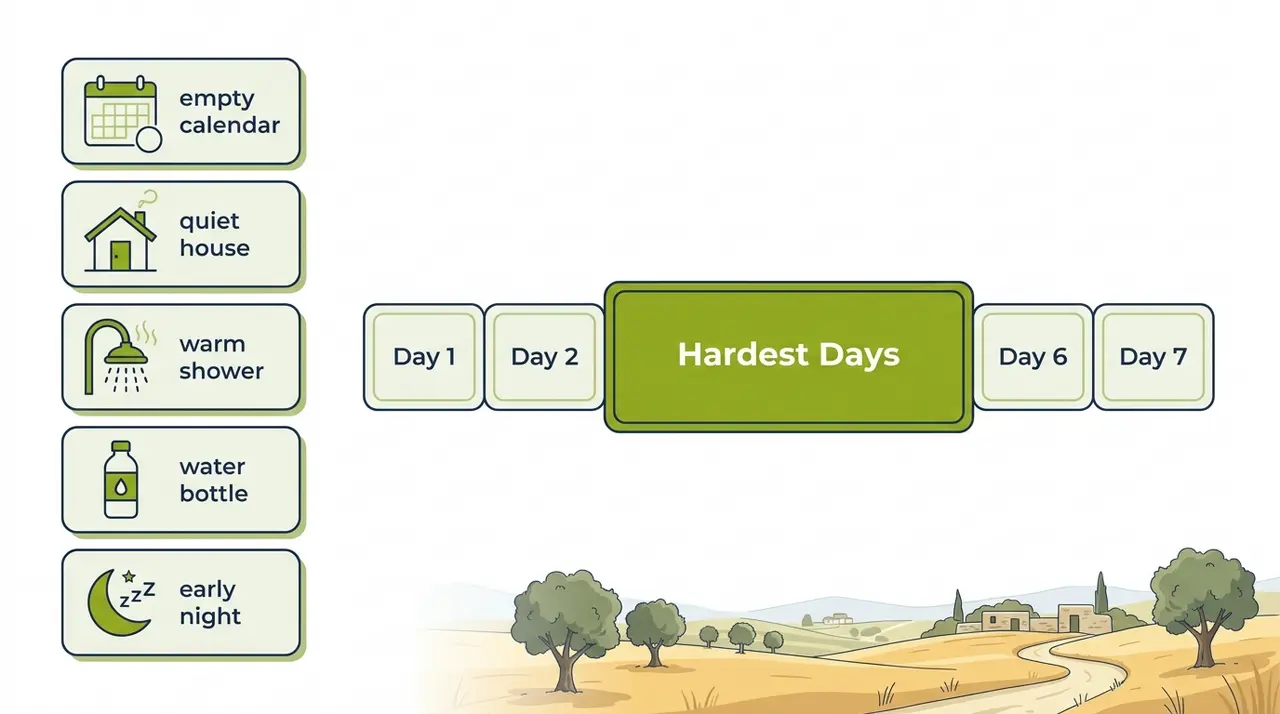
Because the hardest days are predictable, they can be planned for. Keep the diary empty. If work leave is possible, take it now rather than earlier, when you feel fine and it seems wasteful. Lower every expectation of yourself for seventy-two hours, and avoid stressful conversations and anything requiring emotional steadiness you do not currently have. A quiet house, warm showers, plenty of water and early nights are not folk remedies. They are load-bearing.
Why Sleep Goes First, and Why the Dreams Come Back Loud
The sleep disruption of cannabis withdrawal has two engines. The first is simple. If you have used in the evenings for years, your brain has outsourced the onset of sleep to THC. Remove it, and sleep no longer has an on-switch.
The second engine is stranger, and nobody warns you about it. THC suppresses REM sleep, the stage where dreaming happens, so long-term users often cannot remember their last dream. When you stop, the brain compensates with what researchers call REM rebound, dreaming hard to make up for lost time. The results can be vivid, bizarre, occasionally nightmarish and exhausting. It is not a sign that your mind is deteriorating. It is a sign it is recovering a function it was denied.
What helps is unglamorous. Same bedtime and wake time every day, including weekends. No screens for the last hour, because the light and the stimulation both keep the alert system switched on. No caffeine after midday. A warm shower before bed, and slow breathing, four counts in and six counts out, for a few minutes. Sleep will be broken for a while regardless. These habits shorten the broken period, and they give the 3am waking somewhere to go besides spiralling.
Irritability Is the Symptom Families Notice First
From the inside, withdrawal feels like restlessness. From the outside, it looks like anger. The person who was placid and vague a week ago is now snapping at the volume of the television. Families find this the hardest stage, harder even than the years of use, because there is no visible cause, just a loved one who has become prickly and distant. The mechanism is a temporary flood of the fight-or-flight system, now running without the chemical that had been damping it. For most people it thins out within two to three weeks.
One distinction matters here, and any honest clinician will make it. Some of what surfaces during withdrawal was never caused by the withdrawal. Cannabis is a powerful anxiolytic, and many people began using heavily precisely because it quieted an anxiety that was already there. When the chemical goes, the original anxiety returns, unmedicated for the first time in years. This is often the point where people conclude, reasonably, that the problem is bigger than a home detox. In the meantime, the immediate toolkit holds. Grounding through the senses, naming five things you can see, four you can hear, three you can touch, two you can smell and one you can taste. Slow diaphragmatic breathing. A walk outdoors, not a heroic run, just a walk.
When Food Stops Making Sense
THC artificially activates the brain’s hunger circuitry, which is the entire mechanism behind the famous munchies. Remove the THC and the circuitry goes quiet, so for the first week or two food can seem pointless or actively unpleasant. Some people feel genuine nausea at the smell or sight of meals and lose two or three kilos without trying.
The practical response is to stop negotiating with full meals. Small amounts, often. A banana, toast, a bowl of clear soup. Nutritional shakes carry a lot of calories through a small appetite and are worth keeping in the fridge. Eat by the clock rather than by hunger, because hunger is the last signal to return. Water matters even more than food in week one, especially with night sweats in the mix, since dehydration quietly worsens headaches, irritability and fatigue. A bottle refilled through the day does more for mood in week one than most things in the medicine cabinet.
Riding Out the Craving
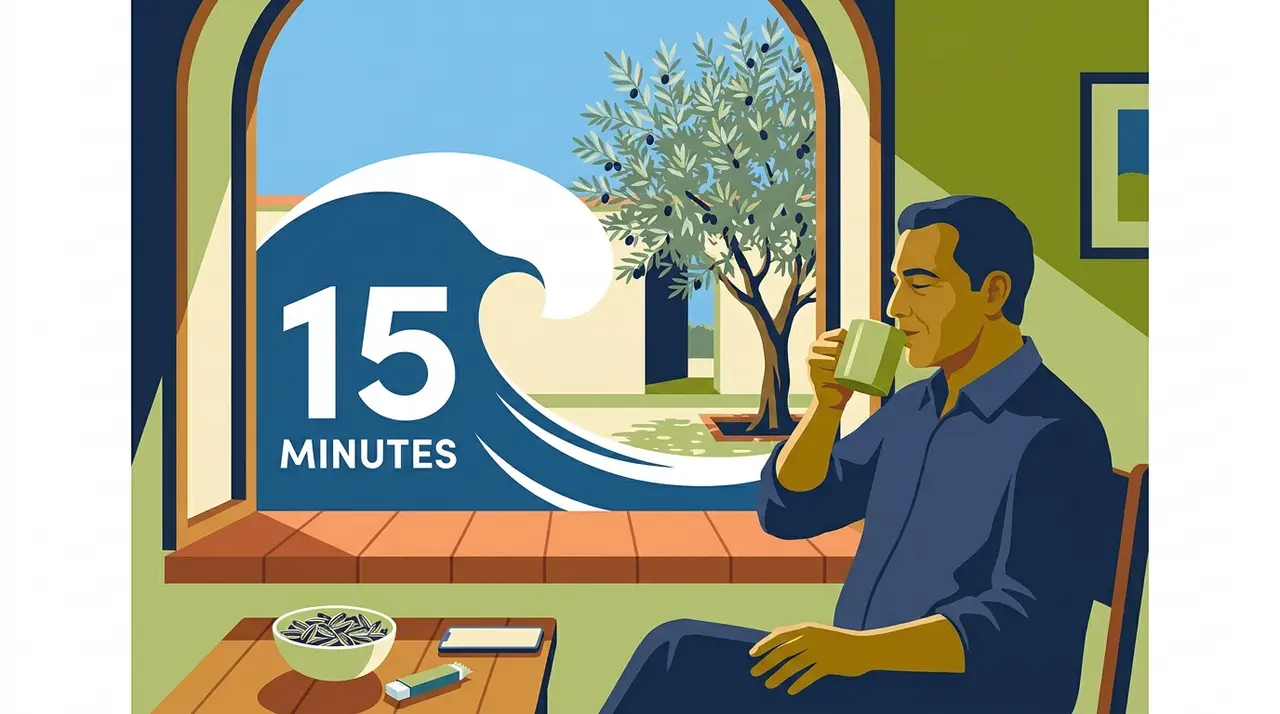
The most useful fact about craving is that it does not last. It behaves like a wave, building, cresting and receding, usually within ten to twenty minutes, before returning later to do the same thing again. People relapse in the crest, in those few minutes when discomfort peaks and the mind produces a dozen reasonable-sounding arguments for why now, just this once, is different.
The technique with the best evidence and the least glamour is called urge surfing. You neither fight the craving nor obey it. You watch it as a physical sensation, the tightness in the chest, the restlessness in the hands, and let it rise and fall without acting on it. Craving that is observed tends to lose force faster than craving that is argued with. The practical additions matter too. Change the room, because craving is heavily cued by place. Splash cold water on your face. Call the one person who knows what you are doing. Replace the ritual, and ritual is the right word, with something else that occupies the hands and the mouth, gum, herbal tea, sunflower seeds, a walk to the shop and back. Many people find that the physical clearing of the tin, the bin, the rinse, the drying rack, is the moment the decision becomes real.
Cold Turkey or a Slow Taper
Both approaches are legitimate, and the right one depends less on pharmacology than on your history with stopping.
Stopping at once
What it asks of you
An intense first week in exchange for a short total timeline
Works well for
People who have already failed at cutting down, and anyone entering a supported setting away from access
Tends to fail when
Stopping alone, with the tin still in the drawer and the dealer still in the phone
Gradual reduction
What it asks of you
Weeks of discipline in exchange for milder physical symptoms
Works well for
Lighter or shorter-term use, with strong structure and accountability
Tends to fail when
Active addiction, because “one less” gets renegotiated every single night
The pattern we see is consistent. People who use heavily and have tried tapering repeatedly, always arriving back at the original amount by the weekend, usually do better with a clean break inside a supported environment than with a fifth attempt at moderation at home. That is not a character judgement. It is the nature of the condition.
Why Withdrawal Hits Harder Than It Used To
The cannabis on the market today is not the cannabis an older relative remembers. Commercial flower routinely carries THC concentrations several times higher than a generation ago, and concentrates such as vape oils, waxes and dabs go far beyond that. Higher, more constant exposure produces deeper CB1 adaptation, which means a sharper, more abrupt withdrawal when it stops.
There is a second, quieter factor, especially in Europe and the UK. Most people smoke cannabis mixed with tobacco, so when they stop they are withdrawing from two substances at once. The nicotine withdrawal runs alongside the cannabis withdrawal, doubling the irritability, restlessness and sleep disruption. We regularly meet people who believed their withdrawal was unbearably severe when, in truth, they were doing two withdrawals simultaneously and comparing themselves to friends who had only done one. Naming both usually comes as a relief, because it explains the severity, and because each can be addressed on its own terms.
Detox Is a Week. Recovery Is Everything After It
Here is where a lot of good intentions quietly fail. The body clears THC and rebalances itself over two to four weeks, and that process is essentially passive. You endure it. But detox was never the problem. The question that decides the outcome is what the cannabis was doing for you, and what will do that job instead.
For some people cannabis was leisure. For very many it was self-medication, for anxiety, grief, insomnia, or a nervous system that never felt safe. Take the medication away without treating what it was treating, and the underlying condition simply reissues the invitation. That is why relapse so often follows a physically successful detox by four to eight weeks. The body was fine. The reason for using was untouched. This is the gap that structured treatment exists to fill, and it is why we describe our work as beginning where detox ends. If you want to see how that longer work is organised, our adult treatment programme sets out the daily structure, the therapy and the community model. For a sense of how often grief sits underneath long-term use in young adults particularly, our piece on grief in early adulthood and recovery is a candid place to start.
For the Family Watching From the Kitchen
If you are the parent or partner, the first week will ask things of you that feel backwards. The irritability, the slammed doors, the monosyllables are neurological weather, not choices, and taking them personally will drain you precisely when steadiness matters most. Do not schedule confrontations in week one, and do not deliver the speech you have been rehearsing for years. It will not land, and it will burn capital you will need later.
Boundaries and compassion are not opposites. Do not buy or fund substances to keep the peace, no matter how reasonable the request sounds at 11pm. Do cook simple food, keep the house quiet, and make water boringly available. Say once, without drama, that you are glad they are doing this and that you are there. Then let the week pass. And you are allowed to seek support for yourself. Living alongside dependency changes a household, and the recovery period is a good time for the people around it to find their own footing, whether that is a therapist, a support group, or one honest conversation with someone outside the situation.
When Home Is Not Enough
Most cannabis withdrawal, done with the right information and some planning, can be managed at home. But not all of it, and knowing the difference saves months. The honest indicators are these. Several serious attempts to stop, each ending in relapse. A home environment where the substance, the people who use it, or the stress that drives it are all still present. A co-occurring condition, anxiety, depression or trauma, that announced itself the moment the cannabis stopped. And a family running on empty, still willing but no longer knowing how.
When those indicators line up, the issue is rarely willpower. It is environment. A residential therapeutic community works for a simple mechanical reason. It removes the person from every cue and pressure the brain has wired to using, and it surrounds the difficult weeks with structure, nutrition, movement and round-the-clock human support. In our experience, the people who thrive in that setting are not the most severe cases. They are the ones who finally stop negotiating with themselves and let the structure hold them for a while. If you want to know who would actually be around you or your relative, you can meet the clinical and therapeutic team here, and if any of this describes your situation, you can reach our admissions team for a no-obligation conversation. Most families who call us are in a quiet crisis, and the first conversation is usually calmer than they expected it to be.
Considering a residential programme?
If several attempts to stop have ended in relapse, or if the home environment keeps pulling the person back, a residential therapeutic community changes the conditions rather than testing willpower against them. A confidential conversation with our admissions team is the simplest first step, with no pressure and no obligation.
Frequently Asked Questions
How long does cannabis withdrawal last?
Most symptoms begin within one to three days of stopping, peak between days two and six, and largely resolve within two weeks. Sleep and mood changes can linger for three to four weeks, and a flat, pleasureless mood sometimes persists a little longer before it lifts.
Is cannabis withdrawal dangerous?
It does not carry the seizure risk of alcohol or benzodiazepine withdrawal and rarely needs emergency care. The serious risks are indirect, including deepening depression, unmanageable panic and a quick return to heavy use. Suicidal thoughts during withdrawal should always be treated as urgent.
Why are my dreams so vivid after stopping cannabis?
THC suppresses REM sleep, the stage where dreaming happens. When you stop, the brain compensates with REM rebound, producing intense, vivid and sometimes exhausting dreams. It is a sign of recovery, not deterioration, and it settles within a few weeks.
Is it better to stop suddenly or cut down gradually?
Both are legitimate. A clean break suits people who have repeatedly failed at cutting down, especially in a supported setting away from access. Gradual reduction suits lighter or shorter-term use with strong structure. Heavy users who keep renegotiating their taper usually do better stopping at once.
A Word Before You Close This Tab
Withdrawal is a fortnight of discomfort in exchange for a system that works again. Sleep comes back, appetite comes back, the dreams settle. Somewhere around week three or four, most people notice something they had forgotten was available to them, the ability to be bored, or pleased, or simply present, without chemical assistance. What happens after that depends less on the first month than on what the first month was for. The people who do best treat the withdrawal as the doorway and the emotional work as the house. Whatever you decide, deciding with information, and with at least one other person who knows what you are doing, beats deciding alone in a quiet kitchen.
A confidential conversation, whenever you are ready
If anything in this article describes your situation, or someone you love, Holina Village Cyprus is here to talk it through with you. No pressure, no obligation, just an honest conversation about what the next few weeks could look like.
About the Author

Yossi Zubari
CEO & Founder
Director and Senior Therapist working with addiction for over 25 years, and in personal recovery for almost 30 years.