The room is quiet in a way it usually is not. The blinds are down at two in the afternoon. A plate sits half-eaten on the floor, and the phone, which used to light up all weekend, has gone dark. Someone you love has not come out of their room in a day and a half, and when they did, they snapped at you over nothing and went straight back in. You are not watching a dramatic medical emergency. That is part of what makes it so hard to read. Cocaine withdrawal rarely looks like the shaking, sweating crisis people picture. It looks like a person going flat.
Reading time: 8 minutes
Key Points
- Cocaine withdrawal is primarily psychological rather than physical. The dominant symptoms are depression, exhaustion, and a loss of the capacity to feel pleasure.
- The process moves through three broad phases – a crash in the first days, acute withdrawal across the first two weeks, and a longer tail of milder symptoms that can persist for weeks or months.
- The second week brings a false sense of recovery that is one of the most common points at which people return to use. Structural support and distance from triggers matter most in that window.
- No approved medication reliably treats cocaine dependence. The strongest clinical evidence sits with behavioural approaches, particularly contingency management and cognitive behavioural work.
Table of Contents
What cocaine withdrawal symptoms actually are
Cocaine withdrawal symptoms are mostly what the mind and brain do when the chemical that has been driving them is suddenly gone. This is the first thing to understand, because it overturns a common assumption. Withdrawal from alcohol or opioids can carry direct, life-threatening physical danger. Cocaine withdrawal generally does not. The danger here is different, and quieter.
What appears instead is a collapse in mood, motivation, and the capacity to feel pleasure. Exhaustion without rest. Irritability. A heavy, grey flatness that the person cannot explain and often cannot name. The clinical literature describes the dominant features of stimulant withdrawal as primarily psychological in character, and that matches what families notice at home – the withdrawal from school or work, the retreat to the bedroom, the long silences.
If you have arrived here frightened, you are reading the situation correctly. Many families who reach the Holina Village clinical team describe exactly this. Not a scene. A withdrawal of the person from their own life.
When the symptoms begin after the last use
Cocaine moves through the bloodstream fast and leaves fast. Its effect is brief, often a matter of minutes to a couple of hours. Because of that, the descent begins almost as soon as the last line wears off.
This is the difference young people rarely articulate. There is the moment the high ends, and there is the moment the body starts to register its absence, and those are not the same. After a weekend of use at parties or in clubs, the low usually settles in within hours and deepens over the next day. A clinical review of psychostimulant withdrawal management describes this early collapse – the crash – as the opening phase of the whole process.
What changes how fast it arrives
Speed and severity are not fixed. They shift with how much was used and how often, how long the pattern has been running, and whether cocaine was mixed with alcohol or sedatives. The person’s underlying mood and sleep matter too. Someone already depressed or sleep-starved tends to feel the crash arrive harder and sooner.
The crash, and why the body produces it
During use, cocaine forces the brain to flood with dopamine, the chemistry of reward and drive. The crash is what happens when those stores run dry and the brain has nothing left to give. This is not weakness. It is a depleted system trying to find its floor again.
The experience is strange and contradictory. The body is wrung-out tired, yet rest does not come easily. There is a deep emptiness, and a particular kind of dullness where nothing feels good – not food, not music, not company. Clinicians call that last part anhedonia, and during the crash it can feel total. The crash is predictable. It is the body doing exactly what a depleted body does.
Is this a comedown, or the start of dependence
A one-off comedown after a single weekend is rough, and it passes. The person feels low on Monday, ragged on Tuesday, and roughly human again by midweek. That is the body clearing a one-time event.
Dependence reads differently, and the tell is repetition. When the crashes keep happening, and when the person starts using again specifically to escape the low rather than to chase a high, a pattern has formed. Clinical diagnostic frameworks for substance use disorders point to exactly these markers – failed attempts to cut down, craving, and continued use despite the harm it is plainly causing. For a parent, recurring crashes are the red light. Not the single bad weekend. The cycle.
How long cocaine withdrawal lasts
The honest answer is that it is not a clean countdown. The chemical clears the body in days. The recovery of the brain takes longer, and it does not move in a straight line. People often feel better, then worse, then better again, and the second dip catches them off guard precisely because they thought the worst was over.
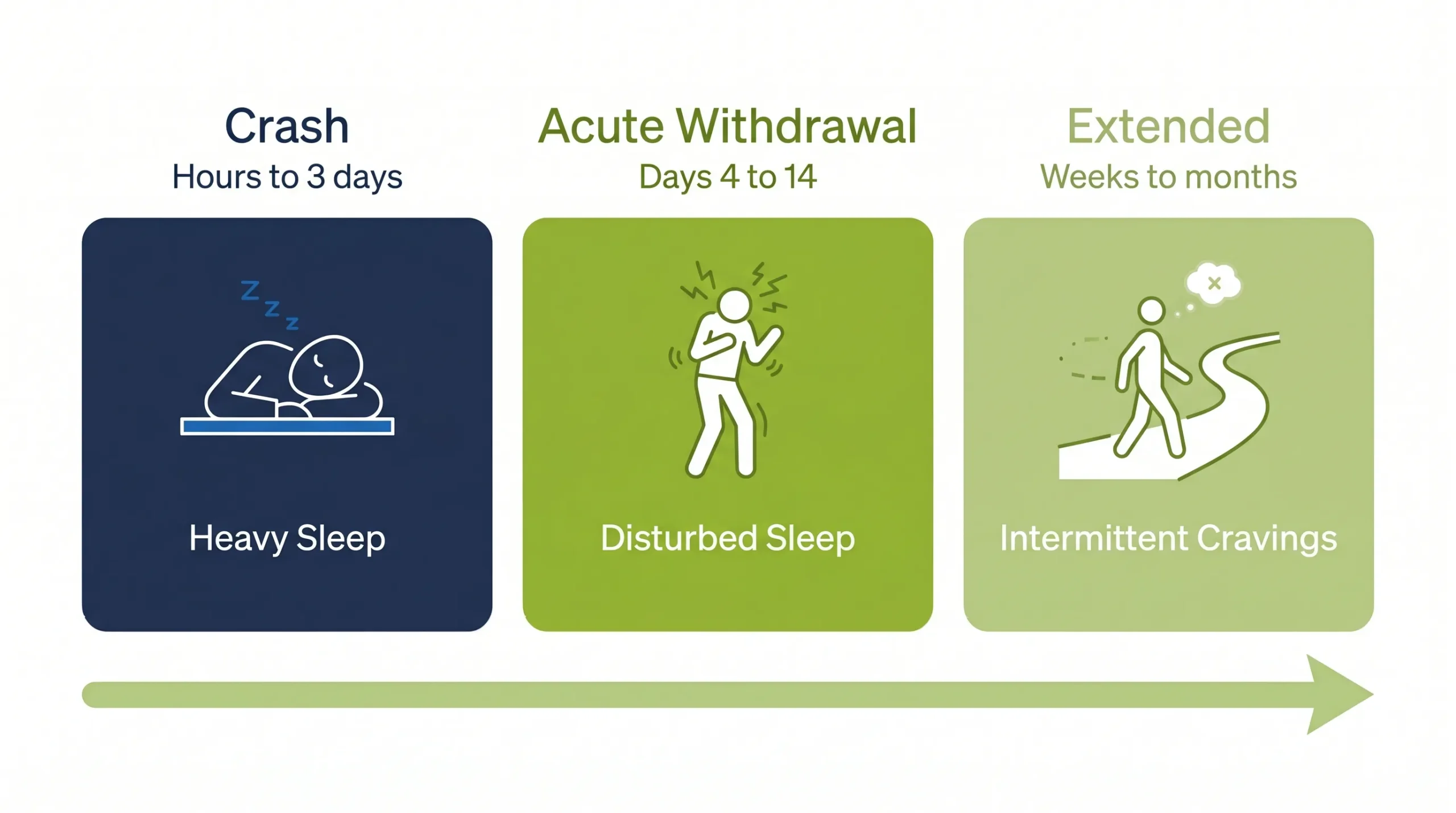
It helps to hold the process in three broad phases – the acute crash, then a stretch of acute withdrawal, then a longer tail of milder symptoms that can surface for weeks.
| Phase | Rough window | What tends to dominate |
|---|---|---|
| Crash | Hours to roughly 3 days | Heavy sleep, ravenous appetite, exhaustion, low mood, no drive |
| Acute withdrawal | Roughly days 4 to 14 | Anxiety, disturbed sleep and vivid dreams, rising cravings, irritability |
| Extended (post-acute) | Weeks to months | Intermittent low mood, blunted pleasure, cravings tied to triggers |
Why the timeline needs a protected space
The cravings do not respect the calendar. They spike when an old contact texts, when a familiar place comes into view, when alcohol lowers the guard. The thing the brain needs most during these weeks is time without access. That is far easier to provide inside a contained setting than inside a bedroom with a phone full of the old numbers.
Days one to three: the flat collapse
This is the heaviest sleep most people will ever have. The body crashes into a near-shutdown, sleeping enormous hours and waking hungry, eating in a way that surprises everyone. Underneath the fatigue sits a thick low mood.
What a family sees in these first days is often misread as defiance. The blocked phone. The locked door. The flash of anger at a simple question. The complete refusal to think about exams or work. It is not contempt. It is a nervous system on the floor, with nothing left to spend on patience or conversation.
The first week, day by feel
By the fourth or fifth day, the heavy sleep starts to lift, and something less comfortable takes its place. Sleep becomes the problem now. Falling asleep gets hard, and when sleep comes it brings vivid, often unpleasant dreams.
This is also when the cravings begin their climb. As the brain claws back toward normal activity, it goes looking for the stimulation it had been trained to expect. The pull toward use is usually stronger here than during the crash, because the person now has the energy to act on it.
The second week, and the trap that follows
Into the second week, many people start to feel genuinely better, and this is the most dangerous good feeling of the whole process. The energy returns. The fog thins. And a quiet thought arrives – maybe it was not that serious, maybe one social weekend would be fine.
That false sense of recovery is where so many returns to use begin. The body has steadied. The relational and behavioural patterns underneath have not. This is the stretch where emotional support and distance from triggers matter most – the parties, the alcohol, the old friends who still use. It is also the moment where having something better to walk toward, real work in a structured therapeutic community programme, does more than willpower ever could.
The mental symptoms, which are the real ones
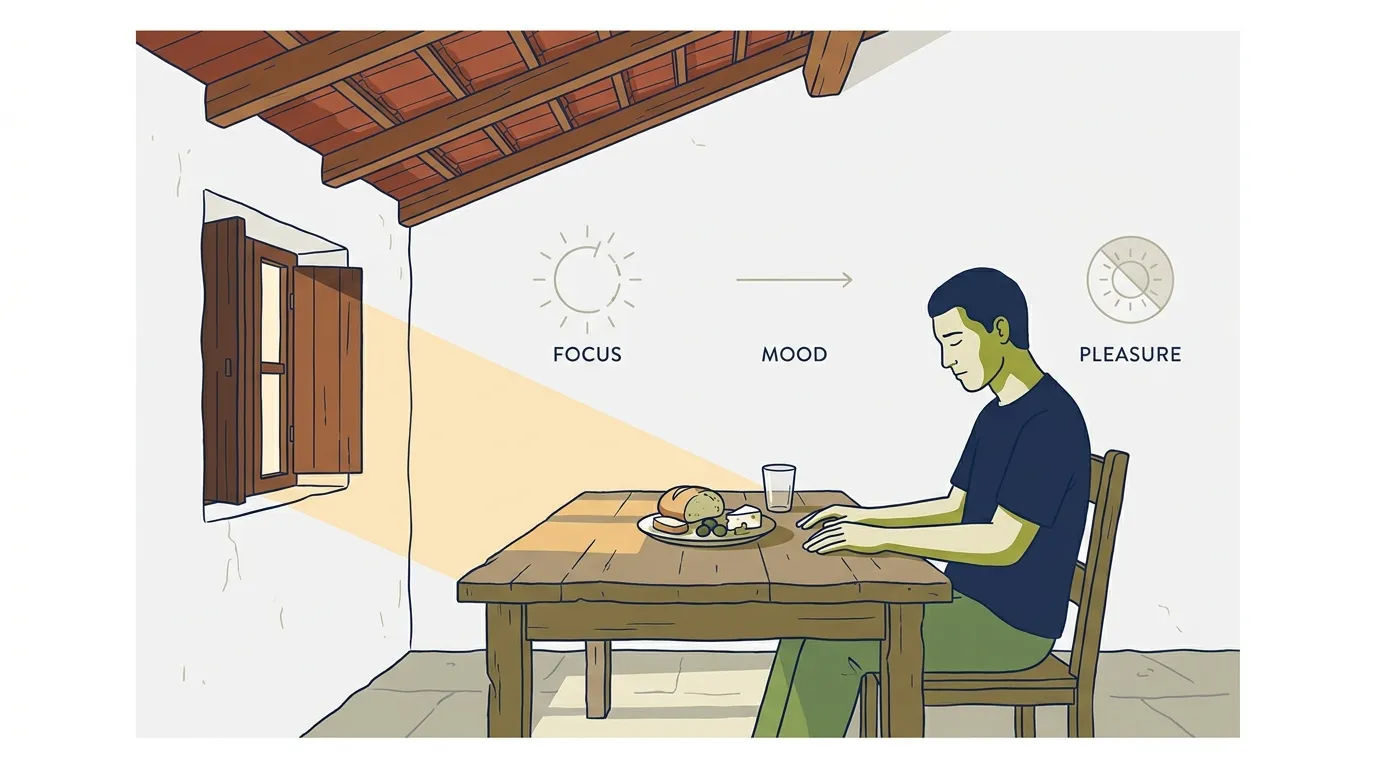
The psychological side is the centre of cocaine withdrawal, not the footnote. An emptiness that feels permanent. A flatness in the emotions. A restless irritability with no clear cause. Concentration that fragments, and a short-term memory that keeps dropping things.
Why nothing feels good for a while
Anhedonia is the hardest of these to sit with. Ordinary pleasures – a good meal, a song, a conversation, a walk – go grey for a stretch. The reason is mechanical, not moral. The brain’s natural dopamine receptors have been overdriven for so long that they need time to rebuild their sensitivity. Pleasure comes back as that rebuilding happens. Knowing it is temporary does not remove it, but it changes what the person tells themselves while they wait.
The physical symptoms people insist do not exist
A common belief holds that cocaine has no physical withdrawal at all. That is not quite right. The physical signs are real, they are just milder and less dangerous than the dramatic ones people expect.
Heavy headaches turn up. Muscles hold tension. Movement slows in some people and becomes agitated in others – a restless pacing back and forth, a slight tremor in the hands, sweating that breaks out at night. None of these are emergencies on their own. Together they wear a person down at exactly the time their mind is least able to cope with being worn down.
Concerned about someone going through this
If what you have read here matches what you are seeing at home, the clinical team at Holina Village is available for a confidential conversation. No pressure, no obligation – just an honest discussion about what is happening and what might help.
Why the depression hits so hard
The low after stopping cocaine can be genuinely brutal, far heavier than people expect from a drug that felt like fun. The brain has been borrowing pleasure at high interest, and now the bill comes due all at once. What is left is a chemical deficit that feels, from the inside, like a permanent verdict on the person’s whole life.
It is not permanent. The flatness is a temporary shortage, and it lifts as the brain restores its own supply. That is true and worth holding onto. It is also true that this kind of depression needs watching, because at its worst it stops feeling survivable.
When the low becomes a red flag
Some signs ask for immediate professional help and should never be waited out. Talk of self-harm or of not wanting to be here. A total, sustained shutdown that runs past a few weeks without any lift. Complete withdrawal from all contact. Suicide risk is a recognised feature of the depressive phase of stimulant withdrawal, which is why close supervision through this window is not an overreaction. It is the appropriate response.
Anxiety, panic, and the body stuck on high alert
Alongside the depression, many people feel a swell of anxiety – unexplained dread, even brief paranoia in the early weeks. This catches people off guard, because they associate cocaine with confidence rather than fear.
The body’s alarm system, the sympathetic nervous system, spent the period of use being constantly over-stimulated. When the drug stops, that system does not reset cleanly. It stays jumpy, firing alarms at nothing, until it slowly recalibrates. The anxiety is the sound of an over-tuned alarm winding down.
Living through the cravings
A craving is not a command, though it impersonates one well. It rises, peaks, and falls – usually within a span far shorter than it feels in the moment, provided it is not fed. People in recovery sometimes call this riding the wave. You do not fight the swell. You let it lift you, crest, and set you back down, and you are still standing.
The practical work around cravings is mostly about access. In the early weeks it helps to put real distance between the person and the means to act – contacts removed, easy cash limited, the clubs and gatherings simply off the table for a while. None of this is punishment. It is the recognition that a craving acted on in thirty seconds is far harder to undo than one that had nowhere to go.
When alcohol is in the mix: cocaethylene
This matters most for people who combine cocaine and alcohol at clubs and parties, which is one of the most common pairings. When the two are taken at once, the liver produces a third substance, cocaethylene, which the body did not make from either drug alone.
Cocaethylene lingers longer than cocaine and carries its own load on the heart. Research on how cocaethylene forms when cocaine and alcohol are taken together links it to prolonged cardiovascular strain. In practice this means the comedown is worse, the crash is heavier, and the cardiovascular system takes longer to settle. Withdrawal from the combination is simply a harder, longer climb.
The health risks that sit underneath
Long-term use grinds on the heart and blood vessels, and the repeated swing between extreme stimulation and total collapse is part of that strain. There is a quieter danger in the withdrawal period too. After even a short break, tolerance drops. Someone who returns to their previous amount can take far more than their body can now handle, and that is a genuine overdose scenario.
The other trap is substitution. People try to fill the cocaine-shaped gap with heavy drinking or with sedatives bought without a prescription, and the mixing is where things turn dangerous fast. Combining cocaine with alcohol or other depressants makes effects unpredictable, and any honest clinician will tell you that polysubstance use raises the risk of a serious outcome considerably.
Can this be done safely at home
Sometimes, yes. Going through it at home has worked for people with a steady support network, a settled environment, and no easy route back to the drug. It is fair to say that for some adults, home is enough.
For a lot of people it is not, and the reason has nothing to do with character. The bedroom still holds the phone, and the phone still holds the dealer. The street outside still leads to the same friends. The triggers that drive the cravings are all exactly where they were. What a clinical setting provides that a bedroom cannot is genuine separation, paired with people awake and present through the worst of the nights. Clinical guidelines for stimulant use disorders consistently identify structured support and supervised care as the spine of an effective response.
When a place like Holina Village makes sense

There is a point where staying put stops being brave and starts being a trap. When the crashes keep coming, when the depression has teeth, when the same room and the same phone keep pulling the person back, leaving the environment entirely can be what finally changes the picture.
Holina sits on a farm in Achnas, with orchards and animals and open sky, and it feels nothing like a clinical facility. That setting is not decoration. It is the relational substrate that does the work – a held container where the nervous system can recalibrate without the old triggers a phone call away. The programme is built for adults who need real distance from the cycle, met without judgment, and with clinical work that takes the whole person seriously. If you want to understand how everything is structured, the full residential programme is laid out plainly, and the people who deliver it are listed on the clinical team page.
What a stay costs, compared honestly
Cost is a real question and families deserve a straight answer. Holina’s rooms are all-inclusive, covering accommodation, meals, clinical and group sessions, adventure and farm activities, and airport transfers. Personal spending money is the only thing on top.
| Room type | From (per month) | What’s included |
|---|---|---|
| Shared Room | €7,950 | Full programme, meals, all activities, transfers |
| Single Room, Shared Bathroom | €10,950 | As above, with private sleeping space |
| Single Room, Private Bathroom | €12,950 | As above, with full private facilities |
The choice between these is about how much private space a person needs to settle, not about a difference in care. The clinical work is the same in all three.
Common questions families ask
Cocaine withdrawal is not the dramatic, physically visible crisis that many people expect. Its weight is mostly internal – a depleted chemistry, a flattened mood, a craving that rises without warning and a depression that can feel much larger than it is. It moves through stages and it does lift, but the conditions in which a person tries to get through it matter enormously. The same bedroom, the same phone, the same social circle – these are not neutral. They are the environment that shaped the pattern in the first place. If you have read this far because someone has gone quiet behind a closed door, you already know more than most. The next step is rarely a grand decision. It is usually one honest conversation, and the willingness to be met.
Ready to have that conversation
The Holina Village team is available to speak with families and individuals at any stage. The call is confidential, there is no obligation, and it is simply an honest conversation about what is happening and what the options are.

About the Author
Yossi Zubari
CEO & Founder
Director and Senior Therapist working with addiction for over 25 years, and in personal recovery for almost 30 years.