The phone has been quiet for two days now. Not switched off, not broken. Just quiet. And you have noticed that you keep checking it, the way people check a weather forecast for a storm that has already arrived. Somewhere between the checking and the not-calling, a question has taken up residence: what do I actually do here?
If you have arrived at this page because someone you love is using cocaine and you are no longer sure where the helping ends and the harm begins, you are in the right place. This article is about that boundary. It is about what real cocaine addiction help looks like, what it does not look like, and why the most loving thing a family can do is often the thing that feels least loving in the moment.
One thing before anything else. Addiction is not a moral failure, and it is not a shortage of willpower on the part of someone you love. It is a condition with neurological, psychological and usually traumatic roots, and the research-based principles of addiction treatment from NIDA are blunt on this point: effective treatment addresses the whole person, not just the substance. That single fact changes what helping means. It also, quietly, removes most of the blame from everyone involved, including you.
Reading time: 4 minutes
Key points
- Cocaine changes the brain’s reward system, which is why promises to stop are sincere and still not enough on their own.
- Helping means calm honest conversations, treatment research and firm boundaries; enabling means absorbing consequences so nothing has to change.
- For significant dependence, residential care is usually indicated when the home environment cannot support sobriety.
- Family members who get their own support measurably improve their loved one’s treatment outcomes.
Table of contents
What helping is, and what it is not
The conversation
Red flags that change the timeline
The intervention, done properly
Where treatment happens, and why it matters
What treatment actually consists of
Your recovery, which is also a thing
After treatment, the part nobody budgets for
Frequently asked questions
Why “just stop” is the one thing they cannot do on command
Cocaine does something specific and rather elegant to the brain. It floods the dopamine system and then, over months of repeated use, teaches that system to expect the flood. Ordinary pleasures, food, conversation, achievement, sunlight, stop registering. Long-term use produces measurable changes in the brain’s reward circuits and a resulting compulsive seeking that survives good intentions, promises, and genuine love for the people being hurt.
This matters for you as a family member, because it explains the pattern you have almost certainly lived through already. The promise made on Sunday. The relapse by Thursday. The genuine tears, followed within weeks by the same lie told with the same face. It is not that the promise was false. It is that the promise was made by a brain that then encountered a craving it had no tools to withstand.
Any honest clinician will tell you that willpower alone rarely interrupts this cycle. The person needs structure, treatment, and time. What the family can supply is different, and it is not nothing.
What helping is, and what it is not
There is a word used in family work with addiction: enabling. Families hate this word, and understandably, because it sounds like an accusation. It is not one. Enabling is simply any action that makes it easier for the addiction to continue without consequences. It is almost always done out of love.
| This is helping | This is enabling |
|---|---|
| Sitting with them and saying what you have observed, once, calmly | Repeated arguments about their use that change nothing |
| Researching treatment options and offering them on paper | Paying off drug debts so the dealer stops calling the house |
| Paying directly for treatment or a therapist | Giving cash “for food” when you both know where it goes |
| Letting them feel the consequence of a missed shift | Phoning their employer with an excuse, again |
| Looking after their children while they attend appointments | Looking after their children indefinitely so nothing has to change |
| Getting your own support, therapist, group, or both | Carrying the secret alone to protect the family’s image |
The right-hand column feels like kindness in the moment. Read it again in a month and it will read like something else: the family absorbing every consequence so the person never has a reason to stop. That is the mechanism nobody warns you about.
The conversation: what to say and when to say it
Timing first. Do not attempt a serious conversation when they are high, coming down, or in the depths of the crash that follows a run. Wait for a sober, relatively calm window. It will come, and it is worth waiting for.
Then use what family therapists call “I” language. The difference is mechanical but real. “You are destroying this family” invites defence, and defence invites the exit door. “I have been frightened by what I am seeing, and I love you, and I want to talk about it” invites a person rather than cornering a suspect. Say what you have observed in concrete terms: the money missing from the joint account, the two days of sleep, the nosebleeds, the friend whose calls no longer come. Facts, not interpretations. Then leave space. Silence is not failure in these conversations. It is often the first honest thing to happen in the room in months.
And expect ambivalence. Most people in active addiction are not lying when they say they want to stop. They are also not lying when, three sentences later, they defend their use. Both are true at once, and motivational interviewing as a clinical approach exists precisely because holding that contradiction, rather than arguing with it, is what moves people toward change.
Red flags that change the timeline
Some observations are not conversations. They are emergencies. Cocaine strains the heart and the vascular system directly, and national heart health authorities list it among causes of coronary spasm and heart attack. Chest pain, irregular heartbeat, fainting, or collapse during or after use means a call to emergency services, not a family meeting.
The other emergency is quieter. The crash that follows cocaine use, the deep exhaustion, the flatness, the inability to feel pleasure in anything, is well documented in clinical descriptions of cocaine withdrawal. For a few people, that trough becomes dangerous: hopelessness, talk of not wanting to be here, giving things away. If you hear any of this, treat it as urgent and seek immediate guidance from crisis services in your country.
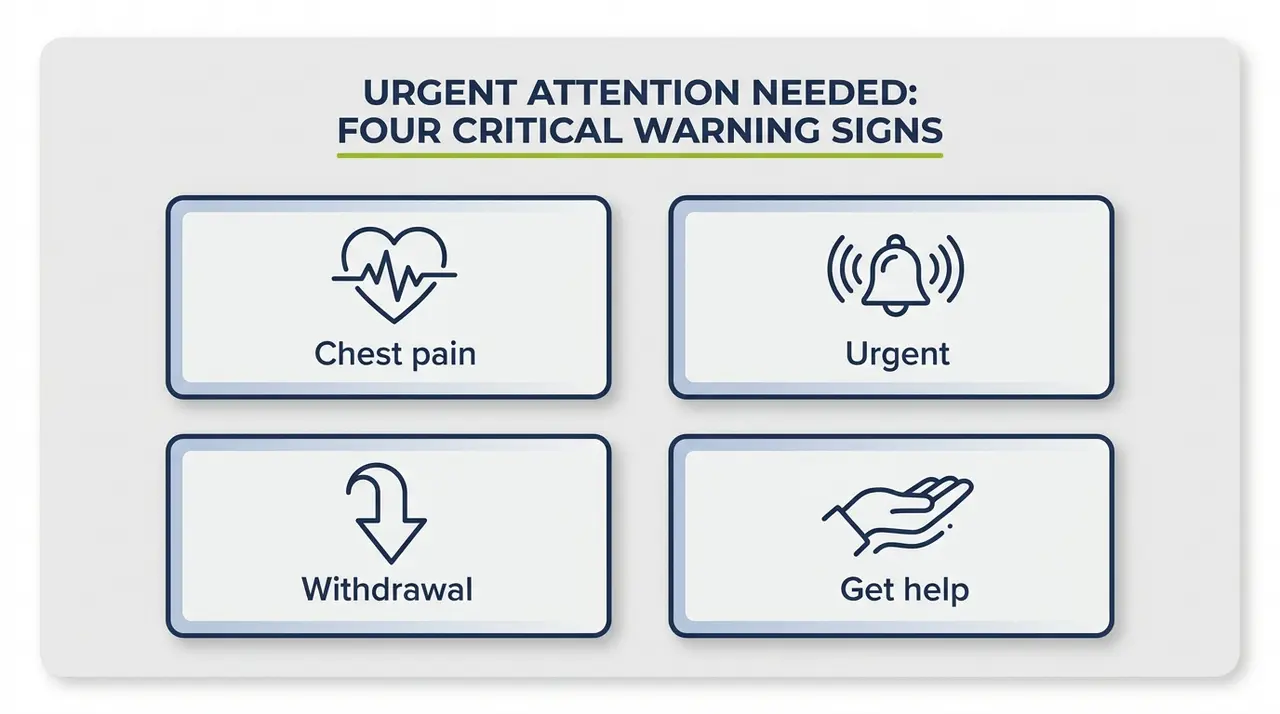
Physical and psychological warning signs that change the timeline from a family conversation to an emergency response.
The intervention, done properly
Sometimes the gentle conversation has been had, several times, and the answer has always been “soon.” An intervention is the structured version: a planned, loving, and firm conversation with the specific goal of getting the person into treatment immediately, not eventually.
It has a bad reputation, mostly from television. Done well, nobody shouts, nobody ambushes, and nobody cries for more than a minute or two. What actually happens is closer to logistics with love underneath. The family agrees on a single message beforehand, so the person cannot play one member off against another. A treatment place is arranged and a bed confirmed before anyone sits down, so that “yes” can be acted on the same day. Each person writes down what they want to say: the specific facts they have seen, the care behind their concern, and the boundary they will hold if the answer is no. Then the conversation happens once, calmly, and the family follows through on whatever they said.
Professional facilitation is worth considering, particularly where the family is fractured or tempers run close to the surface. A trained interventionist keeps the conversation from collapsing into the argument everyone has already had twenty times.
Where treatment happens, and why it matters
Outpatient therapy has genuine value. For someone with a mild problem, a stable home, and no using household members, weekly sessions and a support group can be enough. But cocaine dependence is rarely mild, and the environment that surrounds the person at home is usually the environment the addiction was built in. The dealer’s number is still in the phone. The friends who use are still two streets away. The stressors, the boredom, the 2 a.m. thoughts, all still live at the same address.
This is why, for significant dependence, most clinicians will point toward residential care. The clinical framework used internationally for matching people to the right level of care, the ASAM Criteria, weighs things like withdrawal risk, relapse history, and the recovery environment at home. When the home environment is actively unsafe for sobriety, residential placement is the indicated choice. Distance helps too, and not only because of geography. A short flight puts the whole pattern, the numbers, the routes, the rituals, out of reach while the nervous system settles enough to think clearly again. Families who consider a residential programme abroad often describe the same relief: for the first time in a year, nobody in the household is listening for the front door.
| Question | Outpatient probably fits | Residential is indicated |
|---|---|---|
| Can they get through a week without using, even badly? | Yes, most weeks | No, or barely |
| Do they live with or near people who use? | No | Yes |
| Have they tried outpatient and relapsed? | Not yet | Once or more |
| Is there a mental health condition alongside? | Mild or managed | Untreated trauma, depression, or anxiety |
| Is withdrawal being managed safely? | Yes, with monitoring | Crash is deep, or there is any despair |
What treatment actually consists of
There is no approved medication for cocaine dependence, so the treatment is therapy, and the therapy is specific. Cognitive behavioural therapy helps the person map their triggers and rehearse different responses, so that the Friday-night thought has somewhere to go other than the dealer. Contingency management rewards verified abstinence with small concrete incentives and works with stimulant use better than almost anything else, precisely because it retrains a reward system that cocaine has flattened.
Underneath the methods, though, sits the real work. In our experience at Holina Village, cocaine is rarely the problem. It is the solution the person found to a problem that started earlier: a trauma, a bereavement, an anxiety that never had a name, a loneliness that became unbearable somewhere around the third year of it. Take away the cocaine and the original problem is still there, suddenly without anaesthetic. That is why treatment that only addresses the using tends to produce what families know as the revolving door, and why our own programme treats trauma and emotional health alongside the addiction itself, in a contained space where the difficult weeks can be difficult safely. You can read more about how we structure the programme, or about the clinical team who deliver it, if that would help you picture it.
If someone you love is struggling with cocaine and you are unsure what to do next, we offer a confidential conversation with a senior clinician. No pressure, no obligation, just an honest discussion of your situation and the options open to you.
Your recovery, which is also a thing
Here is the part most articles skip. The research on family involvement, including published studies on engaging families in the care of adults with substance use disorders, consistently shows that treatment outcomes improve when families participate and receive their own guidance. Not when they worry harder. When they are supported, informed, and held to healthy limits by someone outside the family system.
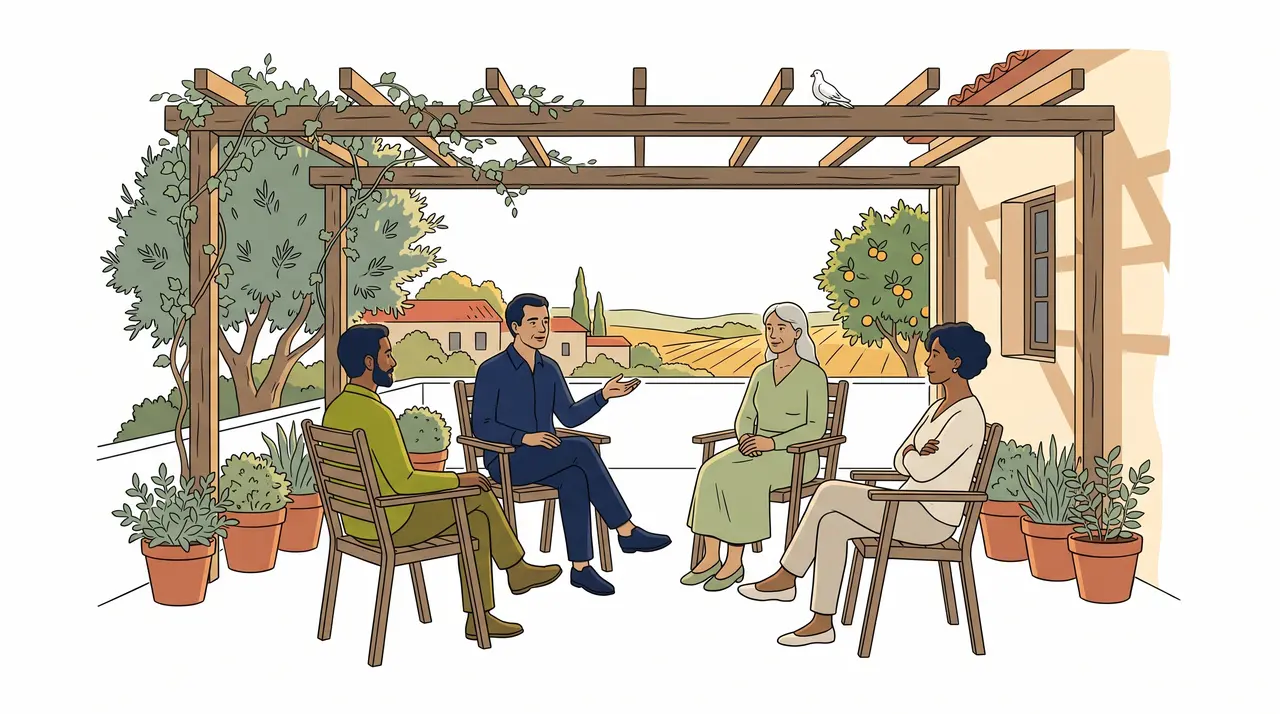
The family’s own recovery is the other half of the treatment, and it deserves the same attention.
You have been living inside this too. Probably for longer than you have admitted to anyone. The hypervigilance, the checking, the half-listening to every conversation for a slur, the inability to relax when the car pulls up, these take a cumulative toll, and they do not simply lift the day your loved one enters treatment. Get your own support. A therapist who understands addiction, a family group, whatever form it takes. It is not self-indulgence. It is the other half of the treatment, and the person you love has a measurably better chance when you are steadier than you have been.
Recovery from loving someone with an addiction looks like handing the problem to people equipped for it, and slowly taking your own life back. Not because you have stopped caring. Because the caring was never the part that was supposed to save them.
After treatment, the part nobody budgets for
A residential stay is not a cure, and anyone who tells you otherwise is selling something. It is a concentrated period in which the person gets sober, does the underlying work, and builds a routine that can survive contact with the real world. What happens in the three months after discharge determines most of the outcome, and this is where families can genuinely help: ongoing therapy in the hometown, a support group attended more than once, a gradual return to work rather than a heroic full-time sprint, and parents or partners who have learned not to treat every difficult mood as a relapse in progress.
Relapse, if it comes, is not the end of the story, though it will feel like it for a week or two. It is information. It usually means something in the aftercare plan was missing or too thin, and it is addressed by adjusting the plan, not by abandoning the person to it.
Frequently asked questions
Can someone stop using cocaine on their own?
Some people with very mild use patterns do stop without formal treatment. For genuine dependence, it is uncommon. Cocaine rewires the reward system so that cravings outlast motivation, which is why structured support, whether outpatient or residential, produces far better outcomes than willpower alone.
Should I confront them when they are high?
No. Serious conversations about treatment work best in a sober, calm window. When someone is intoxicated or in the crash afterwards, their capacity to take in what you are saying is reduced, and the conversation usually turns into an argument that solves nothing.
Is cocaine withdrawal dangerous?
Unlike alcohol or benzodiazepine withdrawal, cocaine withdrawal is not usually physically dangerous. Its risk is psychological rather than physical. The crash that follows use can involve deep exhaustion, flatness and hopelessness, and for some people that trough carries a risk of suicidal thinking that does require urgent attention.
What if they refuse help?
Refusal is common, especially early on. You cannot force treatment in most circumstances, but you can stop absorbing the consequences of the addiction, keep the door to treatment visibly open, and get support for yourself in the meantime. Many people who initially refuse accept help later, once the family’s boundaries make continuing as before less comfortable than changing.
If any of this describes your house at the moment, you do not have to wait for the bottom everyone talks about. Bottoms are not a treatment plan. What you can do today is simple: check the do-and-don’t table above against what the last month has actually looked like, pick the one boundary you have been avoiding, and get one conversation started.
Helping someone with a cocaine addiction means staying steady while they find their way to treatment, protecting your own health in the process, and knowing the difference between support and enabling. Residential care is often the right choice when home cannot be made safe, and family involvement reliably improves outcomes. If you want to talk any of this through with people who work with these situations every day, contact Holina Village for a confidential, unhurried conversation. Most families who call us are tired and frightened and doing their best. Nobody will judge how long it took you to pick up the phone.
About the Author
Yossi Zubari – CEO & Founder
Director and Senior Therapist working with addiction for over 25 years, and in personal recovery for almost 30 years.