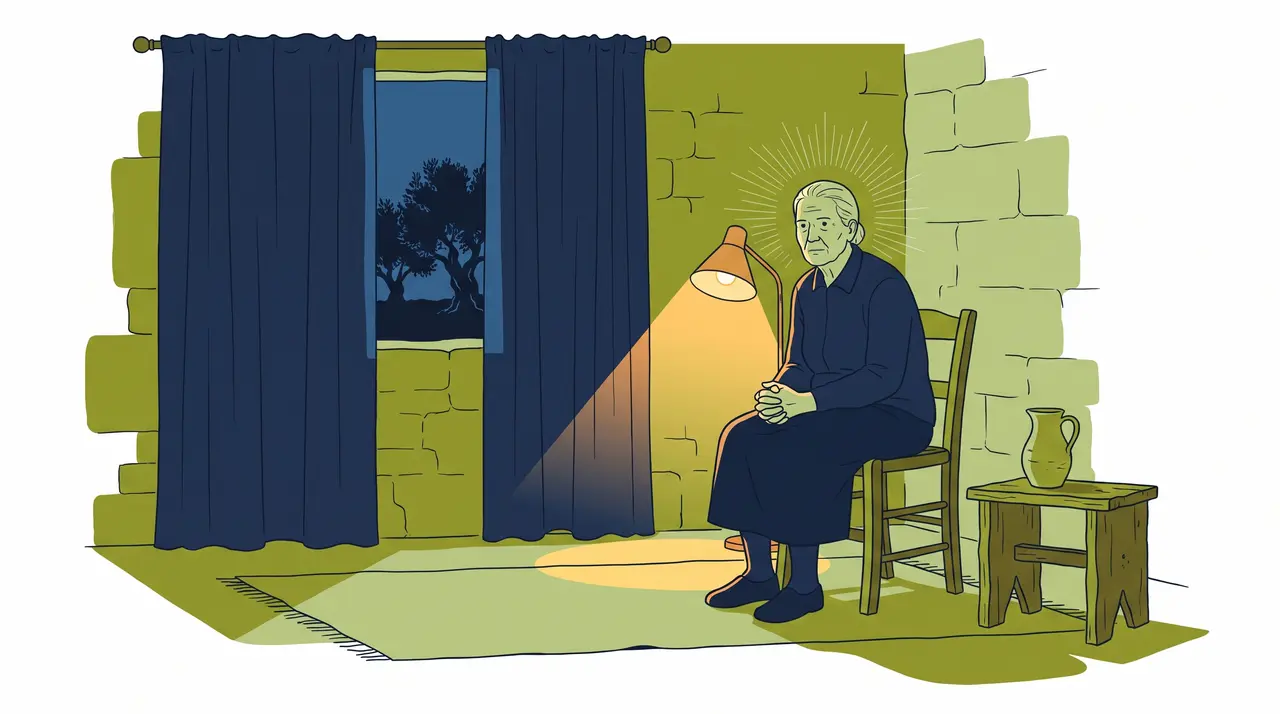
The curtains have been shut since Saturday afternoon. The phone is face down on the carpet beside the bed, and it has been buzzing, and that is part of why it is face down. Somebody in the flat is making coffee. The smell of it arrives and produces nothing at all, no appetite, no interest, just a dull awareness that other people are managing to have a Sunday.
This is not a hangover in the ordinary sense. Nobody in that room is thinking about last night’s high. They are thinking about how to get through the next six hours without their own thoughts.
Most articles on this subject open with a definition and then produce a tidy inventory of harms. That inventory matters, and it is below. But the part that keeps people using is rarely the part that gets described properly, so this piece spends as much time on the crash and the day after as it does on the drug itself.
Reading time: 5 minutes
Key points in this article
- Cocaine causes immediate cardiovascular strain, including raised heart rate, higher blood pressure and narrowed coronary arteries, which can trigger a heart attack even in a young, fit person.
- The acute comedown typically runs between 24 and 72 hours as depleted dopamine and noradrenaline are slowly restored, with low mood and fatigue often trailing on for days.
- Mixing cocaine with alcohol produces cocaethylene, a toxic compound that lingers in the body longer than cocaine alone and is linked to a higher risk of cardiovascular fatality.
- A comedown that resolves in days is different from withdrawal, where craving and low mood can persist for weeks, and telling the two apart matters for deciding what kind of help is needed.
Table of contents
- The first twenty minutes, and what the body pays for them
- What happens where, and on what clock
- A stimulant does not check whether you are twenty-six and fit
- Why the room starts to feel like it is watching you
- The nervous system runs out of road
- The nose keeps a record
- The comedown is the part nobody plans for
- How long it lasts, and what makes it longer
- The Tuesday problem, or what the day after actually costs
- Why nothing feels good, and why that matters clinically
- Sleep is the first casualty and the last thing to come back
- Comedown or withdrawal, and why the difference changes the plan
- The signs that mean stop reading and call for help
- The alcohol combination almost nobody is warned about
- When side effects stop being the question
- What a contained space actually does
The first twenty minutes, and what the body pays for them
The short-term cocaine side effects are, in plain physiological terms, an emergency response switched on without an emergency. Heart rate climbs. Blood pressure climbs with it. Core temperature rises, pupils widen, the hands may shake slightly, and there is often a fine layer of sweat that has nothing to do with the room being warm.
Alongside that comes the part people describe as confidence. Talkativeness. A sense that the evening has finally started.
What the MedlinePlus overview of cocaine and its effects makes clear, and what we see confirmed in the intake room, is that these responses are not reserved for long-term users. Nausea, breathlessness and sudden fear can arrive on a first occasion, at a small dose, at a party where everyone else seems fine.
What happens where, and on what clock
Readers arrive at this page with different questions. Some want to know what tonight is doing. Some have watched two years go by and want to know what two years does. The distinction is worth drawing plainly.
| System | During use and the hours after | With repeated use over months or years |
|---|---|---|
| Heart and vessels | Racing pulse, raised blood pressure, chest tightness | Thickened heart muscle, rhythm disturbance, raised stroke and infarct risk |
| Brain and nerves | Tremor, headache, restlessness, occasional seizure | Impaired impulse control, memory and attention difficulties |
| Mood | Euphoria, then agitation, suspicion, panic | Persistent low mood, anhedonia, paranoid thinking |
| Nose and airway | Numbness, congestion, nosebleeds, cough | Loss of smell, chronic sinus infection, septal damage, lung injury |
| Sleep and appetite | No hunger, no sleep, rapid weight loss | Broken sleep architecture, nutritional depletion |
A stimulant does not check whether you are twenty-six and fit
The mechanism is worth understanding because it explains why healthy young people end up in cardiology units. Cocaine narrows blood vessels, including the coronary arteries that feed the heart muscle itself. So the heart is asked to beat harder and faster at the same moment its own oxygen supply is being squeezed. Demand rises, supply falls.
That gap is where chest pain, arrhythmia and myocardial infarction live.
Cardiac events after use have been documented in people with no prior heart disease, no family history, no risk factors a GP would have flagged. Athletic fitness offers no protection here, and in our experience it often does the opposite, because it produces confidence that the body will absorb whatever is asked of it.
The chest signs that end the conversation
Pressure or crushing pain in the chest, a pulse that will not settle, sudden dizziness, breathlessness, grey or clammy skin. None of these should be waited out. This is an ambulance call, not a wait-and-see.
Why the room starts to feel like it is watching you
Among the cocaine side effects people are least prepared for is the turn. The evening is going well, and then it is not, and nobody can say exactly when the switch happened.
The flood of dopamine that produces the initial lift also raises the volume on the brain’s threat detection. The result is a nervous system running at full alert with nothing to be alert about. That state is close to indistinguishable from severe anxiety, and it frequently tips into a panic attack, complete with pounding heart, a sense of unreality, and a conviction that death is imminent.
At higher doses, and across longer runs, suspicion hardens into something else. People become certain they are being followed, recorded, discussed. They hear things. Paranoid states of this kind are well described in the clinical literature and they are not a character flaw. They are pharmacology.
The nervous system runs out of road
Tremor in the hands. Jaw clenching. Headache with a sharp, pressing quality. An inability to sit still that is not restlessness in the ordinary sense but something closer to the body refusing to accept stillness as an option.
Seizures are the part that surprises people most. They can occur at doses well short of what anyone would call a massive amount, and they can occur in someone who has used the same quantity a dozen times before without incident.
There is also the quieter neurological cost, the one nobody notices in the moment. While the drug is active, judgement narrows. Risk looks smaller than it is. Decisions get made at three in the morning that would have been unthinkable at three in the afternoon, and those decisions have consequences that outlast the chemistry by years.
The nose keeps a record
Local vasoconstriction is the same mechanism as the coronary one, applied to a much smaller and more delicate territory. The blood vessels in the nasal lining clamp down, tissue is starved, and it does not fully recover between occasions.
What follows is gradual and easy to explain away. Congestion that never quite clears. Nosebleeds that arrive without warning. Sinus infections that keep returning. Smell fading so slowly that people only realise when someone else mentions that dinner is burning.
In advanced cases the septum itself perforates, and reconstructive surgery is the only route back.
Where the drug is smoked rather than sniffed, the injury moves downward instead. Chronic cough, chest tightness, breathlessness on stairs that were never a problem before, and inflammation of the lung tissue itself.
The comedown is the part nobody plans for
Ask most people what a comedown is and they will say something vague about feeling rough. That undersells it considerably.
The comedown is what happens when the borrowed chemistry is repaid. Dopamine and noradrenaline, which were released in enormous quantity and then blocked from being reabsorbed, are suddenly depleted. The receptors that were flooded are now under-stimulated. The body, which has been running an emergency response for hours, collapses out of it.
Physically this feels like exhaustion with weight to it. Heavy limbs, aching muscles, a headache that paracetamol barely touches, hunger that is somehow also nausea.
Emotionally it is worse. Flatness, irritability that snaps at people who did nothing, waves of anxiety with no object, and an insistent, practical thought that there is one obvious way to make all of this stop.
A short film on what a recovery journey through Holina Village actually looks like, from arrival to daily life in the community.
How long it lasts, and what makes it longer
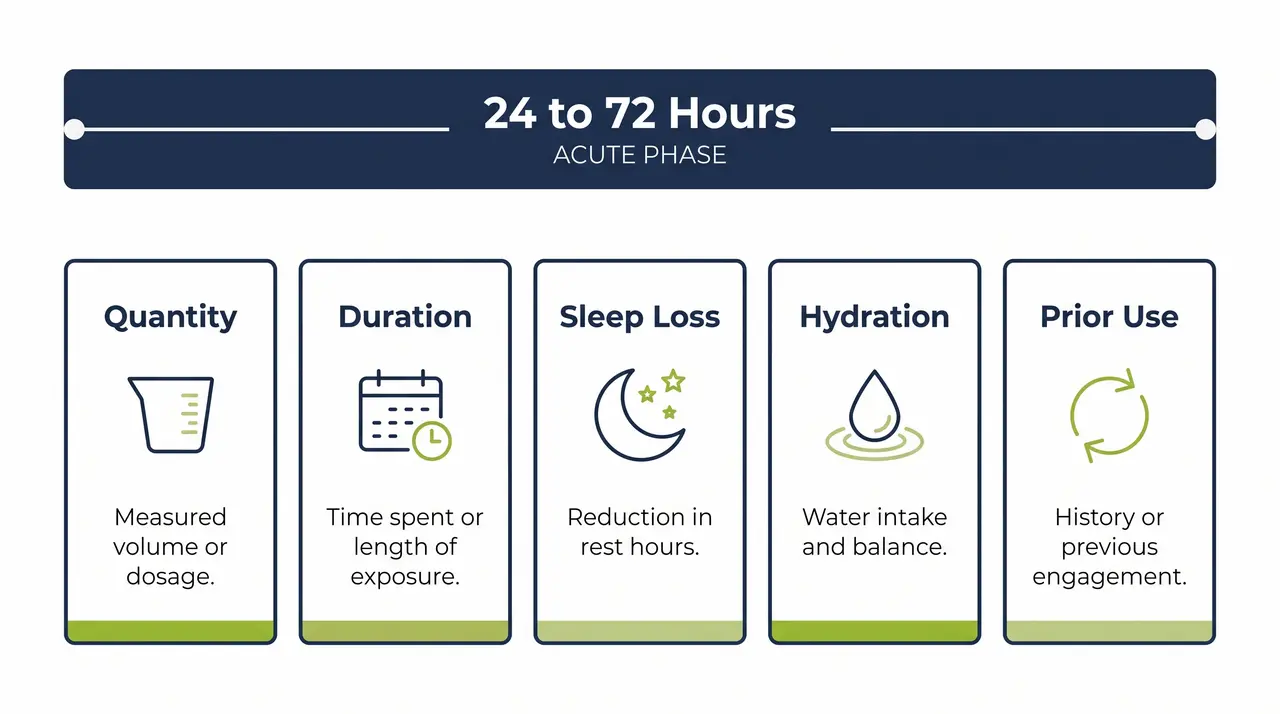
The acute phase usually runs somewhere between twenty-four and seventy-two hours. That is the window in which the body is doing the heaviest correction. Beyond it, fatigue and emotional instability tend to trail on for several more days, thinning out rather than ending cleanly.
Four things reliably lengthen it. The quantity consumed. Whether it was a single occasion or a run across a weekend. How much sleep was lost, because sleep debt and comedown compound each other. And the state of hydration and nutrition, which after two days of no appetite is usually poor.
There is a fifth factor that people discover slowly. The more sustained the use has been over months, the longer each comedown takes, because the neurotransmitter stores being drawn on were already low before the weekend started.
The Tuesday problem, or what the day after actually costs
The cocaine after effects that damage a life are rarely the dramatic ones. They are the ordinary Tuesday.
Concentration is gone. Not reduced, gone. Emails get read three times without registering. Light seems too bright, ordinary office noise seems aggressive, and a simple decision about which task to start feels genuinely impossible.
Underneath that sits a specific emotional texture. Shame with no proportion to it. Self-criticism running on loop. A sense of distance from colleagues and family that feels like it must be visible to everyone. And a temporary inability to take pleasure in anything at all, so the things that usually help, food, exercise, company, simply do not work.
When these days stop being occasional and start being the shape of the week, it is worth looking honestly at what a structured residential programme can interrupt that willpower on a Tuesday morning cannot.
Why nothing feels good, and why that matters clinically
The dopamine system is not a reservoir that refills on demand. After a heavy occasion it is genuinely depleted, and the brain sits in a temporary chemical deficit where ordinary rewards register as nothing. Coffee is nothing. Music is nothing. A message from someone you love is nothing.
People interpret this as evidence about their life. It is evidence about their neurochemistry, three days out of date.
This is the point at which we ask families to pay attention rather than give space. The steep drop in mood that follows heavy use can produce despair that feels total, and thoughts of self-harm appear in people who have never had them before. If someone is in that state, they should not be alone with it, and the honest conversation should happen now rather than when they seem better.
Sleep is the first casualty and the last thing to come back
The sympathetic nervous system stays switched on long after the subjective effects have faded. The body is still braced. Lying down in a dark room does not undo that, which is why people describe being flattened by exhaustion and completely unable to sleep at the same time.
What happens next is where real danger enters. Alcohol, borrowed sedatives, sleeping tablets bought without prescription, all used to force the system down. Combining stimulants with depressants of this kind carries a serious risk of respiratory depression and poisoning, and the risk is highest precisely when someone is desperate and stops measuring.
Lost sleep also has a compounding effect that people underestimate. Two nights without proper rest sharpens paranoia, deepens the crash and makes panic far more likely.
Comedown or withdrawal, and why the difference changes the plan
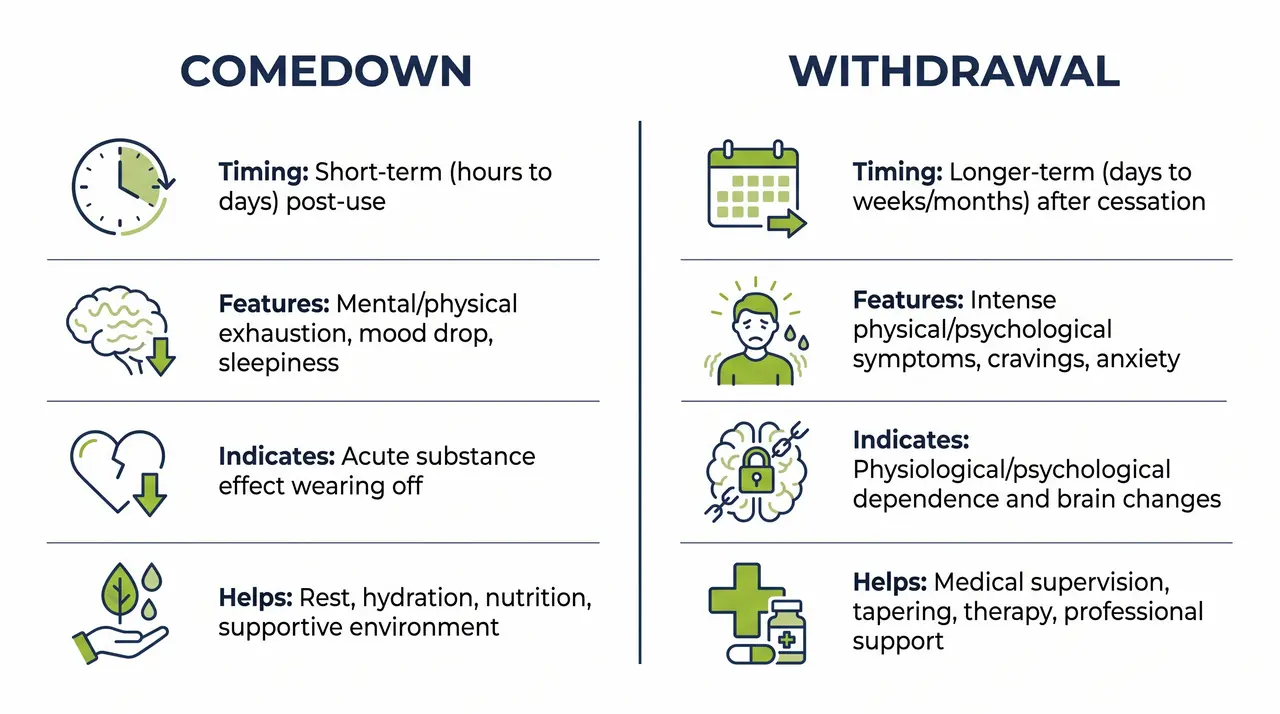
These two words get used interchangeably and they describe different things. Getting the distinction right determines whether someone needs a quiet weekend or a treatment plan.
| Comedown | Withdrawal | |
|---|---|---|
| What it is | Short-term physiological rebound as the drug clears | The brain’s adaptation to sustained presence of the drug |
| Timing | Hours to roughly three days | Weeks to months, in waves |
| Core features | Exhaustion, flat mood, irritability, short craving spike | Persistent craving, depressed mood, vivid dreams, appetite and energy changes |
| What it indicates | The body correcting | Dependence has developed |
| What usually helps | Sleep, food, fluids, company | Clinical support, therapy, monitored setting |
The clinical description of cocaine withdrawal notes that low mood and craving can persist for months, which is precisely why unsupported attempts to stop so often fail in week three rather than week one.
The signs that mean stop reading and call for help
Overdose is not simply a matter of quantity. Individual sensitivity, the purity and contents of what was taken, and whether anything else was in the system all shift the threshold, sometimes dramatically, sometimes on an occasion indistinguishable from a hundred previous ones.
| What you are seeing | What it may mean |
|---|---|
| Body dangerously hot, skin flushed or dry | Hyperthermia, which can damage muscle and kidneys |
| Convulsions or collapse | Seizure activity |
| Shallow, laboured or rattling breathing | Respiratory compromise |
| Chest pain, irregular pulse | Cardiac emergency |
| Severe confusion, hallucination, terror | Stimulant psychosis or brain involvement |
Call the emergency number where you are, 112 across Cyprus and the EU. Keep them cool, keep them lying on their side if they are unresponsive, tell the operator what was taken, and stay with them. Do not leave the room.
The alcohol combination almost nobody is warned about
Two things happen when cocaine and alcohol are taken on the same night, and both of them are bad.
The first is chemical. The liver, presented with both substances, produces a third one, cocaethylene, which does not exist otherwise. It is cardiotoxic, it lingers considerably longer in the body than cocaine does, and a systematic review of simultaneous alcohol and cocaine use links the combination to raised cardiovascular fatality risk.
The second is behavioural and arguably kills more people. Each substance masks the felt effect of the other. Alcohol blunts the edge of the stimulant, the stimulant hides how drunk someone has become, and so both get consumed in quantities that would never have been reached alone. The internal warning system, the one that says enough, has been disabled from both directions.
When side effects stop being the question
There is a specific moment that families describe to us again and again, and it is not a dramatic one. It is the realisation that the using has quietly changed function. It is no longer about the night out. It is about not having to sit through the comedown.
That inversion is the clinical turning point. Other markers cluster around it. Repeated intentions to stop that dissolve by Friday. Hiding, editing, small lies that become large ones. Money that does not add up. Work absences explained by illness that was not illness.
Dealing with the side effects of cocaine and the cocaine after effects alone, in a shuttered room, with shame doing the talking, is the least effective arrangement available. That isolation is not a moral failure. It is a predictable feature of how this particular substance behaves.
What a contained space actually does
Outpatient therapy has real value, and for some people it is entirely sufficient. Its limit is geography. It sends someone back, every week, into the same flat, the same contacts, the same Friday.
Holina Village exists in Achnas because distance from that pattern is not a luxury, it is a mechanism. A working farm in the Cypriot countryside, orchards, animals, open sky, round-the-clock clinical presence, and a therapeutic community where the daily outdoor and adventure work rebuilds the capacity to feel something without chemistry. It feels nothing like a ward, which is deliberate.

Most people who write to us do so during a bad week rather than a considered one. That is expected, and the first conversation is unhurried and confidential. If you have read this far for someone else, an early conversation with our admissions team costs nothing and often changes what is still possible.
The curtains open eventually. What determines whether Sunday repeats is usually not resolve. It is whether anyone was willing to be met.
Common questions
How long does a cocaine comedown usually last
Most acute comedowns run between twenty-four and seventy-two hours, with low mood and fatigue often trailing on for several days beyond that. Heavier or more sustained use tends to lengthen the comedown, partly because it takes longer for depleted neurotransmitter stores to rebuild.
Is it dangerous to mix cocaine and alcohol
Yes. The combination produces cocaethylene, a compound that is toxic to the heart and remains in the body longer than cocaine alone. It also masks how much of each substance has actually been taken, which frequently leads to consuming more of both than intended.
What is the difference between a comedown and withdrawal
A comedown is the body’s short-term rebound as the drug clears, usually resolving within a few days with rest, food and fluids. Withdrawal reflects a deeper adaptation to sustained use, and craving or low mood in withdrawal can persist for weeks or months, which usually calls for structured clinical support rather than simply waiting it out.
When should someone seek professional help rather than manage a comedown alone
If low periods after use are becoming more frequent, if attempts to stop keep failing, if there are thoughts of self-harm, or if using has quietly shifted from being about the occasion to being about avoiding the crash, that is a reasonable point to have an honest conversation with a professional rather than continuing alone.
The physical toll of cocaine, the comedown that follows, and the ordinary Tuesday that comes after that are three separate costs, and each of them is real. None of them are fixed by willpower alone, and none of them need to be carried in silence. Understanding the difference between a passing comedown and genuine withdrawal, and recognising the point where using has changed its purpose, are the first steps toward doing something about it. If that point has arrived, for you or for someone you love, a confidential conversation with our team is a reasonable next step, with no pressure and no obligation attached to it.

About the Author
Yossi Zubari
CEO & Founder
Director and Senior Therapist working with addiction for over 25 years, and in personal recovery for almost 30 years.