“`html
The screen is not particularly bright. The room is not particularly dark. It is somewhere past two in the morning, and a man who told his wife he was asleep is watching a number climb and fall on a phone he keeps face-down at dinner. He is not having fun. He stopped having fun a long time ago. He is chasing something he could no longer name if you asked him. If you have arrived at this page, you may recognise that room. What follows is a plain account of what gambling addiction rehab involves, what the evidence supports, and what recovery genuinely asks of the person going through it.
Reading time: 5 minutes
Key points from this article
- Gambling disorder is a recognised clinical condition driven by brain circuitry, not a failure of character or willpower.
- Residential treatment removes the person from an environment wired to pull them back, and offers the structure the person cannot yet hold alone.
- CBT, motivational work, and group therapy are the approaches with the strongest evidence base for disordered gambling.
- Lasting recovery addresses the emotional wound underneath the behaviour, not only the behaviour itself.
Contents
What gambling addiction rehab is, and who it is for
Gambling addiction rehab is a structured treatment programme designed to interrupt compulsive gambling and rebuild the emotional life underneath it. It is not a punishment, and it is not a confession booth. It is a contained space where a person can stop, finally, and look honestly at what the gambling was doing for them.
The brain does not distinguish neatly between a slot machine and a substance. The dopamine pathways that fire around a near-miss are the same circuitry implicated in drug dependence, which is part of why willpower alone so rarely holds. The American Psychiatric Association classifies gambling disorder as a recognised medical condition – not a character defect, not a moral failing.
It is for the person in bankruptcy. It is also, just as often, for the high-functioning person whose colleagues suspect nothing, whose accounts look fine on the surface, and who carries a constant low hum of dread that no one else can see.
When it stopped being a rough patch
Almost everyone tells themselves a version of the same story for too long. It was a bad month. It will balance out. The line between a social gambler and a compulsive one is not the amount of money. It is the loss of choice.
Watch for the chasing. A loss demands to be won back, and the winning-back becomes its own loss, and the stakes climb because the old amount no longer registers. Watch for the lies, small at first, then load-bearing. Watch for the irritability when someone suggests cutting down.
The phone changed the shape of all this. Gambling is now silent, instant, and pocket-sized. Harvard Health has written on how the constant availability of online gambling and its risks to mental health turns a private compulsion into something that can run all day without a single witness. There is no smell on the breath. There is only the face-down phone.
Why a residential setting, when outpatient exists
Outpatient therapy has genuine value. Many people begin there, and for some it is enough. The weekly hour with a good clinician can do real work, particularly early on, when there is a strong family around the person and no crushing debt pulling at them constantly.
Here is where it reaches its limit. The hardest moment is not the therapy session. It is nine in the evening, alone, three days after the session, when the app is one thumb-press away and the feeling is unbearable. Residential gambling rehab removes that thumb-press. It takes the person out of the environment that is wired – financially and emotionally – to pull them back under.
The therapeutic community model works precisely because the structure does some of the holding the person cannot yet do for themselves. The daily life of the place becomes the treatment – community as method.
What actually happens inside the programme
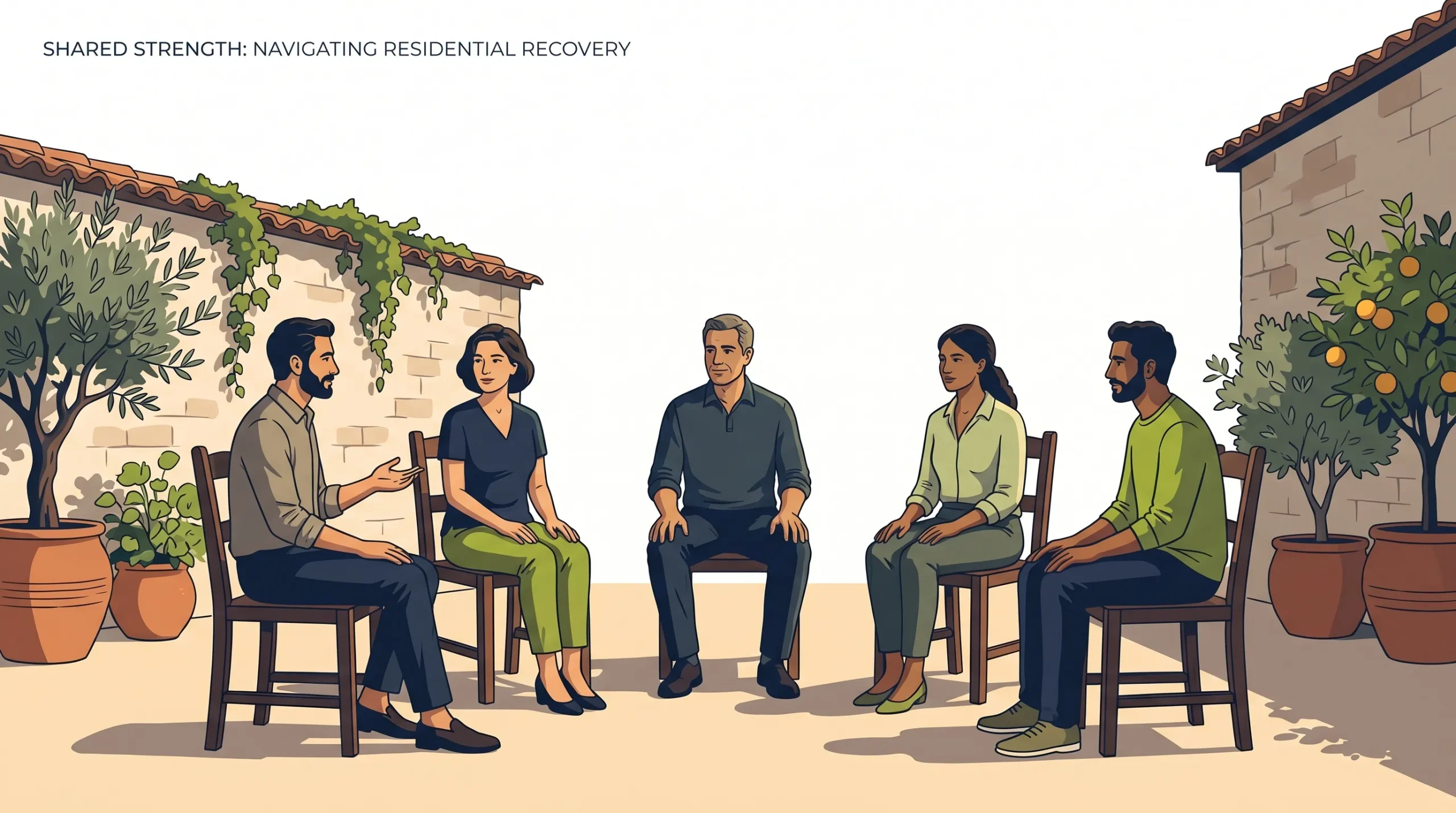
People imagine something between a hospital ward and a courtroom. It is neither. The first days are about stabilising, not interrogating. Sleep, food, a heartbeat that slows back down. Disordered gambling and broken sleep feed each other in measurable ways, and a tired nervous system makes worse decisions – so the early work is quieter than most people expect.
Then the layers come off, slowly. The denial. The rationalisation that this time the system would have worked. Underneath, most often, is something that has nothing to do with money. Loneliness. A grief that was never sat with. A sense of worthlessness that the near-win briefly silenced.
The aim is not simply to stop. Stopping is the beginning, not the conclusion. The work is learning to sit with a hard feeling without reaching for the fantasy of the win. You can read how this unfolds across our residential therapeutic programme.
The methods that hold up under scrutiny
Not every approach earns its place. The ones that do are well-documented. Cognitive behavioural therapy sits at the centre of evidence-based treatment for disordered gambling, because gambling runs on specific, correctable distortions of thought.
Why CBT fits gambling so closely
The gambler’s mind is full of small, persuasive errors. The illusion of control over a random outcome. The gambler’s fallacy – the belief that a run of losses means a win is owed. The magical thinking around systems and streaks. CBT names these out loud and dismantles them one by one. A meta-analysis of cognitive-behavioural techniques for problem gambling found meaningful reductions in the severity of gambling urges, often within weeks of sustained work.
Motivational interviewing matters too, especially at the start, when part of the person still wants to go home and play. The evidence base for this approach in gambling is well established.
Then there is the group. The shame that surrounds gambling is enormous and isolating. Sitting in a room of people who recognise the face-down phone breaks something open that no individual session quite reaches in the same way.
A confidential conversation costs nothing
If you are wondering whether residential treatment is the right step for you or someone you care about, our team will speak with you honestly and without pressure. No obligation, no sales process – just a clear, unhurried conversation.
The question almost everyone asks about control
Most people arrive carrying a quiet, unspoken hope. Surely, with the right tools, it would be possible to go back to a small, sensible bet now and then. A flutter on a match. A modest hand at cards.
For someone with a clinical addiction, the honest answer is almost always no, and the reason is built into the mechanism. Gambling delivers its reward on a variable-ratio schedule – the most powerful pattern in nature for producing compulsive behaviour. You cannot predict when the win comes, so you cannot stop pulling. A single small bet does not stay small. It reopens the entire neural pathway as if no time had passed.
Abstinence is the goal. Not as a moral position. As the only stable ground that holds over time. The work alongside it is building a life that offers real feeling, real connection, real stakes that matter – so that abstinence becomes a fair trade rather than endless deprivation.
How long it takes, and what each length buys you
Changing deep cognitive habits takes time the way healing a fracture takes time. A week away offers a pause, a breath, a temporary relief that feels like recovery and is not. The pattern is still intact underneath, waiting.
Duration depends on the person – severity, the weight of accumulated debt, what was attempted before. We talk in months because that is what the work genuinely requires, not because longer is automatically better.
A day in the place itself
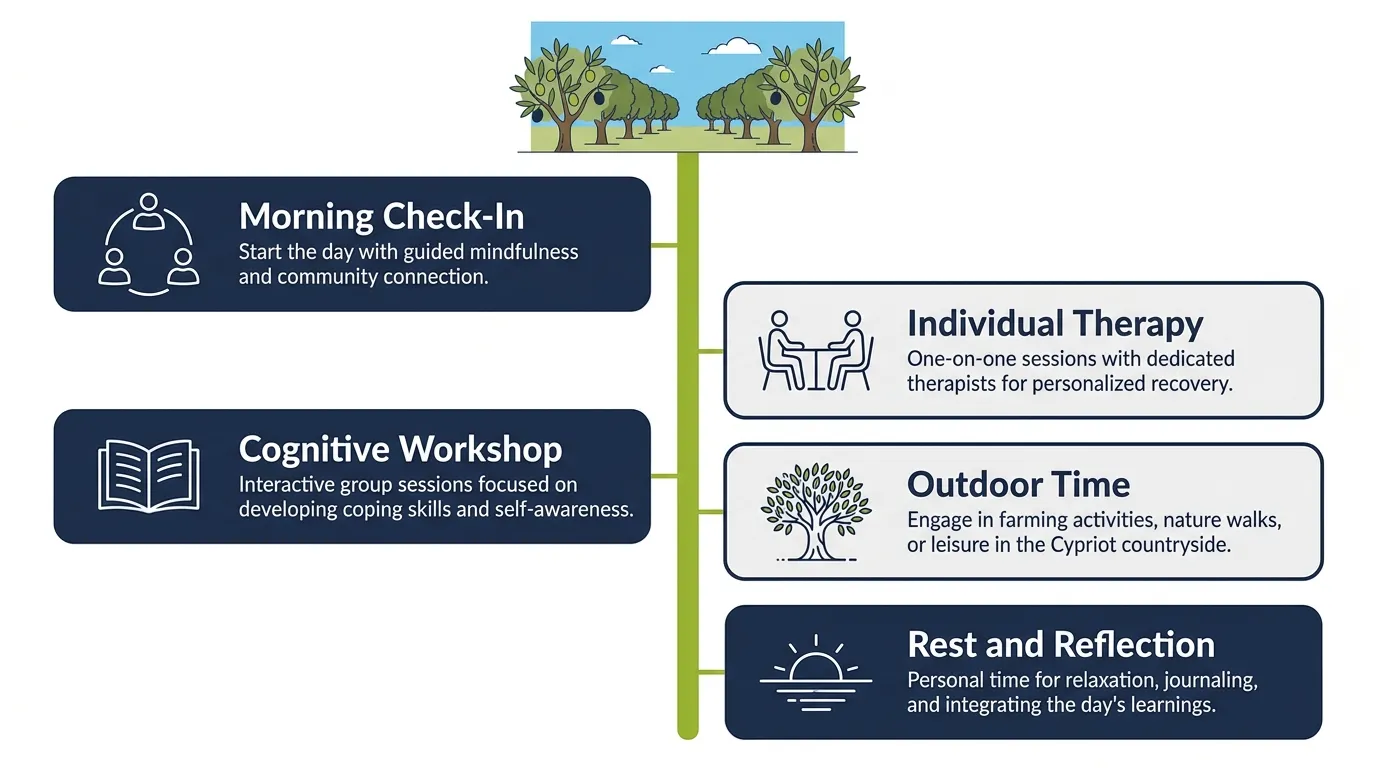
It feels nothing like a clinical facility. The setting is a working farm with orchards, animals, and open sky, and that is not decoration. There is good reason for it.
A morning begins with a group check-in. Then individual therapy, a cognitive workshop, time to write, time to be quiet. There is physical work and there is rest. There is food that does the body good, and there is space outdoors, which matters more than people tend to assume. Research into the effect of nature exposure on perceived and physiological stress links time in green, open space to measurable drops in the arousal that drives the urge to gamble.
The structure itself does something. After years of chaos, a predictable day where nothing terrible happens is, quietly, its own form of treatment. Some of that structure comes through shared physical challenge and outdoor work, which you can read about in our adventure and outdoor activities.
Why Cyprus, and why this particular place
Distance is part of the medicine. A short flight from Israel and much of Europe, no significant jet lag, family reachable quickly if needed. Far enough to break the daily pull of the familiar, close enough that it never feels like exile.
Leaving the country accomplishes something a local outpatient room cannot. The encrypted apps, the lenders who know the number by heart, the streets that hold a hundred small triggers – all of it stays behind. The mind finally drops a gear.
Holina Village is not a grey institution. It is a contained, family-feeling space – pastoral and held – where the work happens among people rather than under fluorescent light.
When there is trauma underneath the gambling
Gambling is frequently a form of self-medication. It quiets depression, dulls anxiety, blots out the intrusions of old trauma, occupies a mind that cannot settle. Among people who seek treatment, the rate of co-occurring conditions is strikingly high – mood disorders, anxiety disorders, and personality difficulties running far above general-population rates.
Treat only the behaviour and ignore the wound beneath it, and the person simply swaps one escape for another. Substances. Compulsive spending. Work that never stops. Lasting recovery means working with a programme that recognises what the gambling was trying to solve – the emptiness, or the old pain that made extreme stimulation feel necessary in the first place. Recovery from grief encountered in early life is one thread that surfaces often in this work, and we have written about grief in early adulthood and its place in the recovery process for those who want to understand that connection.
Where the family fits, and where it must step back
Addiction is rarely a solo event. Families, with the best intentions, sometimes keep it alive without knowing they are doing so. The repeated bailout. The collective silence at the dinner table. The covering of one more debt.
What a family can do in the first week
The hard, loving steps come first. Stop covering the debts. Close the tap. Present a single united front so there is no side door left open. Encourage treatment without offering an alternative that allows the situation to continue. Financial pressure worsens decision-making in measurable ways, which is exactly why the chaos has to be contained from the outside while the person cannot yet contain it from within.
Rebuilding trust after the lies
Trust broken over years does not return on a promise. It returns through radical financial transparency, mediated conversations, and consistency held over months. Actions, repeated, slowly. Not words. The therapeutic community includes family work for exactly this reason – recovery is not a solo project.
How admission actually works
The process is designed to be clear and calm, because most families reach us already in a state of crisis. It begins with an honest conversation and a clinical assessment, which can be done discreetly by video from wherever the person is. From there, a check that the setting is the right clinical fit, and a date to arrive.
It helps to have a few things to hand. A picture of general health, any previous treatment history, a list of current medications, and a sense of what the person actually wants from this. The logistics are taken care of – collection from Larnaca or Paphos airport, and a settling-in period designed to feel gentle rather than abrupt.
If you want to talk it through before anything else, the contact page is the right place to start. There is no form to fill that commits you to anything.
Does it actually work
Yes. Plainly, yes. People who were at the bottom of the financial and emotional pit are living settled, meaningful lives now, and they are not rare exceptions.
What separates the people who hold their recovery comes down to a few honest things. The willingness to give up the fantasy of the next win. The depth of emotional work done on the root, not just the symptom. And a structured plan for re-entry – continued groups or individual support once the person is home. Research into psychological interventions for gambling disorder consistently shows that ongoing, structured support meaningfully lowers relapse rates over time.
So if you are the person with the face-down phone, or the one lying awake beside them, the next step is smaller than it looks. Not a vow. Not a transformation. Just the willingness to be met – by people who have seen this before, and are not frightened of it.
Frequently asked questions
Gambling addiction is treatable, and the path through it is clearer than it often feels from inside it. The evidence points consistently toward structured residential care that addresses both the compulsion and the emotional ground it grew from. Time, distance, community, and clinically grounded therapy – these are not abstractions. They are the actual ingredients of recovery, held together in a setting designed around the person rather than around clinical efficiency.
If you are at the point of wondering whether something needs to change, that wondering is worth listening to. Our team is available for a quiet, confidential conversation – no pressure, no obligation, no commitment beyond a conversation.
Speak with someone who understands
Whether you are ready to begin or simply want to understand what treatment involves, we are here for an honest conversation. Confidential, unhurried, and without any pressure to commit.
About the Author
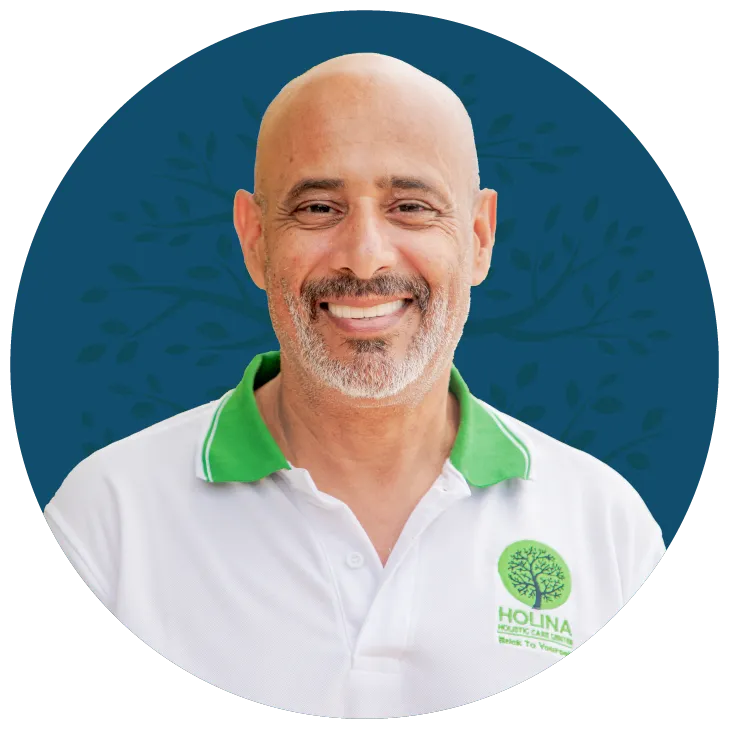
Yossi Zubari
CEO & Founder
Director and Senior Therapist working with addiction for over 25 years, and in personal recovery for almost 30 years.
“`