The bedroom door has been shut for most of the day. There is nothing dramatic about it. A laptop glowing, a takeaway box, the curtains half-drawn against an afternoon that has long since slid into evening. A parent stands on the landing and tells themselves it is just a phase, a hard month, the tail end of something that will pass. It is usually only later – weeks or months on – that the small things line up into a pattern. The money that goes missing. The friends who changed. The stomach pains nobody can explain. By then the question is no longer whether something is wrong. It is what to do about it. This article covers what ketamine dependence actually looks like, what residential rehab involves, and what families and young people can expect from treatment that works.
Reading time: 8 minutes
Key points from this article
- Ketamine dependence is primarily psychological and neurological. Stopping at home repeatedly fails not because of weak will, but because the same environment and triggers remain unchanged.
- Detox and rehab are not the same thing. Stabilising the body is the beginning. The sustained work of building coping skills and a new identity is what actually holds recovery together.
- Ketamine causes serious and sometimes irreversible bladder damage. The earlier use stops and medical monitoring begins, the better the physical outlook.
- Depression, anxiety and trauma almost always sit alongside heavy ketamine use. Treatment that addresses both at once, inside one programme, is consistently more effective than splitting the two apart.
Contents – click to expand
What ketamine rehab is, and who it is actually for
Ketamine rehab is the structured process of stepping out of active use and into recovery, combining physical stabilisation with sustained emotional, cognitive and behavioural work. It is not a detox bed for a few days. It is not a lecture about consequences. It is the slow business of breaking the loop between a substance and the life that has organised itself around it.
In our experience the young people who arrive for this work are between seventeen and their mid-twenties, using heavily or daily, and already carrying the cost in their bodies, their moods and their relationships. The pattern that brings most families to the point of asking for help is a familiar one. Stopping at home has been tried. More than once. It keeps failing, not because of weak will, but because the same room, the same group chat and the same triggers are still there the morning after every good intention. The use of ketamine among young people has been climbing, and the dependence it produces is now well documented in the clinical and neuroimaging research on ketamine use disorder.
The confusion at the centre of it all
Ketamine is unusual among the things young people get into, because it has a respectable face. It sits on hospital anaesthesia trolleys. It is being studied, under careful supervision, for treatment-resistant depression. That medical respectability does something quiet and dangerous. It tells the person using it, and sometimes their parents, that this cannot really be that bad.
The pull is not mainly chemical at first. It is dissociation. Ketamine lets a person step outside their own distress, to watch their anxiety, their grief, their flat empty days from somewhere that does not hurt. For someone who has been struggling, that is not a side effect. That is the whole point. And it becomes a reflex.
The body, meanwhile, learns fast. Tolerance climbs, the old dose stops working, the amount creeps up, and the line between using to feel better and using to feel anything at all quietly disappears.
The signs families keep explaining away
Most of what worries a parent first is behavioural. Moods that swing further and faster than they used to. School or work slipping. Old friends dropping off and a new circle forming, one that seems to revolve around being out of it. The substance hidden, the questions met with a story that does not quite hold together.
Then there is the body. Persistent stomach pain, sometimes called K-cramps, that no GP visit seems to resolve. Memory that has gone patchy. Concentration that will not hold. Either exhaustion that swallows whole days, or nights spent wide awake.
If you are a parent reading this, the practical red flags are worth naming plainly. Frequent, urgent requests for money. Disappearances that do not add up. Small bags or fine crystalline powder found in a room. None of these confirms the worst on its own. Together, they are a conversation you should not put off.
When outpatient help is not enough
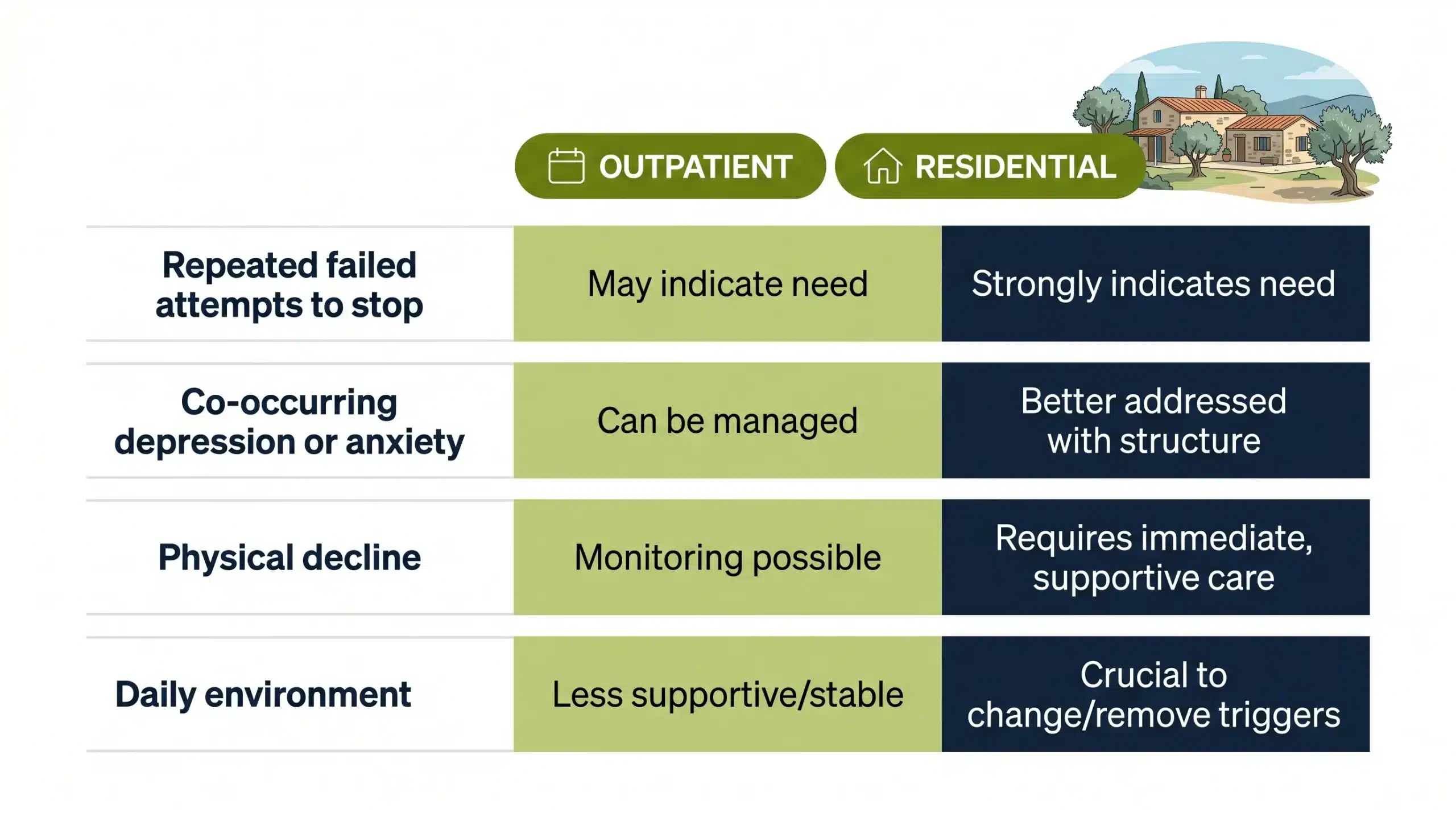
Outpatient therapy has genuine value, and for some people it is exactly right. A weekly session, a therapist who knows them, structure that lets life continue. Where it reaches its limit is geography. Outpatient care leaves the young person inside the precise environment where the dependence grew. The same room. The same friends. The same Friday.
Residential ketamine rehab changes that variable completely. Round-the-clock containment, no access to the substance, and a remove from daily pressure that is itself a kind of treatment. Within the held container of the residential setting, a person can put their whole weight into recovery instead of fighting the world and the work at once.
| Clinical indicator | Outpatient may suit | Residential is usually needed |
|---|---|---|
| Repeated failed attempts to stop at home | First attempt, stable support | Multiple relapses tied to environment |
| Co-occurring depression, anxiety or trauma | Mild, well-managed | Active, untreated, feeding the use |
| Physical decline | Stable health | Rapid functional or bladder deterioration needing supervision |
| Daily environment | Low exposure to triggers | Saturated with cues and supply |
Detox and rehab are not the same word for the same thing
Families often arrive believing that getting the drug out of the system is the cure. It is the beginning. Detox stabilises the body and clears the substance under supervision. It is necessary. It is not, on its own, treatment.
Here is the hard part that any honest clinician will tell you. A clean body with an unchanged mind goes home to the same life that built the problem, and the return to use is close to certain. The research on effective care for substance use disorders is consistent on this point, and you can read it in the summary of principles of effective treatment.
Rehab starts where detox ends. It is the longer work of building coping skills the person never had, developing genuine resilience, and growing an identity that does not need a substance to hold itself together.
What withdrawal from ketamine actually feels like
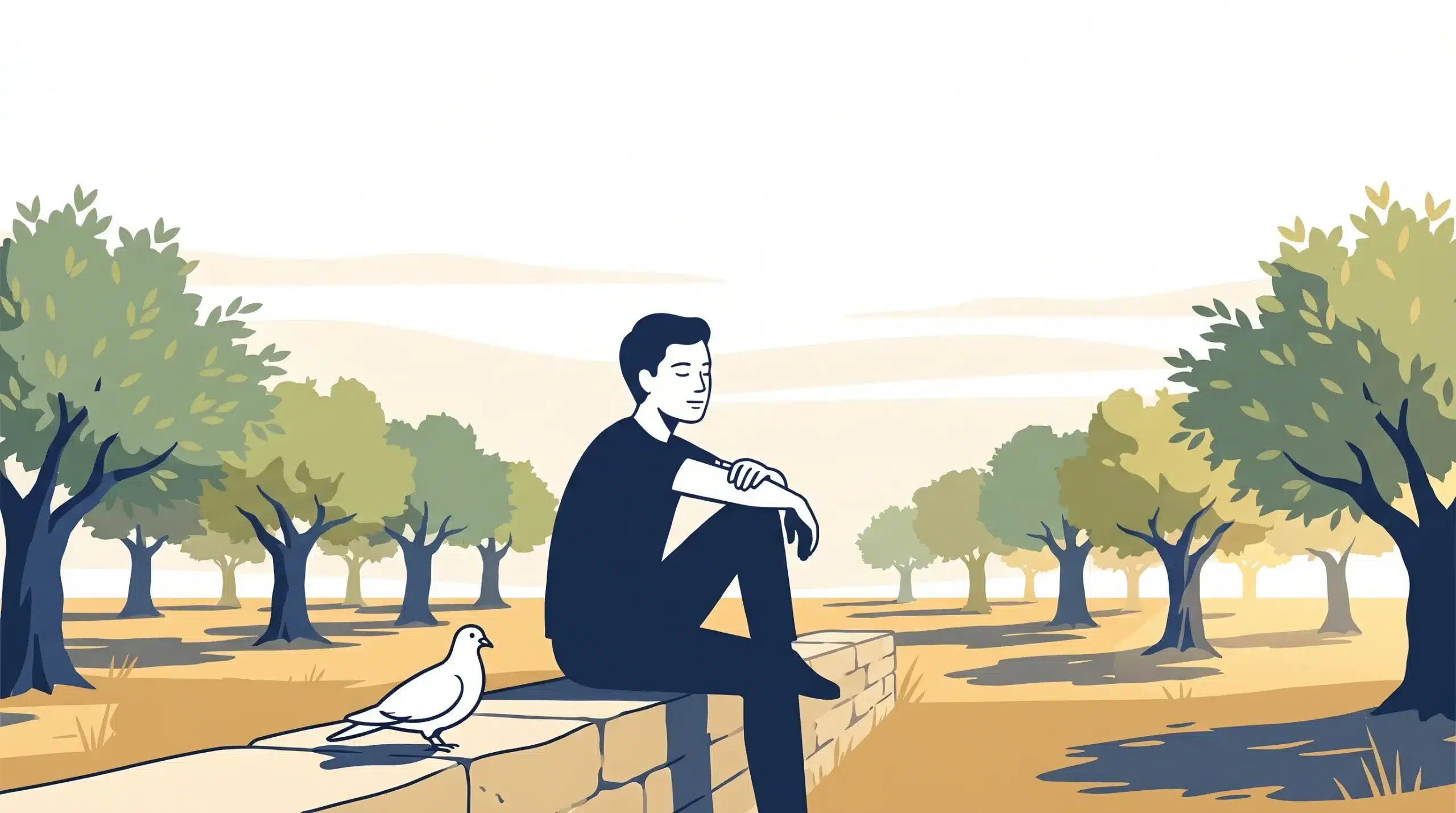
Unlike alcohol or opioids, ketamine withdrawal is not mainly a physical storm. It is psychological and neurological, and that does not make it gentle. It makes it lonely, because it is harder to see from the outside.
The common features are a fierce craving, a deep clinical low with a sense of emptiness underneath it, sharp anxiety, restlessness that will not settle, broken sleep and nightmares. The acute phase usually runs from a few days to a couple of weeks. The cognitive fog and the swings in mood can linger for weeks beyond that, which is why continuous clinical support across the whole stretch matters more than a single hard week of supervision. The patterns of dependence, tolerance and rebound are described across the literature on dependence and withdrawal of CNS drugs.
The damage nobody warns them about – ketamine bladder
Of all the harms ketamine does, the one that surprises young people most is the bladder. The drug, excreted in the urine, attacks the bladder wall directly. Over time the lining scars. The result is a condition often called ketamine cystitis, and it is brutal.
It looks like severe pain on passing urine, urgency so extreme that some people need the toilet dozens of times a day, and blood in the urine. Alongside it sit longer-term cognitive harms, short-term memory loss and difficulty holding attention, and strain on liver and kidney function. The urological picture is set out in detail in this clinical review of ketamine-induced cystitis.
Is the bladder damage reversible, and what do you do?
The honest answer is that it depends on how much harm has been done and how quickly use stops. Caught early, complete cessation of ketamine combined with supportive care can lead to dramatic improvement, and in many cases the tissue recovers fully.
With heavy, prolonged use the picture darkens. The bladder can shrink permanently, lose its elasticity, and in extreme cases reach a point where major surgery – even removal – is the only option left. That is not said to frighten. It is said because the timeline is the whole story.
What matters in practice is stopping now and doing it somewhere that offers real medical monitoring, so the physical symptoms are managed alongside the psychological work rather than left to a separate appointment that may never happen.
A confidential conversation costs nothing
If you are concerned about a young person’s ketamine use, or your own, the first step is simply a conversation. No pressure, no obligation – just an honest exchange with someone who understands what you are facing.
What a ketamine recovery programme involves
A ketamine recovery programme is a structured, whole-person treatment that walks someone from active use to steady recovery. It should bend to fit the person in front of it, not the other way round. The components below describe the shape of it at Holina Village, where clinical method and farm life sit side by side.
| Programme element | What it does |
|---|---|
| Cognitive and dialectical behavioural therapy | Reworks the thinking and builds emotional regulation |
| Therapeutic community | Provides the relational substrate for change |
| Individual therapy | Uncovers what the substance was doing for the person |
| Farm and adventure activity | Rebuilds routine, sleep, and the body’s own reward system |
Assessment and a plan that fits
It begins with a full assessment on arrival – medical, psychological and social – to find the roots of the dependence, any physical damage, and any condition travelling alongside it. To see how the stages are matched to a particular young person, you can read about how the Holina programme is built.
Deep work and new habits
Day by day, individual sessions and group work and the practical business of learning to sit with a craving, to feel a hard emotion and not run from it into something numbing.
Leaving, and what comes after
A careful relapse-prevention plan for re-entry, so the return to community, study or work happens with structure under it rather than open air.
What a therapeutic community does that ordinary treatment cannot
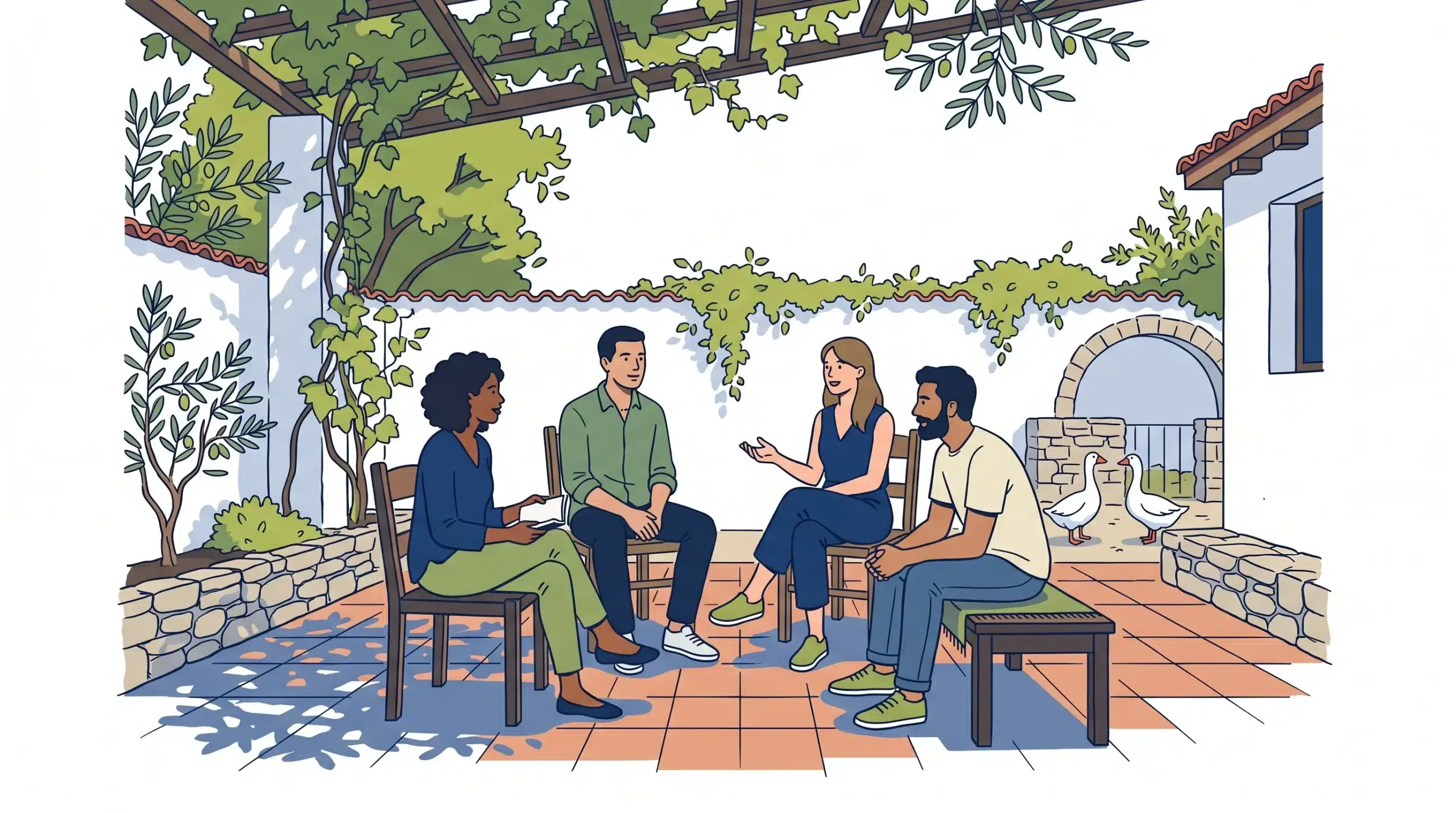
A therapeutic community is a structured social environment where residents live together, share responsibility, and use the daily relationships between them as the central tool of treatment. The change happens in the living, not only in the therapy room.
For ketamine specifically, this matters more than usual. Ketamine dependence is marked by extreme isolation and a deliberate emotional disconnection. The community model gently forces the opposite. It pulls a young person out of their own head, asks them to practise honesty, to carry a share of the work, to notice another person and respond. The evidence behind this model is gathered in the review of the therapeutic community approach. What it gives back, in our experience, is belonging, and a sense of personal worth that had gone missing.
A day on the farm, hour by hour
Ask a young person in early recovery what they miss having, and the honest answer is often structure. Not freedom. Structure. The chaos of active use leaves the days shapeless, and shapelessness is its own kind of distress.
A typical day is built early and kept steady. A consistent wake time. Movement of some kind – a walk, yoga, work that uses the body. Meals taken together, proper food. A morning community meeting. Therapeutic groups through the day. And shared chores, the unglamorous tasks that rebuild responsibility and the ordinary skills of living.
This rhythm does something measurable. It resets the body clock and helps the brain’s own dopamine system find its level again, so that satisfaction starts to come from a finished task and a shared table rather than from a substance.
Which therapies earn their place
The treatment that works is integrative. It pairs methods with a research base behind them and experiential work that actually reaches a young person, rather than choosing one and calling it complete.
Group therapy as a social laboratory
Groups let a person see their own patterns reflected back in others, learn from how someone else is coping, practise being vulnerable, and set down some of the guilt in a room that is not there to judge them.
Individual therapy aimed at the pattern
One-to-one work, cognitive-behavioural or psychodynamic in flavour, exists to expose the function ketamine was serving in this particular life, and to build something that can take its place.
Body, nature, and expression
Time outdoors, contact with the animals and the orchards, art or music therapy. These reach the places where words run out, and a great deal of trauma lives exactly there.
Why trauma sits underneath so much of this
In many cases, ketamine use is self-medication. It is a way to quiet painful memory, to dampen a sense of helplessness, to put distance between the person and something from earlier that was never processed.
Which leads to the trap. Take the substance away without going near the wound beneath it, and you have left someone undefended in front of the very pain they were medicating. The return to something numbing becomes almost inevitable. The overlap between trauma and substance use is well described by the clinical resource on substance use and PTSD.
This is why the work has to be trauma-informed, paced, and careful – building a felt sense of safety, inside and out, before anyone goes near the hard material.
Treating depression, anxiety and self-harm at the same time
The term clinicians use is dual diagnosis, and the relationship it describes is a closed loop. The mental health condition and the ketamine use feed each other, each one making the other worse.
Splitting the treatment – the addiction handled in one place and the depression in another – usually fails. The two are not separable in the person living them. What is needed is integrated care that holds the whole human being in view and works both at once.
Under one roof, with psychiatrists, psychologists and support staff in close contact, anxiety and depression can be stabilised and the impulse toward self-harm reduced, mainly through the slow acquisition of real emotional regulation skills. This is the work the Holina clinical and support team does day in, day out.
How long it takes, and what shortens or lengthens it
There is no quick fix here, and anyone offering one should be treated with suspicion. Real recovery takes time. The stays we see work tend to run thirty, sixty or ninety days and sometimes longer, set by the individual situation rather than a fixed package.
What moves the number is the depth and length of use, the severity of physical harm such as bladder damage, the presence of co-occurring conditions, and how quickly the person takes on the skills that keep them steady. A four-week stay lets the nervous system begin to settle. Twelve weeks gives the new patterns time to hold. Cutting the time short to save weeks tends to cost far more later, and the time spent should be read as an investment in a young person’s future, not an expense to be trimmed.
What to ask before you commit to anything
Most families arrive in crisis, which is exactly when clear questions are hardest to hold onto. These are the ones worth asking out loud.
Safety and boundaries
What is the policy on phones and visits? How is a psychiatric or physical crisis handled at three in the morning? What medical monitoring is actually on site, day and night?
Treatment and outcomes
How is the staff trained, and how many staff to each resident? How do they understand recovery, and how do they involve the family rather than leaving them outside the process looking in?
Why families choose Holina Village
Holina Village sits in Achnas, in the Cypriot countryside, and it feels nothing like a clinical facility. That is deliberate. It pairs the method of an established therapeutic community with open sky, orchards, animals and the kind of quiet that lets a frayed nervous system come down. Admissions are clear and calm, because we know most families reach us at their worst moment.
The focus is young people caught in ketamine use and the conditions that travel with it. Steady routine, good food, real relationships, and a family kept close to the work rather than kept at the door. Through the partnership with UCLAN, recovery and education are not made into one or the other.
If you are standing on a landing outside a shut door, what we can offer is a contained space and a team that will meet your son or daughter where they actually are. You can read more about reaching us and what happens next. The first step is not a decision about everything. It is a willingness to be met.
Frequently asked questions
Can ketamine really cause physical dependence, or is it just psychological?
It is both. The psychological component – craving, low mood, anxiety and restlessness when use stops – is significant and often prolonged. But the physical damage is real and independent of any psychological element. The bladder, kidneys and liver are all under direct chemical stress from heavy or sustained use. Stopping requires support on both fronts at once.
My child is seventeen. Is residential treatment appropriate at that age?
Holina Village works with young people from sixteen upward. The programme is built around their specific developmental stage – not adapted from an adult model. Adolescent and young adult treatment works differently to adult treatment, and the therapeutic community here reflects that. Family involvement is central to the work, not an optional add-on.
What if my son or daughter refuses to go?
Ambivalence is almost universal at this point. A person in active dependence rarely feels ready. Our experience is that a direct, calm, honest conversation between a trusted adult and the young person – one that acknowledges what treatment involves and does not catastrophise it – moves most people from refusal toward willingness. We can talk families through how to approach that conversation before any decision is made.
How does Cyprus work as a location for a family based in the UK or Israel?
Cyprus is a short flight from both the UK and Israel, which keeps family contact practical. The distance from home is also part of the treatment. Removing a young person from the specific environment and social network where dependence developed gives them the space to work without constant proximity to triggers. We support families through the logistics from the first call onward.
Will academic study be completely interrupted?
Not necessarily. Through its partnership with UCLAN, Holina Village offers a pathway that holds recovery and academic progress together rather than asking a young person to choose between them. This varies by individual situation and stage of treatment, and it is worth discussing during the initial conversation.
What happens after the residential stay ends?
Discharge planning begins well before the end of a stay. A relapse-prevention plan is built with the young person, and the family is included in preparing for re-entry into home, education or work. Ongoing aftercare support, outpatient therapy connections, and continued contact with the Holina team are all part of what comes after, because recovery does not end at the gate.
Ketamine dependence in a young person is serious, and it tends to deepen the longer it goes on. The physical damage to the bladder and kidneys follows its own timeline, independent of anyone’s intentions. The psychological work – building coping skills, processing what the substance was mediating, learning to live without it – takes time and a proper container. Neither can be rushed, and neither should be left until the picture is worse.
What we have described here is what that work actually looks like – detox, sustained rehabilitation, trauma-informed therapy, the therapeutic community, the structured daily life, and the family kept close throughout. Holina Village brings all of it together in a setting that is calm, contained, and a genuine distance from the environment that fed the problem.
If what you have read here connects with something you recognise, the next step is simply a conversation. No pressure, no obligation – just an honest exchange with someone who has been doing this work for a long time.
Speak with the Holina Village team
Whether you are a parent trying to understand what is happening, or a young person wondering if treatment is the right move, we are here for that conversation. Confidential, calm, and without any obligation to decide anything.
About the Author
Yossi Zubari
CEO & Founder
Director and Senior Therapist working with addiction for over 25 years, and in personal recovery for almost 30 years.