The room is not particularly cold. The bed is not particularly uncomfortable. And yet the person lying in it cannot get warm, cannot get still, cannot find the bottom of the restlessness that has settled over the last day and a half. They keep checking the time. They keep returning to the same thought – the one that says this would all stop if they just used again.
That thought is not weakness. It is withdrawal, and it has a shape and a timeline, even if no one has explained it. Most people who stop using ketamine after a long stretch of heavy use are told that it is not really addictive – so when the body and mind start to come apart, they assume the problem is themselves rather than the drug. This article is for the person in that bed, and for the family member reading it late at night trying to understand what is happening to someone they love.
Reading time: 7 minutes
Key points from this article
- Ketamine withdrawal is real, recognised, and follows a broadly predictable timeline of roughly two weeks, even though it looks different from withdrawal associated with alcohol or opioids.
- The split between physical and psychological symptoms is misleading. Psychological distress moves into the body, and the two cannot be separated cleanly.
- The middle days – around day four to fourteen – are when people most often give up, because no one warned them the fog and flatness were coming.
- Detox is the first step, not the whole of recovery. What comes after the acute phase is what changes the long-term picture.
Contents
What ketamine withdrawal symptoms actually are
Ketamine is a dissociative anaesthetic. Used heavily and often, it changes how the brain regulates mood, perception, and the basic sense of being present in one’s own life. The U.S. National Institute on Drug Abuse describes how tolerance builds and use continues despite mounting harm – which is the working definition of dependence in everything but name. You can read their overview of ketamine’s effects and addictive potential at NIDA.
The ketamine withdrawal symptoms people report are rarely the dramatic, sweating, shaking picture associated with alcohol or opioids. They are quieter and stranger. A deep fatigue. A constant low-grade agitation. A sense of being off-balance, as though the floor is slightly tilted. And underneath all of it, an emotional rawness that the drug had been holding at arm’s length.
Is it physical or psychological? The wrong question, and why families ask it
Families ask this almost first, because the answer feels like it will tell them how seriously to take things. The honest answer is that the split barely exists.
Ketamine dependence is largely psychological in its mechanism. But psychological distress does not stay in the mind. It moves into the body. A review of dependence and withdrawal across drugs acting on the central nervous system, available through this PubMed summary on CNS drug withdrawal, describes how cessation symptoms appear within roughly a day, peak in the acute phase, and can persist for around two weeks.
So when someone says “it’s all in your head,” they are, accidentally, almost right. It is in the head. The head runs the body.
Why it feels bodily when the source is the mind
Take away a substance that was sedating and dissociating the nervous system, and the sympathetic nervous system rebounds. Heart rate climbs. Hands tremble slightly. The skin sweats. Muscles ache for no reason a doctor can point to. This is the body’s alarm system switched back on after being held down for months. It is uncomfortable, and it is not dangerous in itself for most people. It simply feels like it might be.
When the symptoms start, and a day-by-day timeline
For most people, the first symptoms arrive somewhere between 24 and 48 hours after the last use. How fast they come, and how hard, depends on dose, frequency, how long the use went on, and the person’s general health. Two people who used the same amount can have very different first weeks.
A timeline is not a promise. It is a map drawn from what we see often. Read it as the general weather, not the forecast for your exact day.
The mistake families make at day four
Around day four the worst physical symptoms ease, and everyone exhales. Then the fog and the flatness arrive, and the family reads it as relapse, or laziness, or proof that nothing is working. It is none of those. It is the expected middle of the process, and it is often the part where people quietly give up because no one told them it was coming.
The red flags that mean call someone now
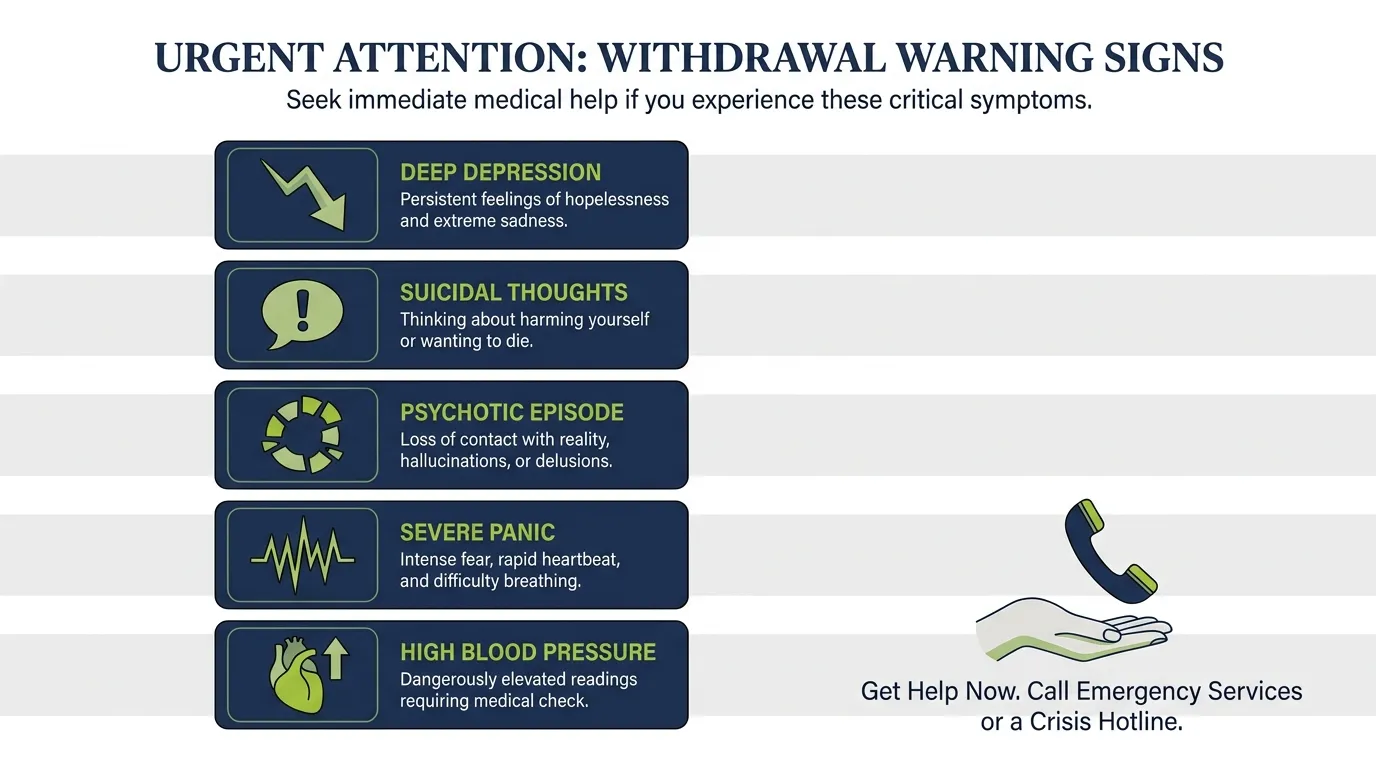
Most ketamine withdrawal is wretched but not medically dangerous. A few situations are different, and you do not need to be certain to act.
Get urgent help if there is deep depression with thoughts of suicide, any talk of not wanting to be here, a psychotic episode with hallucinations or loss of contact with reality, panic that will not settle, or a sharp rise in blood pressure and heart rate. The National Institute of Mental Health lists the warning signs of suicide in plain terms, and it is worth reading before you need it rather than after.
If you are reading this about yourself and any of that is true right now, please treat it as the emergency it is and contact local services or someone you trust today.
Why anxiety and depression arrive together in withdrawal
Ketamine acts on glutamate and the NMDA receptor, part of how the brain manages mood and excitation. Remove it after sustained use and the chemistry is briefly out of balance. The dip in mood and the rise in anxiety are not imagined. They are the system finding its level again.
There is a second layer, and it is the one that hurts. For many people, ketamine was doing a job. It was holding off grief, or trauma, or a kind of pain they had no other way to put down. When the drug goes, the feelings it was suppressing come up, often all at once. The withdrawal is not only neurochemical. It is the return of everything the using was keeping quiet. We see this pattern frequently in people who started using young, after a loss they never got to grieve. We have written separately about grief in early adulthood and its place in recovery.
Cravings are a wave, not a verdict
A craving is the brain’s loud, insistent argument for the thing it has lost. In withdrawal it is normal, it is expected, and it is not a sign that recovery has failed.
The useful fact about cravings is that they are time-limited. A wave of craving usually crests and falls within fifteen to thirty minutes. It feels permanent while it is happening. It is not. The whole skill – the thing cognitive-behavioural work teaches – is staying with the wave without acting on it until it passes on its own. People learn that the wave always passes. After enough of them pass, the waves come less often and hit less hard.
Sleep falls apart, and there are reasons for it
Almost everyone coming off ketamine sleeps badly for a while. Difficulty falling asleep, waking repeatedly, vivid dreams, sometimes nightmares that feel more real than the room. Ketamine disrupts the brain’s normal sleep architecture, and the deep, restorative stages take time to rebuild.
Sleep is not a luxury here. Exhaustion makes every other symptom worse and makes cravings harder to ride out. The CDC’s guidance on how much sleep adults need and how to protect it matters more in early recovery than at almost any other time.
What you can do tonight
Keep the room dark and genuinely cool. Put the screens away an hour before bed. Skip caffeine after the afternoon and skip alcohol entirely, even though it feels like it helps. Try slow, deliberate breathing. None of this fixes the underlying disruption overnight. It gives the body a slightly better chance each night, and the nights add up.
Can you detox from ketamine at home?
You can. The harder question is whether you should, and what it costs when it goes wrong.
The physical risk of ketamine withdrawal is, for most people, lower than with some other drugs. The risk that undoes a home attempt is rarely physical. It is that the drug is still within reach during the worst hours, that the same room and the same phone and the same people are all still there as triggers, and that there is no one present when the anxiety and depression peak and the only available relief is the thing you are trying to stop. That is the moment most home detoxes end. Not in danger. In a quiet, defeated relapse at three in the morning.
Thinking about getting proper support?
If you or someone you love is approaching the end of what home management can offer, a calm, confidential conversation with our team costs nothing and commits you to nothing. We can talk through what supervised care at Holina looks like and whether it fits your situation.
What detox looks like inside a treatment setting
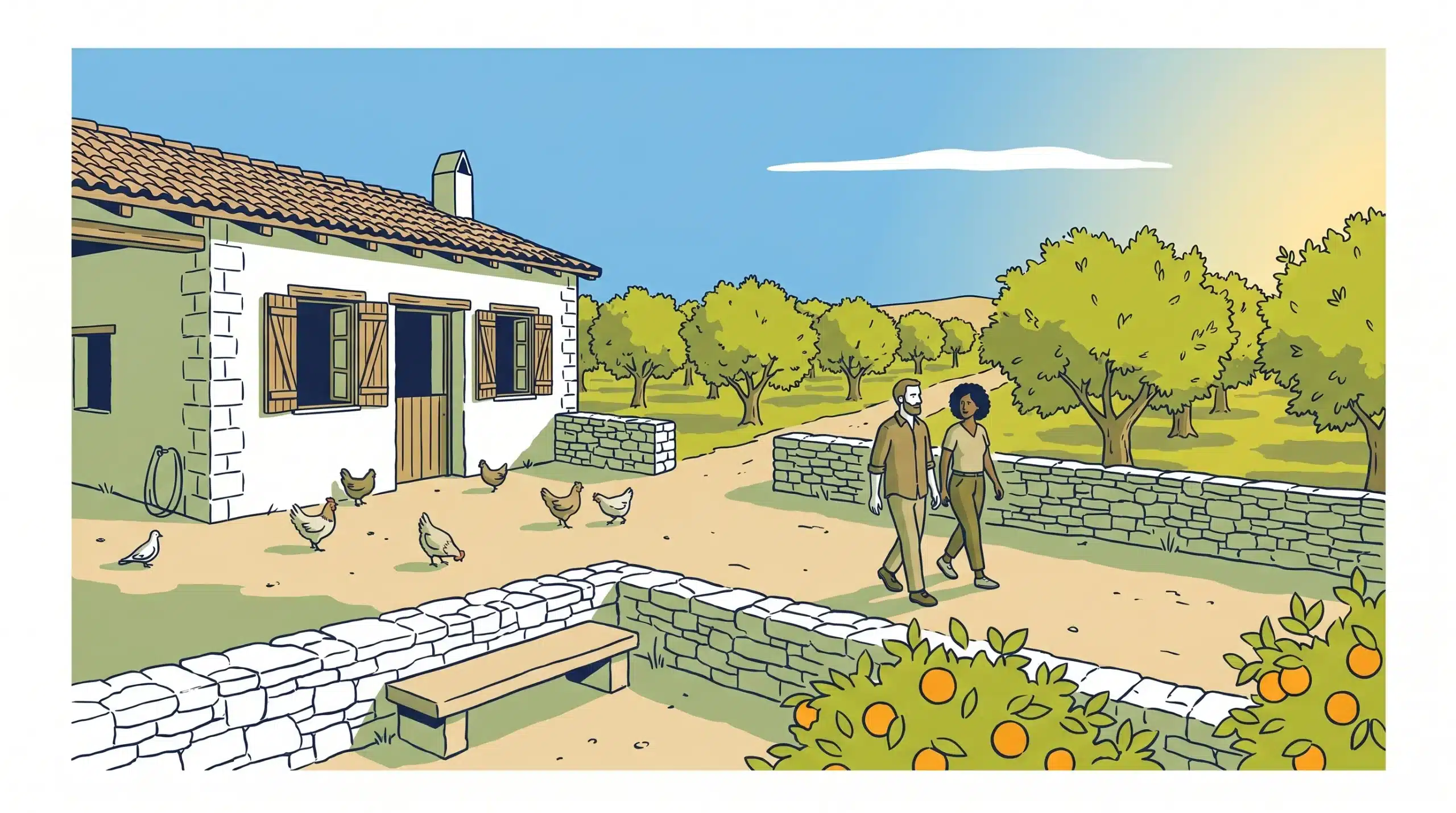
A supervised detox does something a flat cannot. It removes the access, the triggers, and the isolation in one move, and it puts trained people in the room when the hard hours come.
At Holina, that setting is a working farm in Achnas, with orchards and animals and open sky, and it feels nothing like a clinical facility. The point is not the scenery. It is that the nervous system can only really stand down when it is somewhere it reads as safe, with round-the-clock support and a contained space around it. The physical distance from home, the daily structure, the food, the movement, the other people doing the same difficult thing nearby. That is what lets the settling-in actually settle. You can see how this is built into our residential treatment programme.
Are there medications for ketamine withdrawal?
No medication is approved specifically to treat ketamine withdrawal. There is no equivalent of the protocols used for alcohol or opioids.
What experienced clinicians do is treat the symptoms in front of them. Something to take the edge off severe anxiety. Support for sleep. Something for nausea. All of it under close medical watch, and all of it time-limited, because the last thing anyone wants is to walk someone out of one dependence and into another. The clinical literature on ketamine toxicity describes supportive, symptom-focused care rather than any single cure. That is the honest state of the field, and any clinician will tell you the same.
Food, water, and movement do more than they sound like they should
This is the part that sounds too simple to matter, and it matters more than people expect.
Hydration helps the kidneys clear the drug and helps the headaches. Nutrient-dense food gives the brain the raw material to rebuild its chemistry. And gentle movement – a walk, some stretching, easy work outdoors – supports the recovery of dopamine and serotonin balance while burning off some of the agitation. Even a single session of physical activity reduces anxiety and improves sleep that night. None of this is a treatment on its own. It is the ground the rest of recovery stands on. Our work folds this into the days through farm tasks and adventure and outdoor challenges rather than treating movement as a box to tick.
The difference between detox and the waves that come after
People imagine recovery as a wall to get over. Survive two weeks and you are through. This is the misunderstanding that costs the most.
Detox clears the drug from the body. That is the first step and it is necessary. But post-acute withdrawal – the lower, longer pattern of mood dips and cravings that surface in waves under stress – can run for weeks or months after the acute phase ends. Withdrawal management is stabilisation, not the whole of treatment. The long work is not surviving the fortnight. It is building something underneath the using that was not there before, so that when a wave comes, the person has somewhere to stand.
The bladder problem nobody warns about
Heavy, long-term ketamine use damages the urinary tract, and many people arriving in withdrawal are also in real physical pain from it. Ketamine-induced cystitis brings urinary urgency and frequency, severe pelvic pain, and sometimes blood in the urine.
It deserves naming because the person is often suffering twice. The psychological withdrawal on one side, this grinding physical pain on the other, and a quiet fear that the damage is permanent. It needs proper urological assessment, not endurance. If this is part of the picture, say so to a doctor early.
How family and friends can actually help
The instinct, when someone you love is in withdrawal, is to manage them. To monitor, to confront, to extract promises. Almost all of it raises the stress and the stress raises the pull back toward the drug.
What helps is harder and quieter. A space that is safe and not judging. Fewer accusations, fewer arguments about the past. Clear, kind boundaries that protect you as well as them. Learning the actual mechanics of withdrawal so you are not reading every bad afternoon as betrayal. And, when it is possible, going together to a professional assessment rather than trying to be the treatment yourselves.
What the all-inclusive stay actually covers
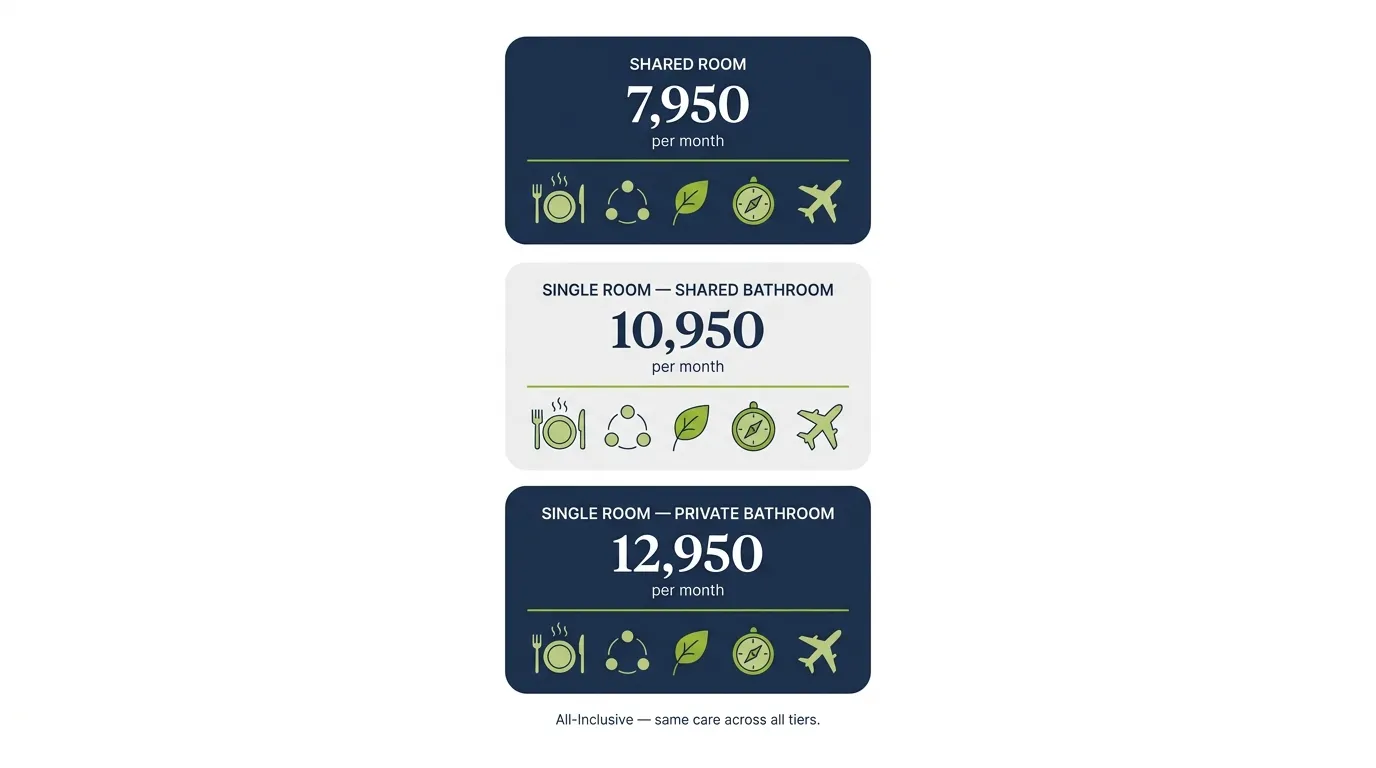
Families in crisis need clear numbers, not a maze. Our rooms are priced as full monthly stays, and comparing the on-site options against each other is usually the most useful place to start.
The figures are all-inclusive. Personal spending money is the only thing left to budget for. The difference between tiers is privacy, not the quality of care, which is the same across all of them.
The step after detox is the one that decides things
Clearing the drug is real progress, and it is not the finish. Without what comes next, the odds of returning to use stay high, and that is not a moral failure. It is how the brain works for a while after.
What lowers those odds is structure that continues. Individual and group therapy, a community of people who understand the specific loneliness of this, new daily rhythms, and the slow rebuilding of relationships that using had hollowed out. The evidence is clear that relapse is part of the process for many people, and that detox alone is not treatment.
Recovery from ketamine is genuinely possible. We watch it happen – not as a single triumphant moment, but as a person slowly becoming reachable again, willing to be met. If you want to talk through what the next step might look like for you or someone you love, the conversation will be calm, because most people who reach us are arriving in the middle of something hard.
Frequently asked questions
How long does ketamine withdrawal actually last?
The acute phase – the most intense part – typically lasts one to two weeks. The post-acute phase, with more intermittent mood dips and cravings triggered by stress, can continue for several weeks or months after that. How long depends on how long and how heavily someone was using, their general health, and whether they have support around them.
Is ketamine withdrawal dangerous?
For most people, the physical risks are lower than with alcohol or benzodiazepine withdrawal. The serious risks are psychological – severe depression, suicidal thinking, or a psychotic episode. These require immediate professional attention. If any of those are present, please contact a clinician or emergency services without waiting.
Will the bladder damage heal once I stop using?
Stopping use gives the best chance of recovery from ketamine-induced urinary damage, and many people do see significant improvement. How much recovery is possible depends on the severity and duration of the damage. Proper urological assessment is important – some cases need specific treatment alongside stopping the drug.
Do I need residential treatment for ketamine withdrawal, or can I be an outpatient?
There is no single answer. Outpatient support works for some people, particularly those with strong home environments and low access to the drug. Residential care is usually worth considering when there have been previous failed attempts at home, when the home environment is itself part of the problem, when there are co-occurring mental health concerns, or when the person and family simply need the certainty that professional help is physically present around the clock.
What happens at Holina after the detox phase?
The detox phase flows directly into the therapeutic programme without a break or transition. Residents move from stabilisation into individual and group therapy, therapeutic community work, farm and adventure activities, and the daily routines of communal life. The goal is not to get someone stable and send them home. It is to give them enough foundation that home becomes a place they can return to rather than a place they are retreating from.
Ready to talk through the next step?
Our team is available for a no-pressure, no-obligation conversation. You can ask anything – about what withdrawal support looks like here, about the programme, about costs, about whether residential care is the right fit. We will give you honest answers and let you decide at your own pace.

About the Author
Yossi Zubari
CEO & Founder
Director and Senior Therapist working with addiction for over 25 years, and in personal recovery for almost 30 years.