n
Ketamine abuse rarely announces itself. It tends to arrive in a household as a set of small, confusing details, a recurring bladder infection that tests keep clearing, a young adult who has grown quiet and nocturnal, a friend group that has changed over completely. This article explains what ketamine abuse actually looks like from the outside, why the line between using and addiction is thinner than families expect, and what genuinely helps once you recognise what you are seeing.
nn
Reading time: 5 minutes
nn
Key points
n
- n
- Recurring, non-infectious bladder pain is one of the clearest physical signs of chronic ketamine use, and standard home drug tests do not detect it.
- Early signs are behavioural before they are physical, secrecy, withdrawal, disrupted sleep, and a shrinking of everyday life.
- Enabling and helping can look similar in the moment but move in opposite directions, one removes consequences, the other points toward treatment.
- A residential setting changes the environment around the person, not just their willpower, which matters when the old surroundings keep supplying the drug.
n
n
n
n
n
nn
Table of contents
n
- n
- The word abuse is doing more work than you think
- Where does using end and addiction begin
- The early signs are behavioural, not physical
- Reading the behavioural signs of ketamine abuse at home
- What it looks like when they are using right now
- The K-hole, and why it is not just a bad trip
- The cognitive damage that lingers between uses
- The bladder, the injury that finally forces the truth
- The cruel emotional arithmetic
- Withdrawal, and why it is not physically dangerous is a trap
- Why the home drug test told you the wrong thing
- When to stop reading and call for help now
- How to open the conversation without closing the door
- Helping versus enabling, and how easily they blur
- Setting boundaries that protect the whole house
- What a residential setting actually changes
- What the different rooms cost, and what is included
- Frequently asked questions
n
n
n
n
n
n
n
n
n
n
n
n
n
n
n
n
n
n
n
nn
The word “abuse” is doing more work than you think
nn
Ketamine started life as a dissociative anaesthetic, still used in operating theatres and in veterinary medicine because it dulls pain and sensation without shutting down breathing the way other anaesthetics do. That same dissociation is what draws people to it outside a clinical setting.
nn
Ketamine abuse means using it for something it was never handed to you for. Non-medical use, uncontrolled doses, and increasingly, use as a way to get out of your own head. What begins at a party, once or twice, folded into a night out, can quietly become the thing a person reaches for when the anxiety gets loud or the loneliness gets heavy.
nn
The mechanism that makes this dangerous is tolerance. The dose that produced the drifting, detached feeling last month does very little this month, so the amount climbs. It is described in detail in medical literature such as the clinical reference on ketamine’s pharmacology and effects held by the National Center for Biotechnology Information.
nn
Where does using end and addiction begin?
nn
This is the line families most want drawn, and it is a genuinely thin one.
nn
Abuse is the behaviour. Addiction is what happens when the behaviour takes the wheel. The clinical marker is loss of control, not the amount used, but the inability to stop using despite clear harm. The bills going unpaid. The bladder that keeps sending up flares. The job that slips away. And still, the use continues.
nn
With ketamine the dependence is largely psychological, and that word gets misread as “not serious.” It is serious. The person no longer trusts themselves to face an ordinary Tuesday without the disconnection the drug provides. Daily reality starts to feel unbearable at full volume, and ketamine turns the volume down.
nn
The clearest sign, in our experience, is the repeated private attempt to stop. They quit on Monday. By Thursday they have started again. This cycle, running quietly and shamefully, is often the truest indicator that use has become something the person can no longer manage alone. The formal diagnostic framework for this is set out in the DSM-5-TR criteria for substance use disorders.
nn
The early signs are behavioural, not physical
nn
Families expect to catch it in the body. They almost never do at first.
nn
The early evidence is in the shape of the days. Disappearances that do not quite add up. A friend group that changes over, wholesale, in the space of a couple of months. Sleep that has come unmoored, awake through the night, gone until mid-afternoon. Mood that swings from flat, uninterested, hard to reach, into a jittery irritability that seems to arrive from nowhere.
nn
Then the small financial holes. Money asked for without a clear reason. Sometimes a thing missing from the house that nobody wants to accuse anyone of taking.
nn
None of these, alone, means anything. Any teenager or young adult can be moody, broke, and nocturnal for entirely ordinary reasons. It is the cluster, forming over time, that should make you pay closer attention.
nn
Reading the behavioural signs of ketamine abuse at home
nn
If you want a shorthand for the signs of ketamine abuse that show up in the household, it is this, the shrinking of a life, plus the effort to hide the shrinking.
nn
The bedroom door closes and stays closed. Hours behind it. The withdrawal from family conversation is not sulking, exactly, it is more like an absence. School attendance frays. The university emails go unanswered. Work becomes a series of lateness and sick days and quietly slipping performance.
nn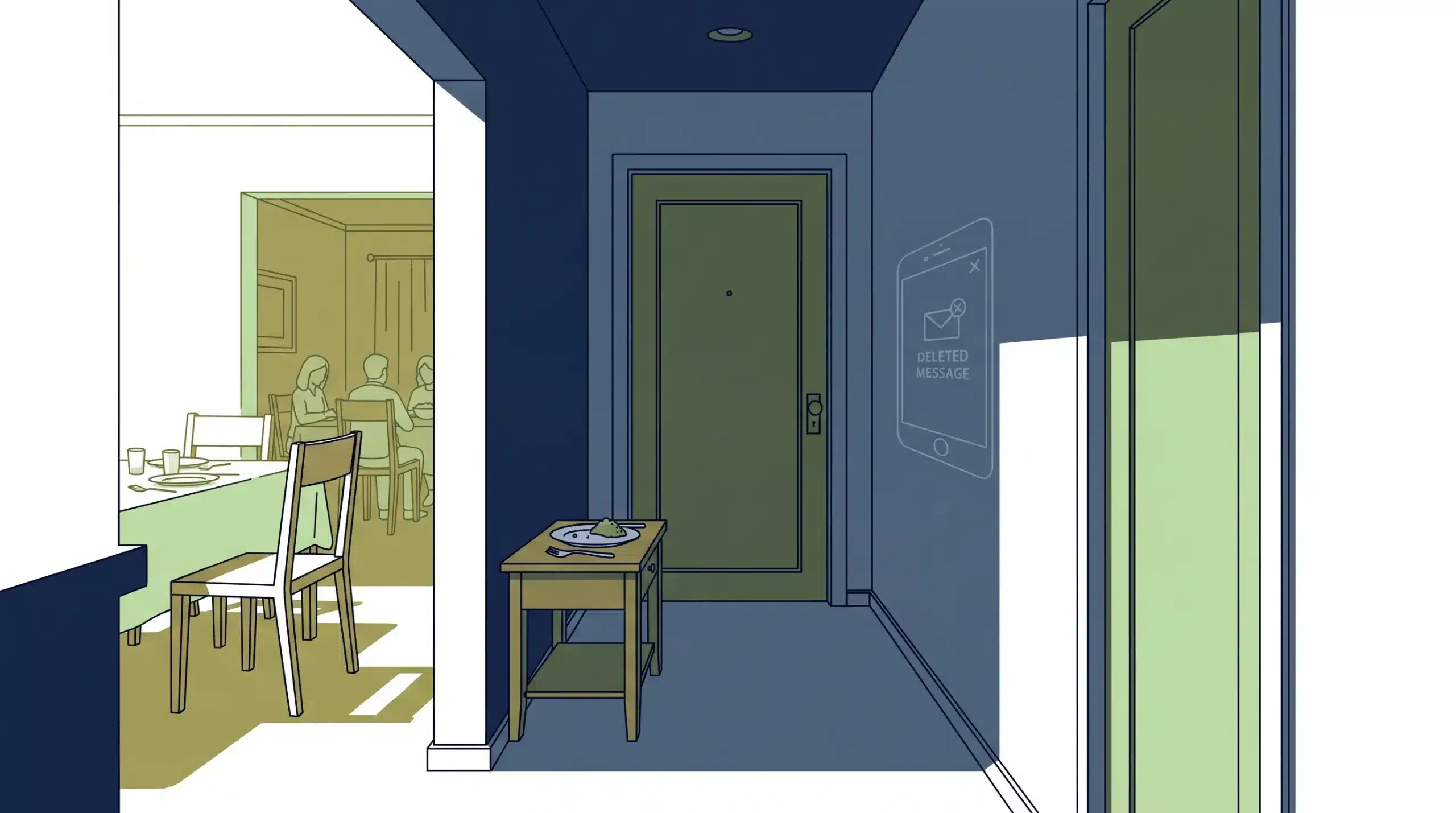 n
n
Behavioural change usually surfaces well before any physical symptom does.
nn
The secrecy sharpens
nn
Messages get deleted before you could ever see them. A simple question, where were you, is met with either a flat lie or a flash of anger out of all proportion to the question. The lies start small and grow to cover more ground. This defensiveness is not the person you raised being cruel. It is the addiction protecting itself, and it will use them to do it.
nn
The self quietly stops being tended
nn
Personal care lapses. Showering becomes optional. Weight drops because eating stops feeling important. The things that used to light them up, the sport, the music, the Sunday lunch, no longer register. What comes off them instead is a kind of flatness, an emptiness they carry into every room.
nn
What it looks like when they are using right now
nn
This section is a field guide for the moment itself, because families often need to know what they are seeing at the kitchen table on a Friday night.
nn
The speech slows and slurs, the words running into each other. Coordination goes. They sway when they walk, lose their balance, and it reads exactly like drunkenness except there is no smell of alcohol. The eyes give it away too, either flicking rapidly or holding a fixed, faraway stare that is not quite pointed at anything.
nn
One of the more unsettling signs is the loss of pain response. They can knock into something hard, or take a genuine injury, and not react. And because the common route of use is snorting, look for irritation around the nose, redness, or traces of powder. The clinical description of ketamine toxicity lays out these intoxication signs in more depth.
nn
The K-hole, and why it is not just a bad trip
nn
At high enough doses, ketamine produces a state users call the K-hole. It deserves plain description because families who have heard the word rarely understand the danger inside it.
nn
The person becomes profoundly detached from their own body. Movement and speech can shut down entirely, a kind of temporary paralysis. There are heavy hallucinations, visual and auditory, and a sensation many describe afterwards as being near death, or floating somewhere outside themselves.
nn
The immediate physical dangers are what matter here. Someone in this state can fall badly and not protect themselves. If they vomit, the suppressed swallowing reflex makes choking a real risk. And they cannot call for help, no matter how much they might need it.
nn
There is a further layer. When ketamine use produces these severe dissociative experiences and the hollow feeling that follows them, the person can begin reaching toward self-harm or suicidal thinking as a way to manage a pain they cannot otherwise get out from under. If you are seeing signs of that, our writing on grief and loss in early adulthood recovery speaks to the emotional undertow that so often sits beneath compulsive use.
nn
The cognitive damage that lingers between uses
nn
Consider the difference between being intoxicated and being changed by repeated intoxication. The second is what long-term use does.
nn
Short-term memory takes a hard hit. Concentration frays. Following an ordinary conversation becomes work. Everyday decisions, the sort that never used to require thought, start to feel like problems. What users describe as brain fog can persist for days after the last use, so a person can look sober and still not be able to function as themselves.
nn
On the physical side there are the abdominal cramps that regular users grimly call K-cramps, severe spasming pain through the stomach and diaphragm. These are not incidental. They are the body registering damage that has been accumulating out of sight.
nn
The bladder, the injury that finally forces the truth
nn
Return to that recurring infection many families first notice, because for them it is the physical sign that cannot be argued away.
nn
Chronic ketamine use damages the lining of the bladder directly. The breakdown products of the drug attack the epithelial tissue, producing a non-infectious cystitis. The symptoms are brutal, severe pain on urinating, an urgent and constant need to go, sometimes dozens of times a day and through the night, and blood in the urine. In the worst cases the bladder itself contracts and scars, permanently, to the point where surgery becomes the only option.
nn n
n
Non-infectious cystitis is one of the clearest physical markers of chronic ketamine use.
nn
When the “urine infection” simply will not clear
nn
This is the diagnostic tell for families. If the urine tests keep coming back clean, no bacteria, yet the pain and the frequency continue and no antibiotic touches it, the odds shift heavily toward ketamine as the cause. A young person running to the bathroom far too often, complaining of pelvic pain, hiding repeated bladder trouble, is showing you something. The mechanism and progression are documented in a comprehensive review of ketamine-induced cystitis. The damage can be slowed, and sometimes reversed, but only when the use stops.
nn
The cruel emotional arithmetic
nn
Here is the paradox that trips people up. In tightly controlled clinical settings, ketamine is used as a short-term psychiatric treatment for depression that has not responded to anything else. That is real. It is also nothing like what happens when someone self-administers street doses for months.
nn
Unsupervised, prolonged use produces the opposite of relief. The comedown, the fall after a session, brings a sharp emotional rebound, deep depression, panic, paranoia, a restless irritability that has nowhere to go.
nn
The drug offers a counterfeit calm. For a few hours the noise stops. But it drains the brain’s own emotional reserves, deepens the loneliness, deepens the depression, and leaves the person needing another dose simply to feel steady again. That is the loop, and it tightens every time.
nn
Withdrawal, and why “it’s not physically dangerous” is a trap
nn
When someone stops abruptly or cuts down, withdrawal sets in. Intense cravings. Sweating, tremors, a racing heart. Sleep falls apart, either impossible or full of nightmares. Anxiety that flattens them, and a heavy dysphoria that colours everything.
nn
People often say ketamine withdrawal is not life-threatening the way alcohol or opioid withdrawal can be, and in the narrow physical sense that is true. It is also the wrong thing to focus on.
nn
The psychological suffering is severe, and the desire to make the bladder pain and the stomach cramps stop is powerful. Most people, left to face this alone, go back. Not because they are weak. Because there is no container around them, nothing holding the space while the worst of it passes. That gap is precisely where structured support earns its keep.
nn
Why the home drug test told you the wrong thing
nn
A parent suspects, buys a home urine test, and it reads clean. Relief. The suspicion gets shelved. Meanwhile the use carries on beneath the radar.
nn
The problem is technical and almost nobody warns families about it. Standard drug panels, the common five- or ten-substance kits used by workplaces and sold in pharmacies, generally do not screen for ketamine at all. A clean result on those tests tells you nothing about ketamine.
nn
Detecting it requires a specific toxicology screen ordered through a laboratory, or, more realistically for most families, clinical assessment combined with honest reporting and the behavioural and physical signs described throughout this article. Do not let a negative home test overrule what your own eyes have been telling you for months.
nn
Not sure what you are seeing?
n
If you recognise some of these signs in someone you love, you do not need certainty before reaching out. Holina’s team speaks with families every week who are exactly where you are now, still assembling the picture. No pressure, no obligation, just an honest conversation about what you are seeing and what might help.
n
nn
When to stop reading and call for help now
nn
Some situations do not allow for watchful waiting. Treat any of the following as a medical emergency and seek urgent care immediately.
nn
Loss of consciousness or complete unresponsiveness. Serious difficulty breathing, or vomiting while unconscious. Seizures. Severe chest pain. A sharp rise in body temperature. An acute psychotic episode with violent or dangerous behaviour. Heavy bleeding in the urine alongside alarming abdominal pain.
nn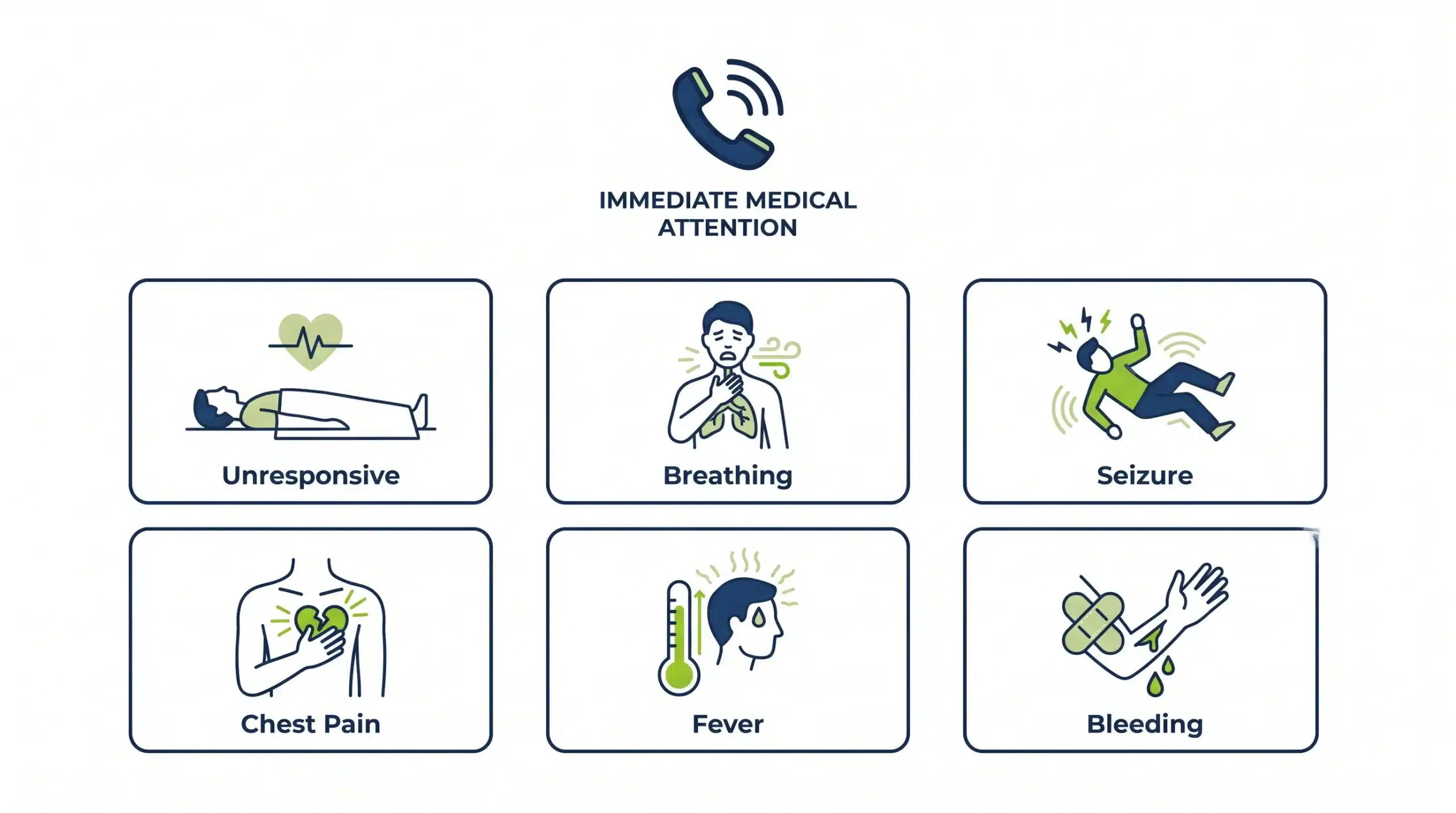 n
n
These signs call for emergency medical care, not a conversation.
nn
In these moments you are not managing an addiction. You are protecting a life, and the right response is emergency medical care, not a conversation.
nn
How to open the conversation without closing the door
nn
This is the part most families get wrong, and understandably, because they are frightened and the fear comes out sideways.
nn
Choose a moment when they are sober. A quiet setting, no audience, nobody in the room who raises the temperature. Lead with worry and love, not accusation. The difference between “I’ve been worried about some changes I’ve noticed” and “you’re destroying yourself” is the difference between a door opening a crack and slamming shut.
nn
Openings that keep the person in the room
nn
You might open with a line such as, “I can see you have been carrying something heavy lately, and I am here to help you with it, not to judge you.” Or try, “I am worried about your health and I want you to feel well. Can we think together about what might help?” These lines do not solve anything. They do keep the person present, which is the only thing that lets everything else become possible. Public-health guidance from Poison Control on ketamine is a useful grounding if you want to speak from fact rather than fear.
nn
Helping versus enabling, and how easily they blur
nn
Enabling is what love does when it panics. Nobody sets out to do it.
nn
Paying off debts that came from buying drugs. Handing over cash with no questions. Calling the employer or the university with a cover story to explain another absence. Cleaning up the wreckage before anyone else can see it. Each of these removes a consequence, and consequences are, unfortunately, part of what motivates a person to seek help.
nn
Healthy support looks different. Unconditional love, yes, and clear boundaries alongside it. A refusal to fund the use, directly or indirectly. And active, practical help pointed in one direction only, toward professional treatment. You keep loving them. You stop paying for the thing that is hurting them.
nn
Setting boundaries that protect the whole house
nn
Boundaries are not punishment. Say that to yourself until you believe it, because the guilt will try to convince you otherwise.
nn
Decide the house rules in advance, calmly, and hold them. No substances in the home, full stop. Any financial help limited to basic living needs and, where reasonable, tied to conditions. Consequences that are known ahead of time, not invented in the heat of an argument.
nn
The point of a boundary is to protect the wellbeing of the home and to hand the young person back responsibility for their own life. This is hard to do without support, and families often need their own guidance to hold the line without breaking the relationship. When you are ready, you can reach us through the confidential family enquiry line at Holina, where most conversations begin long before anyone has decided anything.
nn
What a residential setting actually changes
nn
Outpatient therapy has genuine value, and for many people it is enough. With entrenched ketamine use it often is not, and any honest clinician will tell you why. The person goes home each evening to the same friends, the same triggers, the same private access to the drug. The recovery has to compete with the environment that built the problem.
nn
Holina Village sits on a farm in Achna, with orchards and animals and open sky, and it feels nothing like a clinical facility. That matters more than it sounds. The geographical distance from the old crowd and the daily pressures does something no willpower can manufacture, it clears the ground.
nn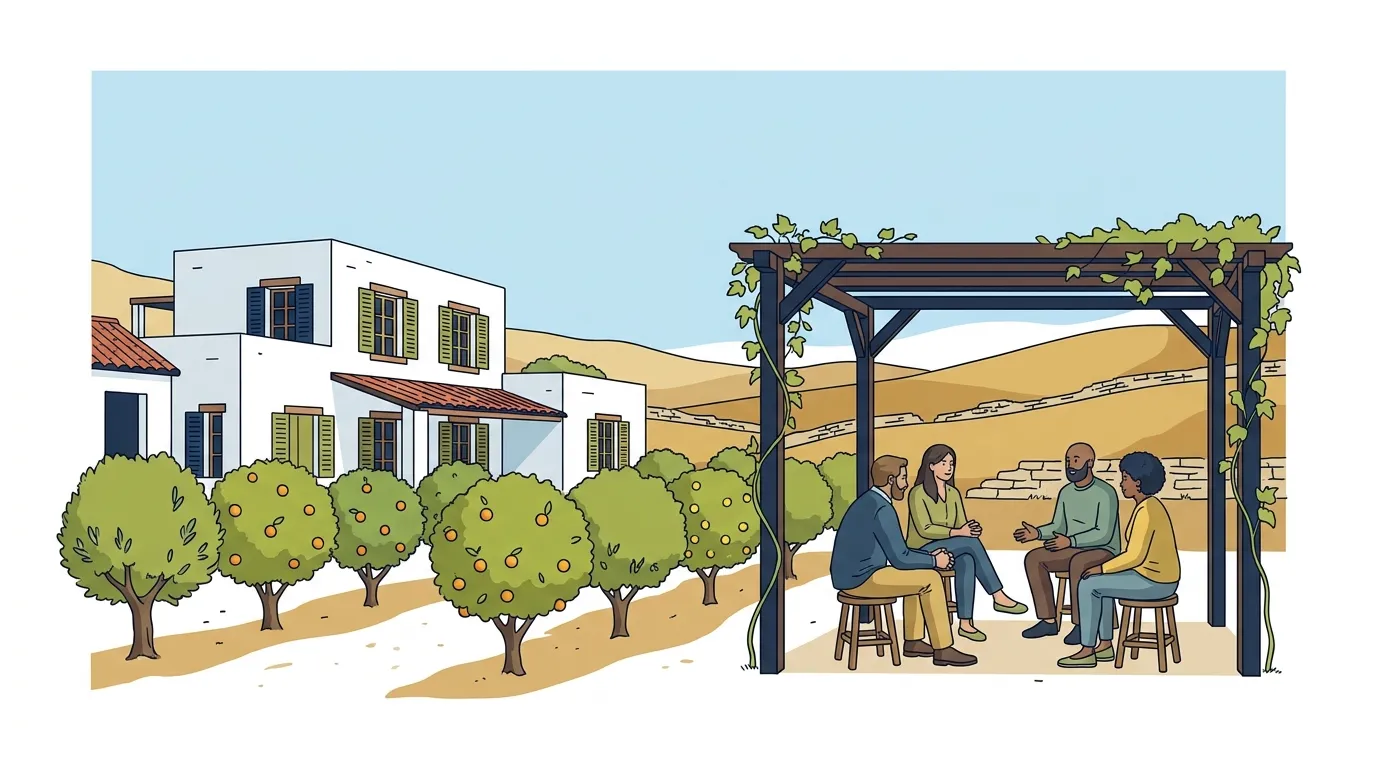 n
n
Distance from old triggers gives the clinical work room to take hold.
nn
Inside that contained space, the work can happen. Close medical support for the physical damage, the bladder especially. Cognitive recovery as the brain fog lifts. Individual and group therapy that reaches the loneliness underneath the use, which is the actual engine. And the slow rebuilding of the ordinary skills a life runs on. You can see how the days are structured in our residential programme.
nn
What the different rooms cost, and what is included
nn
Families in crisis need clear numbers, not a sales conversation, so here is how Holina’s own options compare. Everything is all-inclusive, accommodation, meals, clinical and group sessions, the farm and adventure activities, and airport transfers. The only extra is personal spending money.
nn
| Room type | From (per month) | What it offers |
|---|---|---|
| Shared Room | €7,950 | Full programme, shared living space, the most accessible entry point |
| Single Room, Shared Bathroom | €10,950 | Private bedroom with more solitude during the settling-in period |
| Single Room, Private Bathroom | €12,950 | Full privacy, own bathroom, most space for re-entry work at one’s own pace |
n
nn
Duration matters as much as room type. In our experience a four-week stay lets the nervous system begin to recalibrate and the acute physical symptoms settle. Twelve weeks is where the new patterns start to hold, where the change stops being fragile.
nn
Frequently asked questions
nn
Is ketamine withdrawal physically dangerous to go through alone?
n
Physically, ketamine withdrawal is not usually life-threatening in the way alcohol or opioid withdrawal can be. The psychological distress, though, is severe, and the cravings paired with bladder or stomach pain often push people back to using within days. Supervised support during this period matters even without a medical emergency.
n
nn
How do I know if bladder pain is from ketamine and not a normal infection?
n
The strongest clue is a urine test that repeatedly comes back clean of bacteria while the pain, urgency, and frequent bathroom trips continue and do not respond to antibiotics. That pattern points toward ketamine-related cystitis rather than a standard infection.
n
nn
What if my family member denies there is a problem?
n
Denial is common and does not mean the concern is wrong. Continue to lead with worry rather than accusation, hold your boundaries consistently, and consider speaking with a treatment team yourself first. Families often need guidance on how to approach the conversation before the person is ready to hear it.
n
nn
Does residential treatment mean cutting off contact with family?
n
No. Family involvement, including family support, is typically part of a well-run residential programme. Contact is structured rather than constant during the early settling-in period, but the goal is to rebuild trust and connection, not sever it.
n
nn
How long does treatment usually need to last?
n
A four-week stay is often enough for acute physical symptoms to settle and the nervous system to begin recalibrating. Twelve weeks tends to be where new patterns become more stable rather than fragile. The right length depends on how long the use has gone on and what else it sits alongside.
n
nn
Ketamine abuse tends to show up first as a change in behaviour, secrecy, withdrawal, disrupted sleep, and only later as something physical, most tellingly a bladder problem that will not clear on antibiotics. The line between using and addiction is crossed when a person keeps going despite real harm and cannot seem to stop on their own, even when they genuinely want to. What helps is not panic and not silence, but a steady, honest conversation and, where the use has taken hold, an environment that gives recovery room to actually happen.
nn
A confidential conversation, whenever you are ready
n
Whether you are a family member trying to understand what you are seeing, or an adult who recognises some of this in yourself, Holina’s team is available to talk through the situation honestly. No pressure, no obligation, just a conversation about what is happening and what the options actually look like.
n
nn
 n
n
About the Author
n
Yossi Zubari
n
CEO & Founder
n
Director and Senior Therapist working with addiction for over 25 years, and in personal recovery for almost 30 years.
n
n
nn