The “Failure to Launch” Crisis
It is the phone call every parent dreads. The university expulsion letter. The police knock at the door. Or simply the silence of a child who has locked themselves in their bedroom for weeks, illuminated only by the glow of a gaming monitor.
We are in the midst of a crisis. Young adults today are facing a “perfect storm” of pressures: the ubiquity of high-strength cannabis and synthetic drugs, the dopamine-hijacking nature of social media, and an economy that makes independence feel impossible.
For many parents, the term “Rehab” feels like a last resort. But for a young adult (aged 16–25), rehab is not the end of the road—it is often the beginning of their real life.
However, the industry is fraught with mismatch. Sending a 19-year-old to a standard “adult” rehab is often a mistake. Sitting in a group therapy circle next to a 50-year-old corporate executive with a lifetime of alcoholism is alienating for a teenager. Their brains, their triggers, and their developmental needs are completely different.
This comprehensive guide explores the specialized world of Young Adult Rehabilitation. We will look at why the “Therapeutic Community” model is the gold standard for this age group, how to tackle the “Failure to Launch” syndrome, and why a farm in the Mediterranean might be the best place to save your child’s future.
The Neuroscience of the Young Brain (Why They Can’t “Just Stop”)
To understand why your child is struggling, you have to understand their biology. It is not just “bad behavior”; it is a developmental mismatch.
The Prefrontal Cortex Gap
The human brain develops from the back to the front. The last area to come online is the Prefrontal Cortex—the CEO of the brain. This is the area responsible for:
Impulse control.
Understanding consequences (“If I do X, then Y will happen”).
Emotional regulation.
This part of the brain does not fully mature until age 25. However, the Limbic System (the pleasure and reward center) is fully active by age 15.
The Result: Your child has the gas pedal of a Ferrari (high drive for pleasure/risk) but the brakes of a bicycle (low impulse control). When you add addictive substances to this mix, the “brakes” fail completely.
Why Specialized Rehab Matters: A rehab for 40-year-olds assumes the Prefrontal Cortex is working. A rehab for 16–25-year-olds knows it isn’t. Therefore, the treatment must act as an “External Cortex”—providing the structure, boundaries, and consequences that their own brain cannot yet provide, until it heals.
The “Therapeutic Community” (TC) Model
For young adults, the most effective clinical model is not the “Hospital Model” (doctors in white coats), but the “Therapeutic Community” (TC).
What is a TC?
In a TC, the community itself is the primary therapist. The philosophy is “Right Living.”
Peer Accountability: Young people rarely listen to authority figures (parents/doctors), but they listen to their peers. In a TC, if a resident refuses to clean their room, it isn’t the staff who corrects them—it’s their peers. This peer pressure is harnessed for good.
Flattened Hierarchy: Residents and staff work together to run the facility. This destroys the “Us vs. Them” mentality that many troubled teens have toward authority.
The “Phased” Approach
A good Young Adult TC works in phases:
Orientation: No privileges. High structure. Learning the rules.
Responsibility: Earned privileges (phone access, outings). Taking on a job role (e.g., Head of Gardening).
Transition: Mentoring newer residents. Preparing for university or work re-entry.

Action-Based Healing (Moving Beyond Talk Therapy)
Asking a high-energy 19-year-old male to sit in a chair and “process his feelings” for 8 hours a day is a recipe for boredom and resistance. Young adults learn by doing.
Farm and Nature Therapy
This is why facilities located on farms (like Holina Cyprus) are so effective.
The “Care” Dynamic: Many young addicts are deeply self-absorbed. Their world has shrunk to “Me and My Substance.”
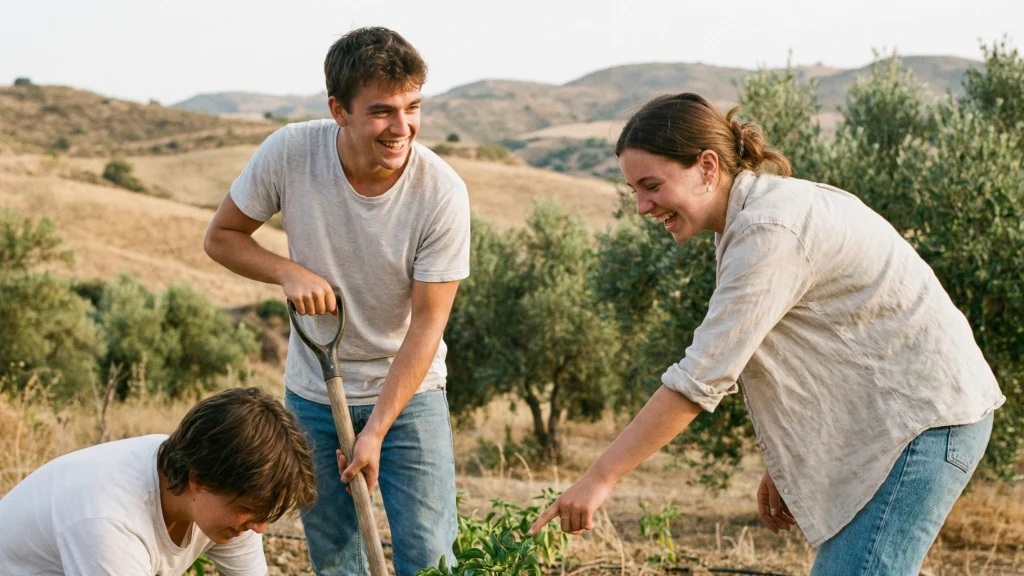
The Antidote: Giving them a living creature to care for (a goat, a chicken, a garden bed). If they don’t get up to feed the animals, the animals suffer. This teaches Empathy and Responsibility in a way that talk therapy never can.
Adventure Therapy
Recovery must be exciting. If sobriety feels boring, they won’t stick with it.
Dopamine Replacement: High-adrenaline activities (rock climbing, hiking, ocean swimming) release natural dopamine. This shows the young brain that it is possible to feel a “rush” without chemical assistance.
Overcoming Adversity: Reaching the top of a mountain teaches resilience. “I didn’t think I could do it, but I did.” This rebuilds the self-esteem that addiction destroyed.
The Twin Demons – “Failure to Launch” & Digital Addiction
Failure to Launch Syndrome
We are seeing a generation of young adults who are “stuck.” They drop out of university, quit jobs after two weeks, and retreat to their childhood bedrooms.
The Cause: Often, high anxiety and a fear of failure lead to paralysis. Drugs/gaming become the numbing agent.
The Rehab Solution: The rehab must act as a “Life Incubator.” Residents must learn to cook, clean, budget, and schedule their day. The goal isn’t just sobriety; it’s Autonomy.
Digital Addiction (The Screen Trap)
For this demographic, substance abuse rarely happens in isolation. It is almost always co-occurring with:
Gaming Addiction: Escaping into a virtual world where they feel powerful/successful.
Crypto/Gambling: The “get rich quick” dopamine loop.
Social Media: The constant comparison engine fueling anxiety.
The Protocol: A modern Young Adult rehab cannot just “ban phones” and hope for the best. They must teach Digital Hygiene. This involves:
Strict limits on screen time.
“Tech-Free” zones.
Therapy specifically focused on the impact of algorithms on mental health.
Why Go Abroad? (The Cyprus Strategy)
Many UK/European parents ask: “Why send them to Cyprus? Why not a clinic down the road?”
There are three strategic reasons to choose a destination like Cyprus:
1. The Pattern Interrupt (Distance) If your child is in a rehab 20 miles from home, they know that if they walk out, they can call a friend to pick them up. The temptation to leave when things get hard is massive. Being on an island in the Mediterranean creates a “safe container.” The physical distance breaks the psychological tether to their dealer, their enabling friends, and their old triggers.
2. The Climate Factor Seasonal Affective Disorder (SAD) is real. Trying to recover from depression in a grey, rainy UK winter is an uphill battle. Sunlight (Vitamin D) is a natural antidepressant. Being able to be outdoors 300 days a year allows for the “Action Therapy” that is vital for this age group.
3. “Geo-Arbitrage” (Cost)
UK Private Rehab: £15,000 – £25,000 per month.
Cyprus Rehab: €9,000 – €12,000 per month. Because operating costs are lower in Cyprus, you get a higher standard of care (larger facility, more staff, better food) for significantly less money.

A Day in the Life (The Farm Schedule)
Structure is the antidote to chaos. Here is what a typical day looks like in a Therapeutic Farm Community:
07:30: Wake Up & Room Inspection (Building discipline).
08:00: Farm Chores: Feeding the animals, watering the orchards, collecting eggs. (Connecting with nature).
09:00: Community Breakfast (Cooked by residents on rotation).
10:00: Morning Meeting: “Just for Today” focus and goal setting.
11:00: Clinical Group: CBT or DBT skills workshop.
13:00: Lunch.
14:00: Vocational Block: Time for study, CV writing, or creative therapy (Art/Music).
16:00: Physical Activity: Team sports, hiking, or swimming.
18:00: Dinner.
19:30: Reflective Group: Processing the day’s emotions.
21:00: Free time (Reading, Journaling, Board Games).
22:30: Lights Out.
The Parents’ Role (Stop Enabling, Start Supporting)
Rehab isn’t just for the child; it’s for the parents too. Almost every young adult in rehab comes from a family system that—usually out of love—has become “enabling.”
Enabling: Paying off their drug debts, lying to their university about why they missed exams, giving them cash “for food” that goes to drugs.
Supporting: Setting boundaries. “We love you, but we will not fund your addiction. We will fund your recovery.”
Family Therapy: A top-tier Young Adult program will include mandatory Family Therapy (usually via Zoom). This is where you learn to detach with love and prepare for their return, ensuring the “failure to launch” dynamic doesn’t restart the moment they walk through the door.
Financials & Investment
Is it worth the money? Rehab is expensive. But consider the alternative cost of not treating the issue at age 20:
University tuition fees wasted (dropouts).
Legal fees (DUI or possession charges).
Chronic unemployment.
Long-term mental health care.
Intervening early, while the brain is still plastic and adaptable (16–25), offers the highest Return on Investment of any medical intervention. You are not just buying “sobriety”; you are buying your child’s future capacity to be an independent adult.
Conclusion: Finding the Right Environment
Your child is not broken; they are stuck. They are trapped in a cycle of dopamine-seeking and anxiety that their young brain cannot break alone. They need a reset.
They need a place where they are not judged for their past, but challenged to build their future. A place where they can get their hands dirty in the soil, connect with peers who understand them, and learn that they are capable of doing hard things.
A Haven for Healing: Holina Village Cyprus
If you are looking for a specialized environment that understands the unique needs of the 16–25 demographic, Holina Village Cyprus is a Center of Excellence in Behavioral Health.
We are not a hospital. We are a Therapeutic Farm Community located in the serene hills of Achnas, designed specifically to engage, challenge, and heal young adults.
Why Holina Village is Unique:
The “Farm Therapy” Model: We operate as a functioning farm with orchards and animals (goats, poultry). Residents build self-esteem through the daily responsibility of caring for living things. This “Action Therapy” bypasses the resistance often found in traditional talk therapy.
Exclusively 16–25: We do not treat older adults. Your child will be surrounded by a cohort of peers facing the exact same struggles—from social media anxiety to university pressure—creating a powerful, shame-free community.
Clinical Excellence: Behind the rustic farm setting is a rigorous clinical engine. We utilize CBT, DBT, and Trauma Therapy alongside creative modalities like Art, Music, and Adventure Therapy to treat the whole person.
Academic & Vocational Support: We understand that life doesn’t stop for rehab. We provide tutoring areas and vocational support to ensure residents can continue their education or build career skills (CV writing, interview prep) while in treatment.
EU Standards: Located in Cyprus (an EU member state), we offer the highest standards of safety and care, with the added therapeutic benefit of the Mediterranean climate.
Don’t let them stay stuck. Visit www.holinacyprus.com to download our e-brochure and speak with our admissions team about giving your child the fresh start they deserve.