nMarcus sits across from his mother in the kitchen of their London flat, watching her stir a cup of tea that has gone cold. His younger sister Sophie is not here. She has not been here for eight weeks, since the evening she was found wandering the Embankment in a state of acute dissociation, her carefully constructed life fractured in ways that nobody saw coming. What Marcus notices now, in the particular silence of mid-morning, is how his mother’s hands shake slightly, how she has stopped asking him about his own work deadlines, how the conversation has narrowed to a single channel: Sophie. He finds himself rehearsing conversations he might have with friends, editing out the parts about his family, carrying a weight that has no name. The house feels different. Not larger, but somehow compressed, all its air drawn toward one focal point. Marcus is beginning to understand that his sister’s crisis is not simply her crisis anymore.
n
nWhen a young adult experiences acute mental illness, substance misuse, or psychological breakdown, the clinical and public narrative centres almost entirely on the identified patient. Yet research in family systems and mental health demonstrates that siblings occupy a uniquely vulnerable and often invisible position within this upheaval. Siblings of individuals in crisis experience elevated rates of anxiety, depression, caregiver burden, and identity disruption, often without formal recognition or support. This phenomenon, sometimes termed the “collateral impact” of mental health crisis, is under-researched and systematically neglected in standard treatment models.
n
nThis piece is for siblings of individuals in crisis: young adults and adults navigating the complex emotional, practical, and developmental disruption that occurs when a brother or sister requires acute intervention.
n
What This Is, Specifically
nThe sibling impact of mental health crisis refers to the constellation of psychological, relational, and developmental effects experienced by brothers and sisters when a sibling undergoes acute mental illness, substance misuse disorder, or psychological breakdown requiring inpatient or residential treatment. Unlike parental involvement, which is legally and clinically recognised, sibling relationships exist in a liminal space: they are developmentally crucial yet institutionally overlooked.
n
nResearch published in The Lancet Psychiatry has identified that siblings of individuals with severe mental illness experience significantly elevated rates of anxiety disorders, with some cohort studies reporting prevalence rates of 25-35% above population baseline. The World Health Organisation recognises family burden as a critical factor in recovery outcomes, yet standard clinical guidelines typically limit family involvement to psychoeducation sessions attended by parents alone.
n
nThe British Psychological Society has highlighted in its guidance on family support that sibling relationships are formative throughout the lifespan, shaping identity, attachment security, and interpersonal templates. When crisis disrupts these relationships, particularly during late adolescence and early adulthood, siblings face simultaneous demands: managing their own developmental needs, witnessing a sibling’s suffering, absorbing parental anxiety, and often maintaining practical household functioning. This represents a form of hidden unpaid care work that remains largely invisible to healthcare systems.
n
Why Standard Treatment Often Misses This
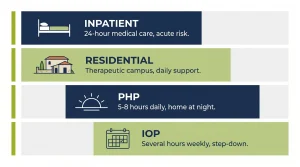
nMost residential and inpatient treatment models operate within a dyadic framework: the patient and the parents. Clinical assessments focus on the identified individual’s presentation, aetiology, and treatment response. Family sessions, when offered, typically involve parents or guardians. Siblings are sometimes included in the final week of a programme, framed as an educational courtesy rather than a central component of healing.
n
nThis systemic omission occurs for several reasons. First, there is a legal and financial assumption that parents hold primary responsibility and authority. Second, treatment centres operate under resource constraints and clinical protocols that prioritise the acute patient. Third, there exists a persistent cultural assumption that siblings, particularly adult siblings, are sufficiently autonomous to manage their own responses without formal support. This is clinically unfounded.
n
nThe gap between standard care and what siblings require is substantial. A sibling watching a brother or sister enter crisis often experiences what trauma researchers term “secondary trauma” or “vicarious trauma”. They may internalise blame, adopt hypervigilance around the family member’s wellbeing, or experience identity collapse if their sense of self has been enmeshed with their sibling’s functioning. They may also experience profound grief for the relationship as it was, alongside uncertainty about what it will become. Standard treatment rarely creates space to process these experiences clinically.
n
The Neurobiology of Shared Attachment and Secondary Impact
nNeuroscience has increasingly documented how threat perception operates within attachment systems. When an individual with whom we share formative attachment experiences enters crisis, our own nervous systems register this as a threat to our internal sense of security and safety. This is not emotional weakness; it is neurobiological reality.
n
nResearch in social neuroscience demonstrates that we possess mirror neuron systems that allow us to resonate with the emotional and physical states of those close to us. Siblings who have shared childhood environments, neurobiological development, and potentially genetic vulnerability factors may experience amplified activation of these systems when witnessing a sibling in distress. Furthermore, if the crisis involves traumatic elements, siblings may themselves experience intrusive memories or somatic symptoms consistent with post-traumatic responses, even without direct exposure to the precipitating event.
n
nThe developmental stage at which the crisis occurs matters significantly. If siblings are in their own critical developmental periods (adolescence, young adulthood, establishment of career or partnership), the timing of a sibling’s crisis can derail these trajectories. Identity consolidation, which extends throughout the twenties and into the early thirties, occurs partly in relation to sibling mirrors. When a sibling becomes acutely unwell, this mirroring function fractures, creating what some family therapists describe as “developmental asynchrony”.
n
What a Residential Period Provides
nA genuinely family-informed residential programme recognises that healing occurs not only for the identified patient, but for the relational system itself. At the therapeutic community at Holina Village, the approach is structured around the principle that siblings and families are active participants in recovery, not peripheral observers.
n
nThis means that siblings receive clinical attention in their own right. They participate in family support sessions designed to untangle shared history, clarify boundaries, and rebuild trust. They gain understanding of the neurobiological and psychological mechanisms at play, reducing shame and self-blame. They have space to grieve the version of their relationship that has altered, and to imagine new foundations. Crucially, they are supported in maintaining their own developmental trajectory whilst offering authentic care and presence to their sibling.
n
nA structured residential programme creates temporal and spatial containment. It removes siblings from the 24-hour burden of informal caregiving and monitoring, allowing them to settle into their own lives whilst knowing their brother or sister is receiving skilled, consistent care. It models what genuine healing looks like: not individual recovery in isolation, but relational repair that honours complexity and restores functionality across the whole family system.