Healing Together
When a young person begins their recovery journey, they often arrive feeling alone — convinced that no one could possibly understand what they’re going through. That isolation is one of the greatest barriers to healing.
At Holina Village Cyprus, we know that recovery thrives in connection. Peer relationships — honest, supportive, and nonjudgmental — are among the most powerful healing tools we have.
Young people learn that they are not alone in their struggles. Through shared experience, they begin to feel seen, accepted, and understood — often for the first time in years.
“It wasn’t therapy that changed me first — it was realizing that other people felt the same way I did.” — Graduate, 18
Why Connection Matters
Addiction, trauma, and emotional distress isolate. They convince young people that they’re different, that no one could possibly relate.
This loneliness feeds shame and keeps destructive cycles alive.
Connection is the antidote.
When young adults find community, they experience belonging instead of fear. They start to take risks again — not dangerous ones, but emotional ones: being honest, asking for help, expressing feelings.
Recovery begins when connection replaces isolation.
The Role of Peer Support in Healing
Peer connection at Holina Village isn’t accidental — it’s built into the fabric of daily life.
Students live, learn, and grow together in a structured, supportive environment that mirrors healthy community living.
1. Shared Understanding
Peers who’ve faced similar challenges offer empathy that professionals alone can’t replicate. “You’re not alone” becomes more than words — it becomes lived truth.
2. Mutual Accountability
Community life encourages responsibility. Students hold each other accountable in ways that are compassionate but firm. They learn to communicate, negotiate, and support each other through both success and struggle.
3. Positive Peer Influence
Many students have spent years surrounded by negative social environments. At Holina Village, they experience the opposite — peers who celebrate progress, model kindness, and reinforce healing.
4. Learning Emotional Skills in Real Time
In therapy, students learn emotional regulation; in community, they practice it. Shared living teaches patience, empathy, and the art of coexistence.
Creating Safe and Supportive Relationships
Safety is the foundation of healthy connection.
Our community model ensures that every interaction happens within clear boundaries and mutual respect.
Trained mentors and therapists guide the process, helping students navigate conflict, express feelings appropriately, and rebuild trust.
Over time, friendships deepen from surface-level companionship to authentic connection — relationships built on truth, not pretense.
“For the first time, I didn’t have to hide who I was to be accepted.”
— Student, 19
Community as a Classroom
The Holina community is a living classroom — a space where young people learn how to be in relationship with themselves and others.
Daily routines — from meals and chores to reflection circles — become opportunities to practice teamwork, communication, and empathy.
Students learn that community isn’t just about getting along; it’s about contributing.
These lessons form the heart of emotional education — teaching independence through interdependence.

Group Therapy and Peer Empowerment
Group therapy is where peer connection truly flourishes.
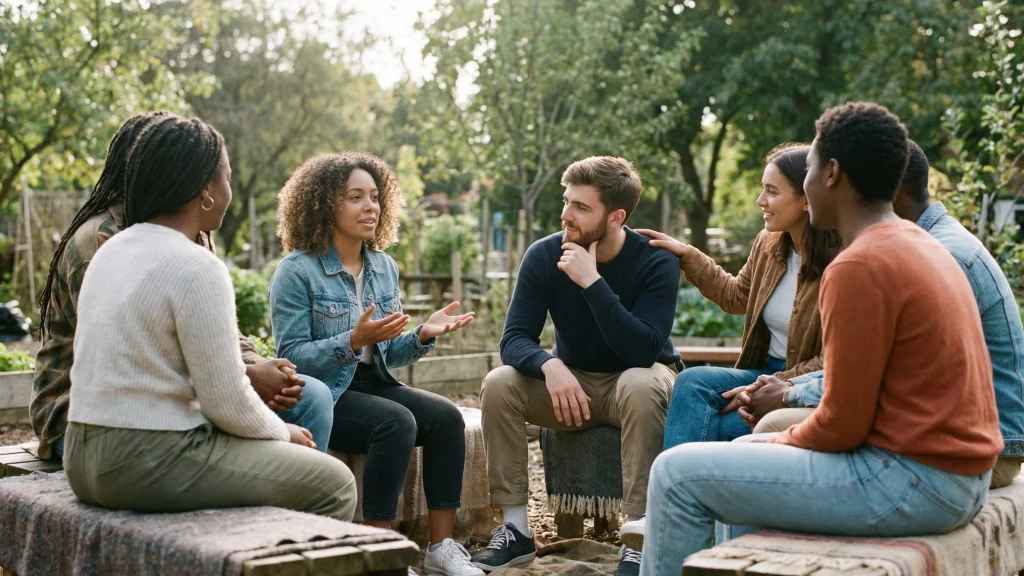
In these sessions, young adults share their experiences, listen without judgment, and witness each other’s growth.
Hearing a peer articulate a feeling they couldn’t name themselves often sparks breakthroughs.
It reminds them that healing is not a solo act — it’s a shared experience.
Facilitators ensure that group therapy remains structured, respectful, and inclusive, turning every session into a safe arena for self-expression and reflection.
Peer Mentorship and Leadership
As students progress, they naturally become mentors for newer arrivals.
This dynamic builds confidence and purpose — showing that healing can be both received and shared.
Being a role model reinforces accountability and self-esteem.
Many alumni stay connected to Holina Village, offering encouragement and perspective to those just starting out.
This sense of continuity transforms recovery from a temporary stay into a lifelong community.
Learning to Belong Again
For many, belonging feels foreign at first. Years of rejection, bullying, or misunderstanding make trust difficult.
But little by little, the walls begin to lower.
Through laughter, shared meals, and teamwork, students start to feel safe in connection again.
They realize that belonging isn’t earned by perfection — it’s nurtured through authenticity.
This rediscovery of community becomes one of the most profound aspects of recovery. It teaches young people not just how to stay sober or stable — but how to live meaningfully with others.
Conflict and Communication: Growth Through Relationship
Conflict is natural — and at Holina Village, it’s part of the learning.
When disagreements arise, students are guided to approach them with honesty, empathy, and responsibility.
They learn to express emotions without aggression and listen without defensiveness.
These relational skills become invaluable tools for life beyond the program — in families, friendships, and future careers.
“We didn’t just talk about recovery. We learned how to be friends, roommates, and people again.”
— Graduate, 20

The Emotional Benefits of Peer Connection
Peer connection provides what isolation never can — a mirror.
In that reflection, young people see that they are not broken; they are human.
Connection helps to:
Reduce shame and loneliness
Improve communication and empathy
Build confidence and trust
Foster accountability and motivation
Create lasting networks of support
The emotional safety created by peers becomes the foundation on which lasting recovery is built.
Family Reflections: Seeing the Difference
Parents often notice the change that comes from connection first — their child begins to smile again, to share, to care about others.
What begins as simple companionship evolves into community — and community becomes healing.
“Our son found friends who understood him — not through words, but through shared experience. That changed everything.”
— Parent, UK
Why Peer Connection Works
The reason peer connection is so powerful is simple: it restores what addiction and trauma take away — belonging.
When young adults find connection, they begin to heal from the inside out.
They rediscover empathy, purpose, and confidence — the building blocks of emotional recovery.
At Holina Village, community isn’t an activity. It’s the medicine.
Stories of Connection and Growth
“At Holina, I found my people — people who didn’t judge, who just understood.”
— Student, 17
“The friendships I made here kept me going. We grew together.”
— Graduate, 19
“Holina Village showed me that connection is the opposite of addiction.”
— Therapist, Cyprus
Each story carries the same message: healing is found in relationship, not isolation.
FAQs About Peer Connection and Community at Holina Village
Q1: How do you ensure that peer relationships stay healthy?
Trained staff and mentors guide all community interactions, ensuring that relationships remain safe, supportive, and balanced.
Q2: What if my child struggles socially?
Many students begin with social anxiety or mistrust. Our gentle community structure helps them build connection gradually and safely.
Q3: Is group therapy mandatory?
Group sessions are highly encouraged because they foster empathy, accountability, and emotional growth.
Q4: How do peers influence each other positively?
We promote positive peer modeling, where students celebrate progress and support each other’s goals without competition.
Q5: Do friendships continue after treatment?
Yes. Many alumni stay in touch through aftercare groups and the extended Holina community — creating lifelong support networks.
Conclusion: Connection Is the Cure
Recovery doesn’t happen in isolation — it happens in relationship.
At Holina Village Cyprus, peer connection transforms loneliness into belonging, fear into trust, and survival into growth.
Through community, young adults rediscover what it means to be seen, valued, and loved for who they are — not who they think they should be.
Because when young people heal together, they don’t just recover — they rise.
Begin your journey at Holina Village Cyprus today.
Where connection becomes the foundation for lasting transformation.


