
Marcus sits in the window of his shared flat in Nicosia, the afternoon light casting long shadows across his laptop. He is twenty-four. Six months ago he was completing his university degree with moderate promise; now he has deferred twice. The job offers that arrived in his inbox last spring have expired unanswered. His parents ring weekly, their concern audible in the careful phrasing of questions he cannot quite address. He has stopped going to the café where his university friends gather. The particularity of his distress is difficult to name. It is not quite depression, though the mornings are heavy. It is not quite anxiety, though the future feels impossibly textured with threat. What Marcus experiences is something more diffuse, more architecturally embedded in the landscape of early adulthood itself. He is competent at many things, yet paralysed by the demand to choose one. The freedom he anticipated has become a kind of vertigo.
What Marcus encounters is increasingly common among adults in their late teens and twenties, a period clinicians now recognise as developmentally distinct. The transition from adolescence to full adulthood, once assumed to be relatively brief, has extended and fractured into a prolonged phase characterised by instability in work, education, relationships and residence. During this time, many individuals experience profound psychological difficulty that does not fit neatly into conventional diagnostic categories, yet significantly impairs their capacity to build a stable life. The underlying causes are multifactorial: developmental uncertainty, social expectation, emerging mental health conditions, substance use patterns, and the structural realities of contemporary economies all converge.
This piece is for adults aged eighteen to twenty-eight who find themselves substantially stuck despite having resources, capability and external support, and for their families seeking a framework that addresses the particular architecture of this life stage.
What This Is, Specifically
The prolonged transition to adulthood, increasingly termed “emerging adulthood” in developmental psychology, is a distinct life phase characterised by relative independence from parental authority combined with an absence of stable adult roles. Research published in The Lancet indicates that mental health difficulties in this population often manifest not as discrete psychiatric disorders but as complex presentations involving multiple domains of functioning: educational disengagement, employment instability, relationship impairment, substance use patterns, and difficulty with practical life management.
The phenomenon is not pathological in itself. The American Psychological Association recognises emerging adulthood as a normative developmental stage. However, when individuals in this phase experience concurrent difficulties in multiple life domains, or when underlying mental health conditions, personality difficulties, or substance use patterns remain unaddressed, the compounding effect can produce significant impairment. Young adults may find themselves in a state of extended paralysis: unable to commit to education or work, yet not actively unwell in ways that trigger crisis intervention; isolated from peers, yet not severely depressed; using alcohol or other substances regularly, yet not meeting criteria for a formal use disorder; living in parental homes or unstable accommodation, yet not homeless.
This liminal state is precisely where conventional outpatient mental healthcare often proves insufficient. A weekly therapy appointment may be clinically appropriate but insufficient to address the structural factors that maintain stuckness, particularly when the young adult has begun to internalise narratives of failure or when family dynamics themselves complicate progress.
Why Standard Treatment Often Misses This
Conventional outpatient mental healthcare, whilst invaluable for many presentations, operates within significant constraints when addressing the complex needs of young adults in emerging adulthood. A general practitioner consultation lasting ten minutes, or even weekly psychotherapy conducted in isolation from the realities of the client’s daily life, cannot adequately address the interplay between psychological difficulty, practical dysfunction, social disconnection, and environmental constraint.
Several structural factors explain this gap. First, diagnostic frameworks such as the DSM-5 and ICD-11 prioritise episodic or categorical conditions. An individual may not meet criteria for major depressive disorder, yet be profoundly unable to initiate contact with potential employers. They may not have a substance use disorder by formal definition, yet their consumption patterns may be substantially impeding their development. Second, outpatient care is largely crisis-responsive or symptom-focused. It addresses what is acute or formally diagnosable, not what is chronically disabling. Third, conventional treatment often does not account for the young adult’s embeddedness within family systems that may themselves be reinforcing patterns of dependency, guilt, or avoidance.
Furthermore, the research base consistently demonstrates that when young adults are isolated within their home environment or home community, psychological work conducted in the abstract often fails to translate into behavioural change. The environmental cues, social rewards and relational patterns that maintain difficulty remain unchanged. Insight alone is insufficient.
The Neurobiological and Relational Foundations of Emergence
Emerging adulthood coincides with the completion of prefrontal cortex maturation, a process that continues until approximately the mid-twenties. This neurobiological window is simultaneously a period of remarkable capacity for change and a phase of significant vulnerability. The prefrontal systems governing impulse regulation, long-term planning, and abstract decision-making are still calibrating. Concurrently, the young adult is navigating social environments of unprecedented complexity. Peer relationships become more psychologically intensive. Romantic relationships involve genuine stakes. Educational and occupational choices acquire lasting consequences.
When this neurobiological phase intersects with environmental adversity, relational insecurity, unaddressed trauma, or emerging personality patterns, the young adult often lacks the integrated capacity to manage the complexity. The theoretical model proposed by leading researchers in developmental psychology emphasises that intervention during this period must address not only intrapsychic factors but also the relational and structural context in which the young adult is embedded. Residential treatment centres that operate as genuine therapeutic communities, rather than aggregates of individual treatments, create the conditions necessary for this integrated change. Within such a setting, the young adult encounters consistent relational experience, repeated opportunity to practice novel behaviours, and structured environmental support that gradually internalises into independent functioning.
What a Residential Period Provides
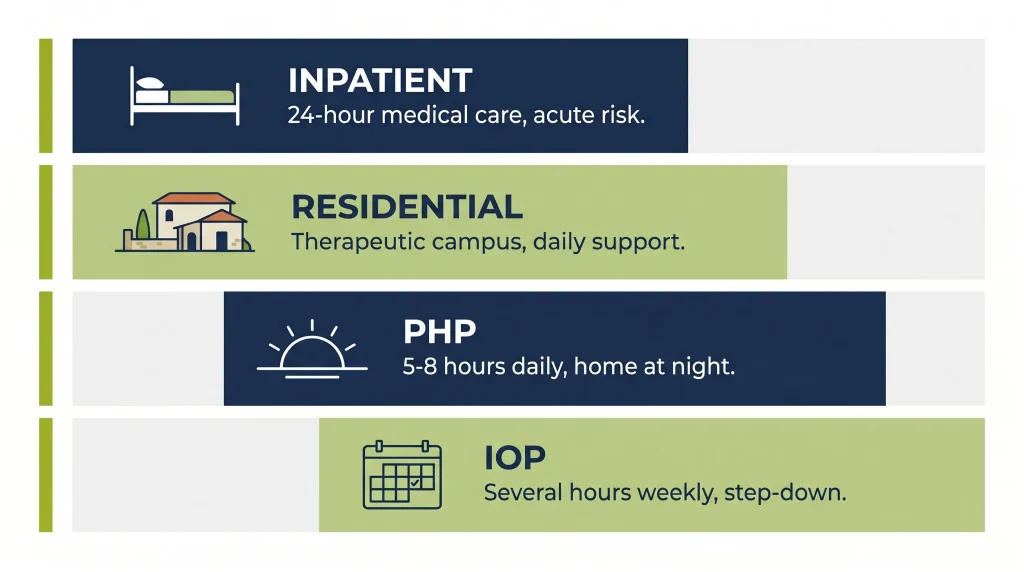
A residential programme designed specifically for this population addresses the gap that outpatient care cannot reach. Within a therapeutic community at Holina Village, the young adult is removed from the environmental patterns that maintain difficulty whilst remaining embedded in a community designed explicitly to foster development. This means living amongst peers navigating similar transitions, with trained therapeutic and clinical staff present daily, not weekly.
The programme addresses concrete life management alongside psychological work: managing money, preparing food, maintaining accommodation, structuring time, developing practical skills. Simultaneously, relational work proceeds continuously through the daily social interactions, group processes, and structured therapeutic activities that comprise the community. The young adult encounters repeated opportunities to practice new relational patterns, to tolerate challenge and discomfort without retreating, and to experience genuine belonging within a community of peers. The framework is neither coercive nor indulgent, but calibrated to the developmental needs of this particular life stage. For many, such a period proves catalytic, enabling the transition to independent adulthood that had seemed immobilised.
To explore whether a residential programme might be appropriate for your circumstances, please visit our programme page.

