Stopping cannabis and staying stopped is rarely a matter of willpower alone. Willpower is a resource that runs down precisely when tiredness, stress or loneliness arrive, and those are the moments a dependence on the substance tends to reassert itself. Lasting recovery is built instead on understanding the role cannabis has been playing in daily life, and then reorganising the environment, the emotional responses and the relationships that hold a person steady when the ground shakes. This article sets out what separates dependence from heavy use and what withdrawal actually feels like week by week, along with which approaches carry the strongest clinical evidence and when a residential therapeutic community becomes the realistic choice.
Reading time: 5 minutes
Key Points
- Cannabis withdrawal is real but time-limited. Physical symptoms usually peak within the first 72 hours and fade over two to four weeks.
- Most people with genuine dependence do better with a complete stop than with gradual reduction, because tapering keeps the mental negotiation alive.
- Cravings behave like waves. They rise, peak and pass within fifteen to thirty minutes if they are not fed with repeated thinking.
- When repeated attempts to quit have not held, a residential therapeutic community offers structure, clinical care and distance from triggers.
Table of Contents
- What Separates Regular Use From Cannabis Addiction?
- Is It Better to Stop Suddenly or Gradually?
- What Happens to the Body and Mind in Early Withdrawal?
- A Week-by-Week Withdrawal Timeline
- How to Sleep and Settle the Body Without Cannabis
- Why Anxiety and Low Mood Often Follow Quitting
- How to Ride Out Cravings Without Giving In
- The Critical First Thirty Days of Recovery
- Which Therapy Has the Strongest Evidence?
- When to Consider a Residential Therapeutic Community
- What to Do After a Slip
- Frequently Asked Questions
What Separates Regular Use From Cannabis Addiction?
The line between a consistent habit and a real dependence is not measured in how many joints are rolled across a weekend, but in how much inner freedom remains to choose differently. With regular use there is still flexibility. Plans can change, an urgent task can take priority, and a sober evening is uncomfortable but survivable. With dependence, the substance becomes the centre of gravity around which the whole schedule organises itself, and the thought of a full day without it produces physical tension and a deep restlessness. According to research from the National Institute on Drug Abuse, prolonged exposure to high concentrations of THC changes receptor density in the brain and disrupts its ability to produce a sense of calm on its own.
Loss of control is the defining feature. A person continues to use despite clear harm to studies, missed professional goals or growing distance from family, because the substance has become the single survival tool for regulating stress and quieting inner storms. The NIH definitions of substance use disorders describe exactly this shift. Seen this way, cannabis dependence is not a moral failure but an understandable attempt to mute distress, and that framing is where effective treatment begins.
The short film below shows Holina’s residential treatment setting and the daily rhythm of recovery inside a therapeutic community, which may help you picture what structured support actually looks like.
Is It Better to Stop Suddenly or Gradually?
Both paths are recognised clinically, and each has a different logic. Gradual reduction sounds gentler because it softens the physical symptoms and lets the nervous system adjust slowly to falling THC levels. In practice, though, tapering becomes an endless negotiation that exhausts the mind for most people with a significant dependence. The brain keeps calculating when the next smoke is permitted, so preoccupation with the substance does not end but intensifies. A clear, complete stop sets an absolute boundary. The first days are more uncomfortable, but certainty saves the energy otherwise spent planning and counting grams.
| Factor | Stopping completely | Controlled gradual reduction |
|---|---|---|
| Mental load | Ends the internal bargaining and brings immediate clarity | Creates ongoing tension around timing and quantities |
| Physical withdrawal | Acute symptoms concentrated within roughly 72 hours | Milder symptoms stretched across several weeks |
| Risk of returning to old levels | Lower once the first days of clearing are past | High, since any temptation can restore former amounts |
| Best suited to | Those who have already tried and failed to cut down, and need a clear frame | Rare cases of extreme anxiety, with close professional support |
How to Choose the Right Approach for Your Situation
Look honestly at past attempts. If you have told yourself dozens of times that you will only smoke in the evening or only at weekends, and every time ended up back in daily use, gradual reduction is not your answer. It will only prolong the discomfort and preserve the sense of guilt. In that situation a full stop, with a clear date and proper external support, is the only route that lets the body cleanse itself and the brain begin real neurological repair.
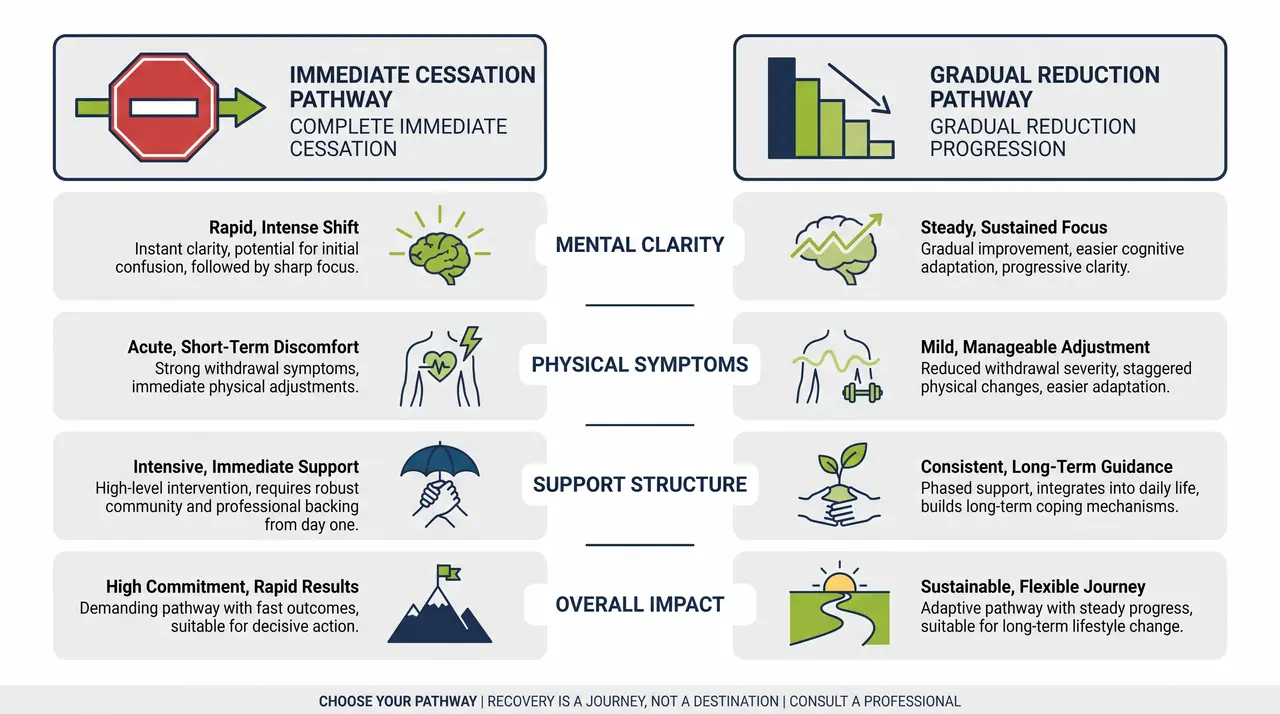
The two quitting approaches compared across mental load, withdrawal intensity and relapse risk.
What Happens to the Body and Mind in Early Withdrawal?
In the first days after stopping, the nervous system goes through a kind of quiet panic. The body begins clearing THC residues stored in fatty tissue, and the brain finds itself without the chemical brakes it learned to rely on after growing accustomed to constant artificial stimulation. The reaction is not dangerous, but it is demanding. Restless legs and heavy night sweats are normal parts of the clearing process, and so are hot and cold waves, dull headaches and a vanished appetite. Emotionally, something deeper happens. The smoke screen that protected consciousness from friction is removed at once, and every feeling that was pushed aside surfaces without a filter. Irritability, impatience with ordinary voices and a flooding sense of emptiness are entirely expected. This is not your true character. It is a brain relearning how to regulate frustration without an external sedative.
A Week-by-Week Withdrawal Timeline
Knowing what to expect at each stage lowers anxiety, because every physical difficulty now has a defined end point. Physical clearing does not last forever. It usually peaks within days and then fades gradually.
| Stage | Main physical symptoms | Emotional and mental experience | Recommended focus |
|---|---|---|---|
| Days 1 to 3 | Night sweats, insomnia, marked loss of appetite | High irritability, mood swings, strong urge to smoke | Reduce demands, drink plenty of water, rest and simply get through |
| Days 4 to 10 | Appetite returns, mild headaches, fatigue | Intense vivid dreams, heightened sensory sensitivity | Walks outdoors, small meals, share with someone close |
| Weeks 2 to 4 | First physical balance, stabilised sleep pressure | Mental clarity returns, but sudden craving waves appear | Build a fixed routine, physical activity, begin emotional therapy |
| One month and beyond | Continuous natural sleep, renewed physical vitality | Improved concentration, growing sense of capability and self-worth | Strengthen boundaries against social triggers and keep healthy patterns |
How to Sleep and Settle the Body Without Cannabis
The fear of sleepless nights is the single biggest obstacle that drives people back to the old drawer. For a long time the brain learned that smoking was the only switch that turned off the stream of thoughts, and when it disappears the bed can feel like a battlefield. The important correction is this. Sleep under the influence of cannabis is not truly restorative. The substance suppresses the deep stages needed for cellular repair, which is why people wake after eight hours of smoked sleep still heavy and drained.
The body needs a training period to fall asleep on its own, and that requires patience and fixed rituals. Keep the bedroom completely dark and slightly cool. Screens emit blue light that disrupts natural melatonin production, so switch them off at least an hour before bed. A calming herbal tea such as chamomile or lemon balm, a printed book and progressive muscle relaxation all signal to the nervous system that it is safe to downshift.
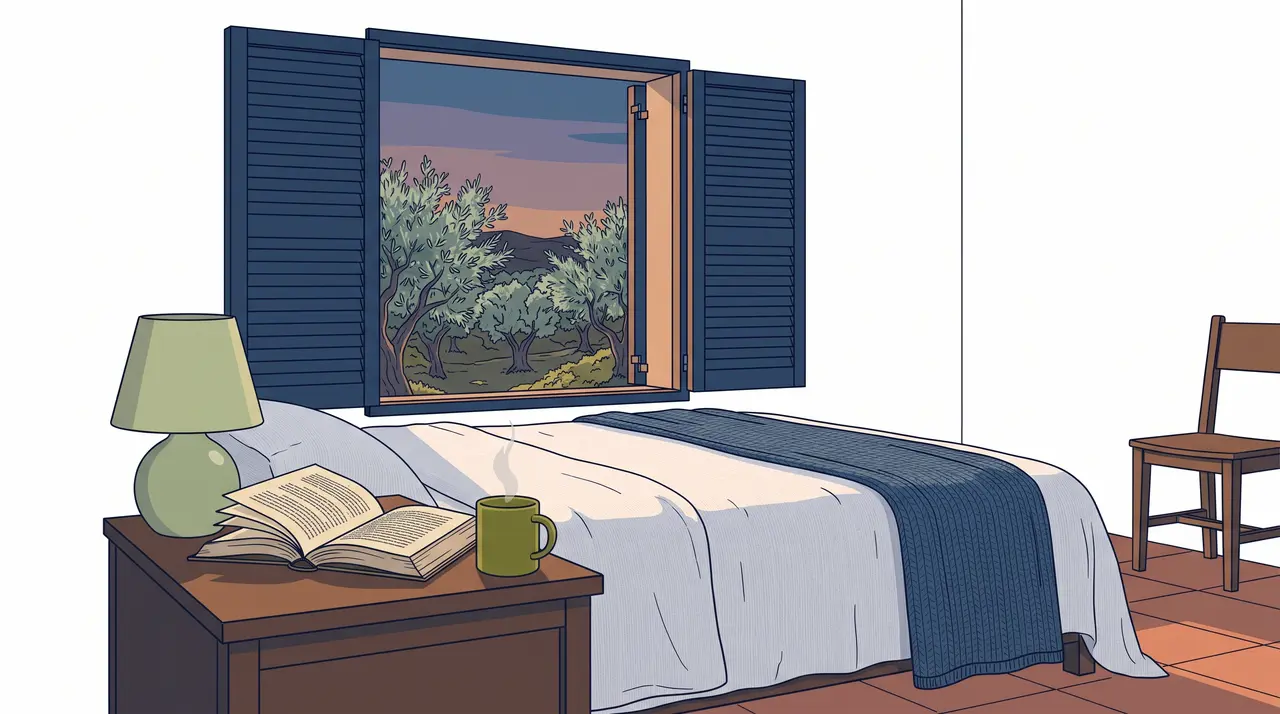
Practical sleep hygiene steps that help the body relearn natural rest.
Why Anxiety and Low Mood Often Follow Quitting
The first weeks of abstinence are sometimes accompanied by sudden sadness or anxiety attacks that surprise with their intensity. This is not a breakdown. It is an emotional rebound. For months or years the smoking acted as a dam holding back frustration, insecurity, disappointment or old pain. When the dam is removed, the backed-up water flows through with force. At the same time, dopamine and serotonin levels dip temporarily until the neurochemical system rebalances.
A distinction matters here. A temporary adjustment storm is different from a deeper condition that existed before the first joint was ever lit. For many people, smoking was an unconscious form of self-medication for trauma, social anxiety or clinical depression. When the substance fades, the original difficulty returns in full and deserves serious, non-judgemental treatment aimed at the root of the distress rather than its outward symptom.
When Professional Help Should Not Wait
Do not wait if low mood turns into thoughts of self-harm, if paralysing panic attacks persist beyond an hour or if a person cannot get out of bed to drink and eat. These situations call for immediate medical and psychological attention from mental health professionals, who can provide short-term stabilisation and keep the person safe until the storm passes.
How to Ride Out Cravings Without Giving In
The moment an urge arrives can feel like a wall that cannot be passed. The physiological truth is different. A craving is not a straight line climbing until it breaks you. It is a wave that rises, reaches a peak and breaks on its own within fifteen to thirty minutes if you do not feed it with repetitive thinking. The core skill is watching the wave without acting on it, with the clear knowledge that it will subside.
Rather than vowing you will never smoke again, an announcement that breeds internal panic, tell yourself you are waiting just fifteen minutes. During those minutes change something physical. Stand up, wash your face with cold water, step outside. A simple bodily action breaks the automatic loop between the feeling and the lighter. If the urge holds, name what is actually happening, whether it is tiredness or hunger or anger or quiet loneliness. Then ground yourself with slow breaths, and reach out to one person who knows your process.
The Critical First Thirty Days of Recovery
The first month is not the time for fireworks or distant achievements. It is a period of building a stable physical and psychological foundation. The key is a firm, structured routine, because empty hours are the most fertile ground for old cravings. Every morning should start at a fixed time, with a made bed and a nourishing breakfast, even if appetite is still hesitant. The body looks for anchors of safety, and a fixed daily schedule supplies exactly that frame.
A few practical steps carry most of the weight. Walk for thirty minutes daily and drink around two litres of water, and stay away from alcohol entirely because it lowers inhibitions and invites a fall back into cannabis. Keep a short daily journal recording the difficulties that arose alongside the small wins, such as resisting a temptation or a full night of continuous sleep. The written record restores a sense of control and reminds you that time is working in your favour. On the social side, take a conscious pause from gatherings built solely around use and move meetings with friends who smoke out of closed living rooms and into public spaces, daytime walks or cafes where the pull is far weaker.
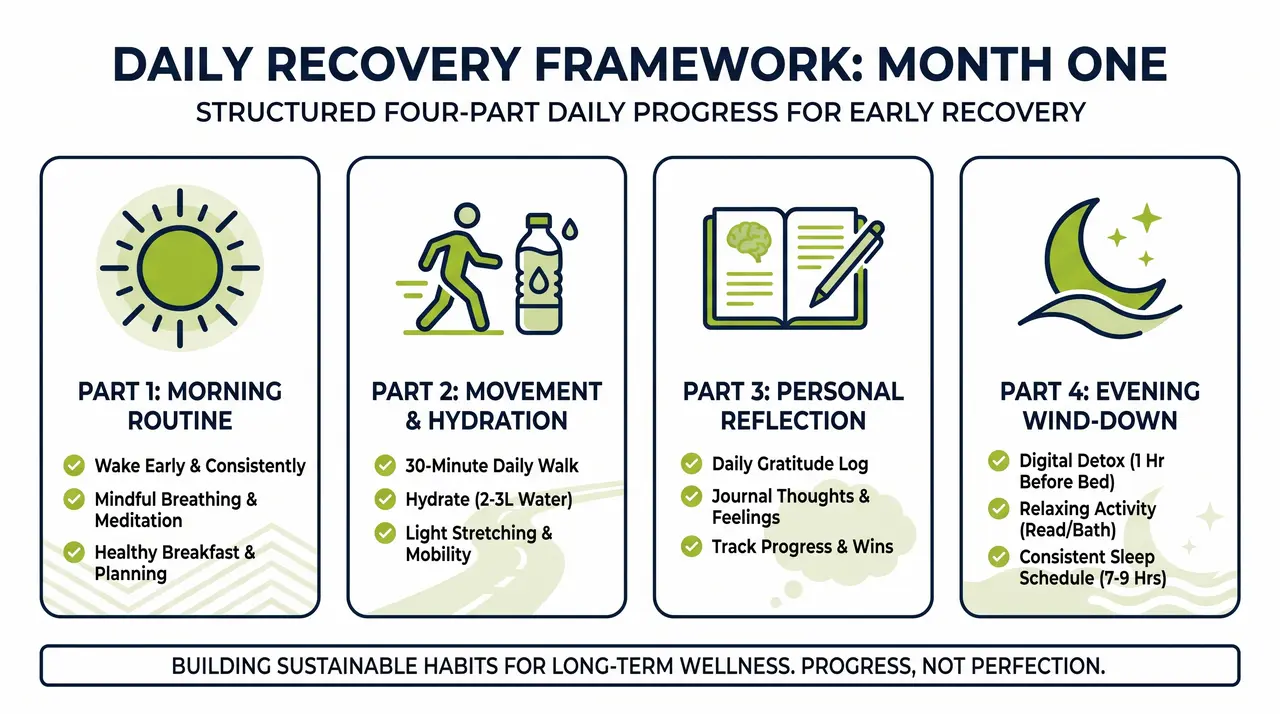
A month-one framework built on routine, movement, hydration and honest record-keeping.
Which Therapy Has the Strongest Evidence?
Professional psychotherapy is not there to lecture. It exists to examine, with curiosity and compassion, the mechanisms that led to the dependence. Across many clinical studies, Cognitive Behavioural Therapy has proven especially effective at dismantling the automatic thought patterns that link emotional overload with the need to smoke. The client learns to spot the preceding thoughts, such as the belief that calm is impossible without the substance, and to practise alternative responses that restore independent regulation. Motivational Interviewing adds a second layer, helping a person resolve internal ambivalence and strengthen their own motivation for change.
A clinical meta-analysis published on PubMed found that combining behavioural therapies with a structured relapse-prevention plan significantly reduces rates of return to use. Within a structured treatment programme that also addresses trauma and self-image, the emotional cargo that fed the dependence for years can finally be unpacked.
When to Consider a Residential Therapeutic Community
A weekly therapy hour is a valuable tool, but for many people it is not enough to break the pattern. Returning from the therapy room to the same living room, the same pressures and the same friends quickly wears down the ability to stay clean. A full temporary break from the exhausting routine is what the situation calls for if you have lived through repeated withdrawal attempts that ended in disappointment, if the use is accompanied by deep depression or if the home environment is saturated with tension and triggers that allow no rest.
When the pattern is deeply rooted, staying within a therapeutic community for adults provides a continuous and comprehensive envelope of clinical treatment, mutual support and a protected space to grow again. At Holina Village in Cyprus, away from the noise of the city, a person does not have to fight for every sober moment alone. There is a professional team around the clock, nourishing food, open spaces and a community of peers on a similar path who offer real belonging without judgement. If it would help to understand whether that setting fits your situation, you can begin with a quiet conversation with our admissions team.
| Accommodation option | Monthly all-inclusive rate | Space and privacy | Treatment envelope |
|---|---|---|---|
| Shared room | From 7,950 EUR per month | Shared living for two residents, warm and connecting | Individual therapy, groups, chef-prepared meals, farm activity and trips |
| Single room, shared bathroom | From 10,950 EUR per month | Private, quiet bedroom with adjacent facilities | Full clinical envelope, close support, workshops and outdoor activity |
| Single room, private bathroom | From 12,950 EUR per month | Full privacy and quiet in a spacious personal space | All treatment components, full board, whole-person care and transfers |
Considering residential treatment?
If repeated attempts to stop have not held, a conversation costs nothing and commits you to nothing. We will talk through your situation honestly and help you judge whether a therapeutic community is the right fit. No pressure, no obligation.
What to Do After a Slip
One of the most dangerous moments in recovery arrives when a person breaks by taking a single draw and is immediately flooded with shame, guilt and self-hatred. The automatic thought is that everything is ruined, that all the clean days are erased, and that continuing the fight is pointless. Here lies the critical difference between a slip and a collapse. A slip is an isolated moment. A collapse is the decision to throw up your hands and return to regular patterns. Shame does not prevent use. It is the primary fuel that keeps it going.
If it happened, stop in that same moment and throw away what remains, and do not drag the mistake into tomorrow. Call a supportive person, a therapist or a friend who knows your process, and share what happened honestly without hiding it. Sharing dissolves the loneliness and pulls the sting out of the guilt. Afterwards, examine together what the precise trigger was, then learn from it and strengthen the defences. Recovery is not a straight line of perfection. It is an uncompromising willingness to keep getting up and choosing a clear-headed life again and again.

The immediate-response sequence that separates a one-time slip from a full relapse.
Frequently Asked Questions
Is cannabis withdrawal dangerous?
Unlike withdrawal from alcohol or benzodiazepines, cannabis withdrawal is not physically dangerous. It is still genuinely uncomfortable because of disturbed sleep, irritability, sweating and strong cravings. The symptoms peak within the first three days and gradually ease over two to four weeks.
How long do cravings last after quitting?
An individual craving wave usually passes within fifteen to thirty minutes. The overall frequency of cravings drops noticeably after the first two to four weeks, though occasional waves linked to old habits or social situations can appear for months. Each wave you ride out without acting weakens the pathway behind it.
Can I quit cannabis on my own?
Many people do stop successfully by themselves, especially with a changed environment and supportive people around them. Professional support measurably improves the chances of a lasting change after repeated failed attempts, when the home environment is full of triggers or when the use sits alongside depression, anxiety or trauma.
How long does cannabis stay in the body?
THC is stored in fatty tissue and released slowly, so it can remain detectable in urine for several weeks after stopping, depending on frequency and intensity of prior use. Detectability is not the same as impairment, and the acute psychological adjustment usually settles well before the substance has fully cleared.
Cannabis dependence is a condition with a body, a mind and a history, and it responds to treatment that addresses all three. A complete stop tends to outperform gradual reduction for real dependence and withdrawal is uncomfortable but finite and predictable, while cravings pass when they are not fed and evidence-based therapies like CBT and Motivational Interviewing give the change a durable structure. When the pattern has resisted every solo attempt, a residential therapeutic community removes the daily battle and replaces it with support. If any part of this article described your situation, you are welcome to reach out for a confidential conversation about what the next step could look like. No pressure, no obligation, just an honest talk.
Yossi Zubari
CEO & Founder
Director and Senior Therapist working with addiction for over 25 years, and in personal recovery for almost 30 years.