Most families do not discover a gambling problem through a confession. They discover it through a bank statement that refuses to balance, a sudden request for a short-term loan, or a phone that is always turned face down. If you have found your way to this page, you are probably carrying fear and anger mixed with exhaustion and need practical direction more than reassurance. This guide sets out what to do in the first days after discovery and how to talk about the gambling without triggering denial, then covers how to protect your household finances and when residential treatment becomes the more sensible option.
Reading time: 5 minutes
Key points
- Paying off a gambler’s debts almost always deepens the problem. Directing money toward treatment instead protects both the person and the family.
- Clear, concrete financial boundaries change behaviour over time. Surveillance and policing do not.
- Gambling disorder is a recognised mental health condition involving the brain’s reward system, not a failure of willpower or love.
- Residential treatment is worth considering when repeated relapses, severe debt, and round-the-clock online access make outpatient care insufficient.
Table of contents
- What to do in the first days after discovery
- The difference between social gambling and problem gambling
- Why someone with a gambling problem cannot simply stop
- How to talk about the gambling without triggering denial
- Setting boundaries that hold
- Should you pay off a gambler’s debt
- Protecting your household finances
- When residential treatment is the right level of care
- Looking after yourself and the wider family
- A step-by-step path forward
- Frequently asked questions
What to do in the first days after discovery
Your first instincts will be confrontation and clearing the debt. Both feel protective, and both tend to backfire. A late-night argument drives the behaviour further underground, while paying off a balance removes the discomfort that might otherwise prompt honest reflection. Take twenty-four hours before any formal conversation. Use that time to gather bank statements and understand the actual scope of the exposure, and to secure liquid household funds by changing banking passwords and removing your cards from shared digital wallets. This is not hostility. It is stabilisation, and it prevents panic wagers during the crisis.
When you do sit down, choose a neutral room in daylight. State what you found plainly, without theatrical inflection. Focus on observable records, such as an unexplained debit of several hundred euros, and explain what that shortfall means for rent or utilities. Facts land more firmly than accusations.
The difference between social gambling and problem gambling
A social bettor sets an explicit loss limit, stops when it is reached, and treats the cost as the price of an evening out. The wager is an expense, never an investment or a solution to financial distress. Compulsive play operates on a different register entirely. The defining clinical marker is the chase, where a person increases their stakes specifically to win back money just lost. The MedlinePlus medical overview of compulsive gambling explains that the disorder involves an uncontrollable impulse to wager despite destructive consequences across personal, professional, and domestic life.
The social player walks away when the budget runs out. The compulsive player experiences a deficit as an emergency that only another wager can solve and watches what began as entertainment become a cycle of secrecy, panic, and escalation.
If residential care is something your family may one day consider, this short film from an open day at our village shows the grounds and a little of the daily rhythm of the therapeutic community.
Why someone with a gambling problem cannot simply stop
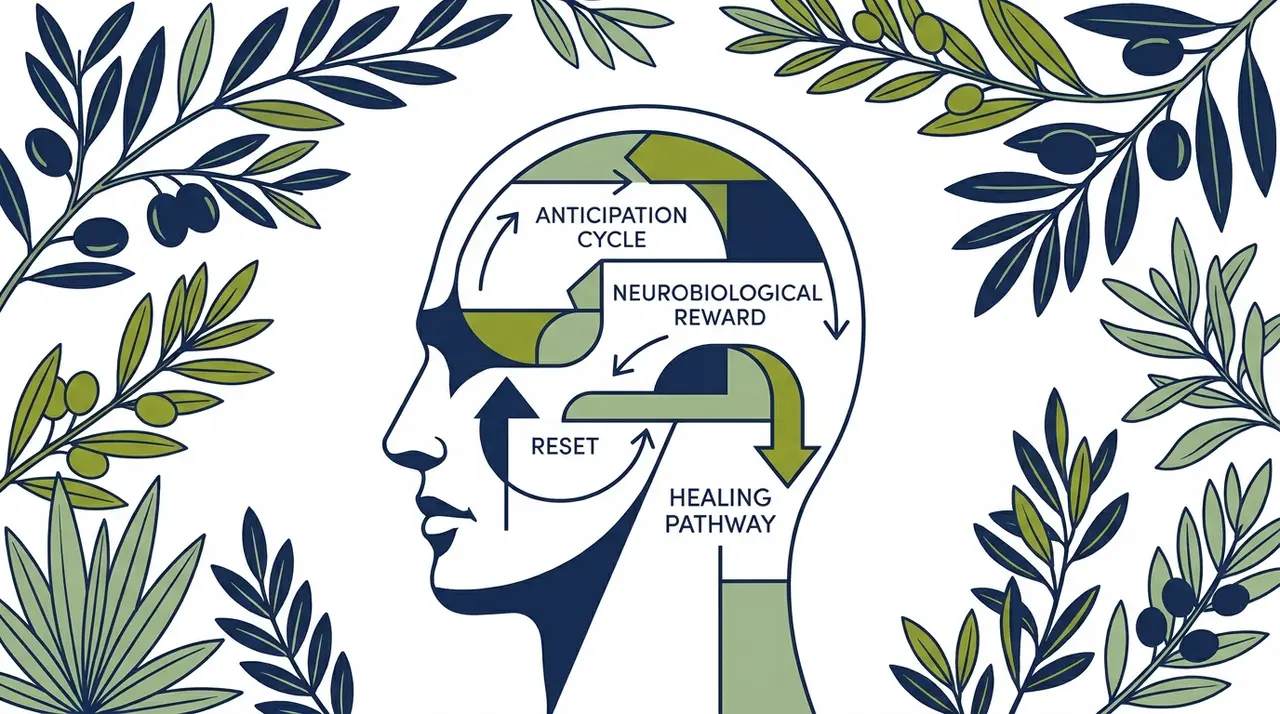
Spouses often ask how a person could risk the family home if they genuinely loved their children. Framing the condition as a willpower failure misunderstands the neurobiology. Wagering stimulates the dopamine reward pathway in a manner strikingly similar to psychoactive substances, and the spike occurs most strongly during anticipation rather than payout. Near-misses, such as two matching symbols out of three, reinforce the circuitry more powerfully than plain losses.
Over months of constant play, the brain desensitises to ordinary pleasures. The person wagers to escape internal restlessness, depression, or unmanaged pain once meals and walks and achievements stop registering as satisfying. Stopping alone leaves a vacuum that very few people can tolerate without professional support.
How to talk about the gambling without triggering denial
Entering the room with accumulated fury will provoke denial, counter-attack, or withdrawal. The goal of the first conversation is not a full surrender. It is an open channel that can lead to clinical evaluation. Pick a moment when neither of you is exhausted, never during a match or after alcohol, and prepare two or three specific observations rather than months of grievance.
Language that keeps the conversation open
Neutral language defuses the shame that sits beneath the defensiveness. Two examples that work in practice follow.
“I can see you are carrying a great deal of stress about money right now, and I am worried about you.”
“Our shared account was overdrawn last week, and I need us to talk honestly about what that means for the household.”
Language that shuts it down
Accusatory phrasing confirms the person’s private fear that they are fundamentally bad rather than unwell, and they double down on lies to escape that feeling. Avoid anything resembling the following.
“How could you do this to our family after everything we have given up for you?”
“Promise me right now that you will never place another bet as long as you live.”
Setting boundaries that hold
A boundary is not a lever for manipulating another person’s conduct. It is a protective fence around your own emotional and financial safety. The distinction that matters is between support and enabling. Support helps the individual reach treatment, therapy, and medical assessment. Enabling cushions them from the real consequences of their betting, such as covered utility bills or excuses made to an employer. The NCBI guide to family counselling approaches underscores that structured boundary adjustments within domestic systems significantly improve treatment engagement, because they remove the false safety net that permits continued gambling.
When the mortgage falls short because of losses, quietly covering the gap enables the pattern. The protective response is to keep your savings separate and require independent debt advice.
When creditors call the house, explaining away a missed payment shields your relative from consequence. The protective response is to let your relative return the call, alongside a certified advisor.
When tempers flare over cash, yielding to restore the peace teaches that pressure works. The protective response is to leave the room and repeat, calmly, that household funds are non-negotiable.
Should you pay off a gambler’s debt
The clinically sound answer is no. A bailout removes the emotional discomfort that pushes a person toward help, and the compulsion quickly whispers that money is always accessible if things go wrong again. Within months, the debt usually returns, often larger. Tell your relative plainly that you will not put a single euro toward servicing gambling losses but are willing to invest in clinical treatment, specialised residential care, or professional counselling. That distinction makes clear your support belongs to their health, not their addiction.
Protecting your household finances
Asset protection cannot wait for the person to acknowledge their condition. Open a bank account in your name alone at an institution where your partner holds no accounts, and have your salary paid into it. Remove your name from joint credit cards and cancel any secondary ones issued on your lines. Contact credit reference agencies to freeze your files against new borrowing and store passports, car titles, and property deeds somewhere outside the home. These steps preserve a stable platform for the household, including children, regardless of what happens next.

When residential treatment is the right level of care
Outpatient therapy has genuine value for milder cases, allowing weekly sessions alongside work and family life. It often proves insufficient when online casinos sit in the person’s pocket around the clock or relapses have repeated, as well as when debt is catastrophic or depression has taken hold alongside the betting. Physical removal from a trigger-saturated environment interrupts the dopamine cycle and gives the nervous system space to reset.
Treatment itself pairs careful assessment of the underlying depression, anxiety, or trauma that the gambling has been masking with a central focus on Cognitive Behavioural Therapy that teaches people to identify distortions such as the illusion of control and the gambler’s fallacy. At Holina Village in Cyprus, our residential programme delivers this evidence-based psychotherapy within an integrated therapeutic community where individual therapy and expressive and movement therapies work alongside animal care and structured outdoor activity to treat emotional and behavioural health together with somatic health rather than in isolation. The setting, a working village amid orchards in Achnas, gives residents a daily rhythm far removed from screens and wagering.

Shared room, from €7,950 per month.
Single room with shared bathroom, from €10,950 per month.
Single room with private bathroom, from €12,950 per month.
Each option includes full residential board and airport transfers, individual and group therapy as well as expressive therapies, and both adventure outings and farm activities. Personal spending money is excluded.
If you would like to understand whether this level of care fits your family’s situation, you are welcome to speak with our admissions team in confidence. There is no pressure and no obligation, just an honest conversation with a clinician who understands gambling dependency.
Looking after yourself and the wider family
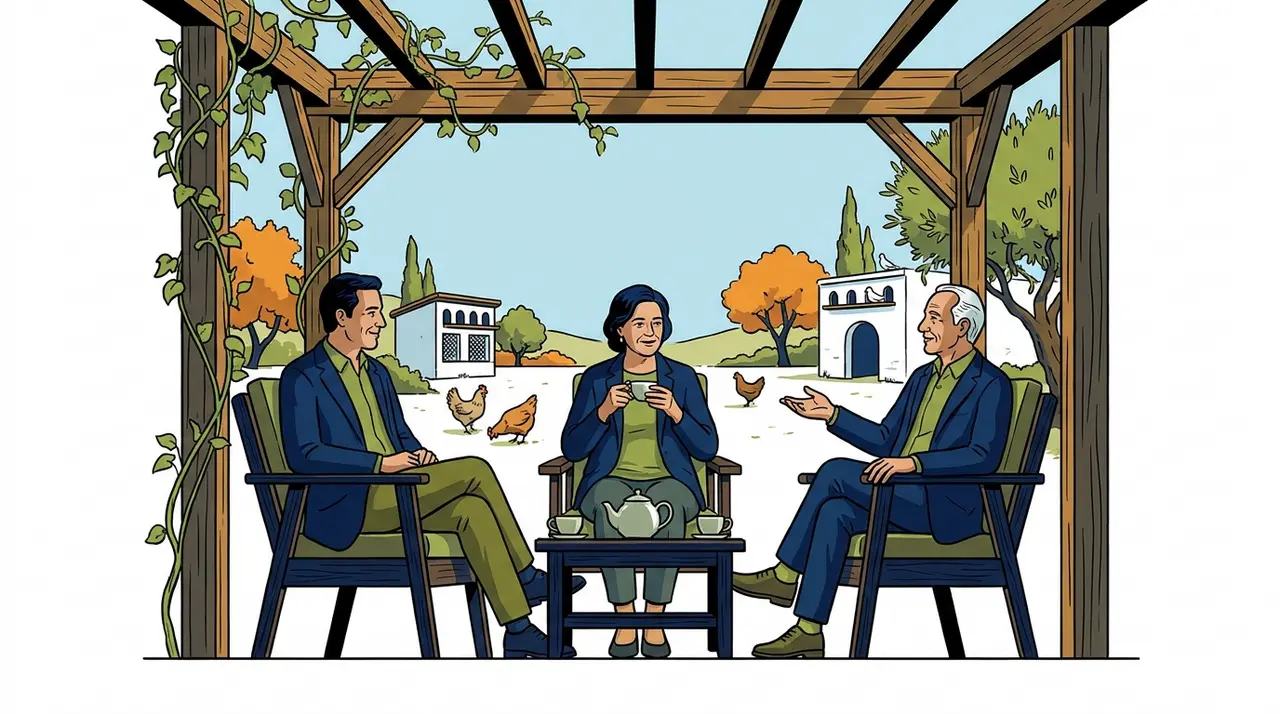
Caring for an addicted relative exacts a real physical toll that includes chronic insomnia, anxiety, and social withdrawal. Shame flourishes in secrecy, so confide in a trusted friend or licensed counsellor, or in a family support fellowship such as Gam-Anon where your experience is understood without judgment. Protect the basics of your own sleep, meals, and movement because a family system cannot heal if its primary caregiver collapses. Our multidisciplinary clinical team consistently finds that healthy family systems are among the greatest assets a recovering person can have.
If children are in the household, offer a simple, age-appropriate explanation without financial detail. Say that their parent has a health problem affecting their decisions, that doctors are helping, and above all that nothing the child did caused it and nothing the child can do will fix it. Predictable routines provide the anchor children need while the family navigates change.
A step-by-step path forward
- Secure the household finances immediately with single-signature accounts, changed credentials, and frozen credit files.
- Hold a calm, structured conversation in daylight, focused on observable records rather than character.
- Refuse all financial bailouts, and direct your resources only toward clinical assessment and treatment.
- Arrange a formal consultation with an addiction specialist, or contact a residential service for an evaluation of your circumstances.
- Maintain your own support through family groups and private counselling, and step out of the role of investigator.
Frequently asked questions
Is gambling addiction a recognised mental health condition?
Yes. It appears in the DSM-5 as gambling disorder, classified alongside substance-related disorders because it involves the same reward circuitry. This matters practically, because it frames treatment as a clinical matter rather than a moral one.
Can someone recover without residential treatment?
For milder cases, weekly Cognitive Behavioural Therapy combined with firm financial safeguards can be enough. Residential care earns its place when relapses repeat, debt is severe, or constant online access makes abstinence at home unrealistic.
What is Gam-Anon?
Gam-Anon is a free fellowship for the family members and friends of compulsive gamblers. Meetings offer the accumulated experience of people who have faced the same domestic crisis, which reduces isolation and helps you hold steady boundaries.
How long does recovery from gambling addiction take?
There is no fixed timeline. The behaviour itself often settles before the finances and the relational trust do, and sustained engagement with therapy and financial transparency typically continues for months or years. A lapse along the way does not erase the progress already made.
Helping someone with a gambling addiction means stepping back from rescue and policing, holding firm financial boundaries, and pointing clearly toward clinical care that addresses the pain beneath the behaviour. Recovery is a deliberate, day-by-day return to oneself, and families who protect their own stability while keeping the door open give their loved one the best possible ground on which to walk through it.
If any part of this describes your situation, you can learn more about our therapeutic community on the Holina Village Cyprus website.
If you are considering residential care for a family member, or simply need to talk something through, we offer a confidential conversation with no pressure and no obligation.
Arrange a confidential conversation with our admissions team
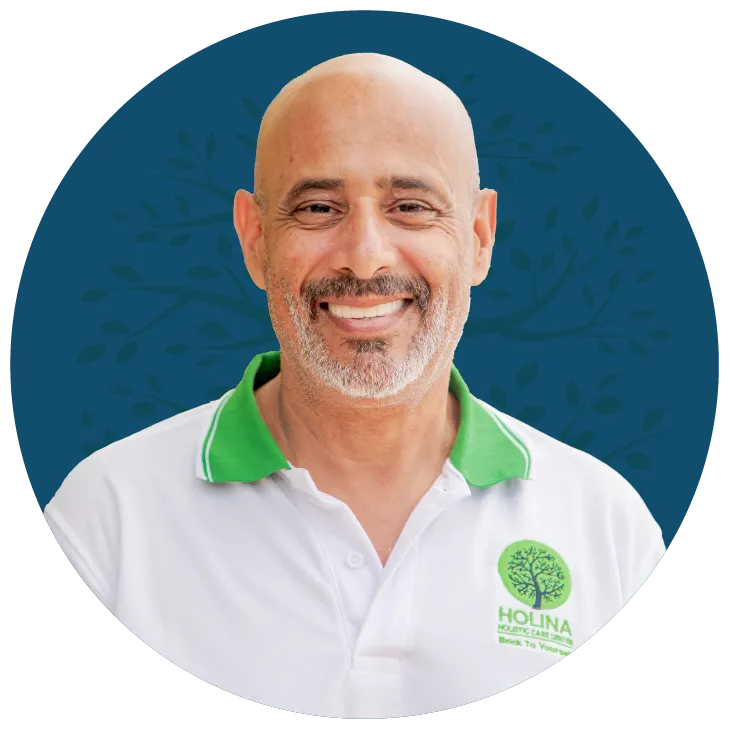
Yossi Zubari
CEO & Founder
Director and Senior Therapist working with addiction for over 25 years, and in personal recovery for almost 30.